
Was sind langkettige Nylone?
Long-chain nylons such as PA11 and PA12 are valued for low moisture absorption, dimensional stability, and chemical resistance.
Als langkettige Nylone bezeichnet man Polyamidharze, bei denen die sich wiederholenden Amidgruppen durch längere Methylenketten voneinander getrennt sind – typischerweise liegen zwischen den Amidbindungen 10 oder mehr Kohlenstoffatome. Im Gegensatz dazu stehen kurzkettige Nylone wie PA6 und PA66 Sie weisen nur 5–6 Methylen-Einheiten zwischen den Amidgruppen auf, was zu einer höheren Amiddichte, einer größeren Polarität und folglich zu einer höheren Feuchtigkeitsaufnahme führt.
Long-chain nylons such as PA11 and PA12 are valued for low moisture absorption, dimensional stability, and chemical resistance.
PA11 (Polyamid 11) und PA12 (Polyamid 12) sind die kommerziell bedeutendsten langkettigen Nylons. PA11 wird aus 11-Aminoundecansäure polymerisiert, die gewonnen wird aus Rizinusöl, was es zu einem nachwachsenden, biobasierten technischen Polymer macht. PA12 wird in der Regel aus Lauro-Lactam hergestellt, einem petrochemischen Monomer mit einer Kette aus 12 Kohlenstoffatomen. Beide Materialien bieten außergewöhnliche Formbeständigkeit, geringe Feuchtigkeitsaufnahme, und hervorragende chemische Beständigkeit—Eigenschaften, die sie von ihren kurzkettigen Verwandten unterscheiden.
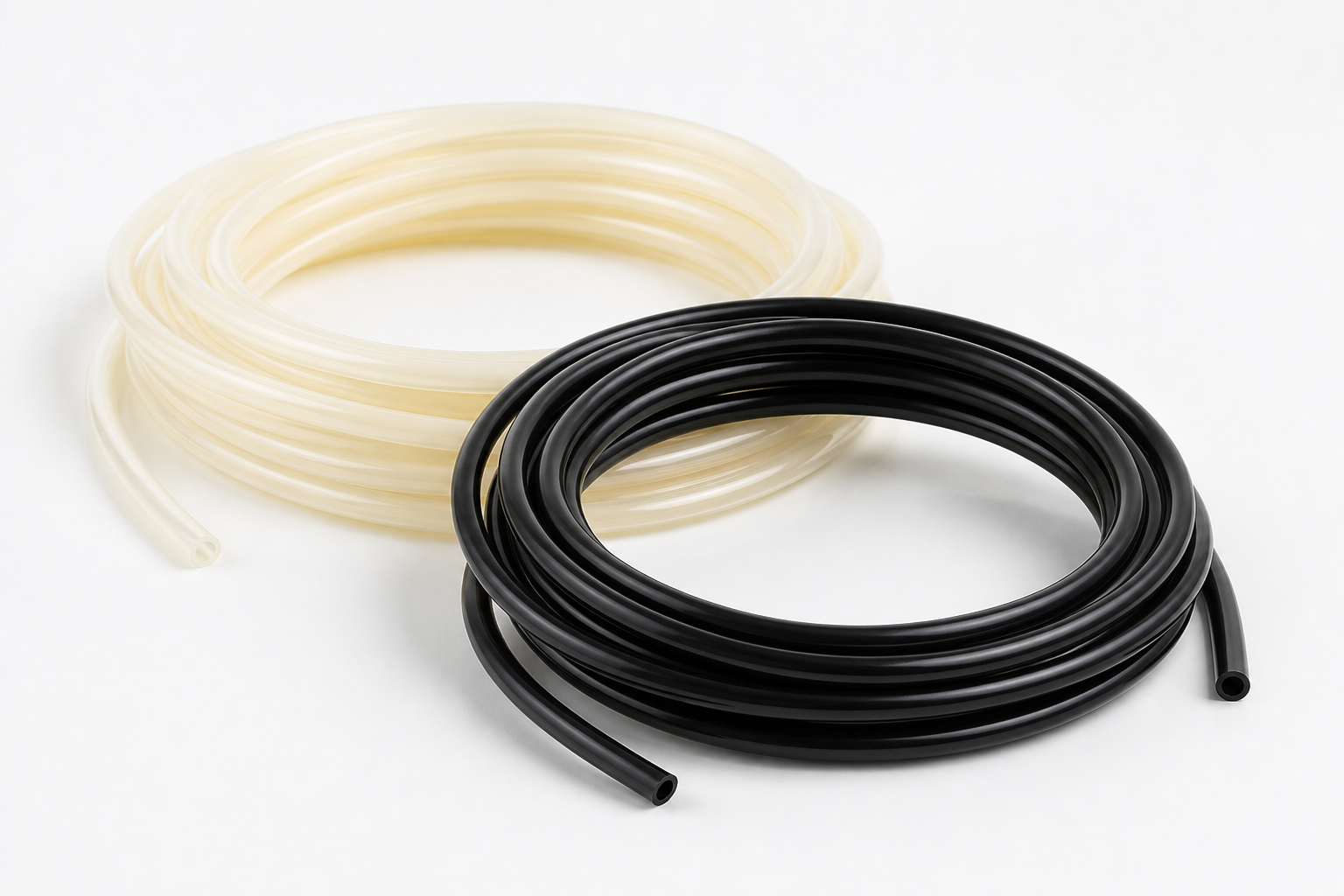
Eigenschaftsvergleich: PA11 vs. PA12 vs. PA612 vs. PA6 vs. PA66
Long-chain nylons such as PA11 and PA12 are valued for low moisture absorption, dimensional stability, and chemical resistance.
In der folgenden Tabelle werden die wichtigsten technischen Eigenschaften gängiger Nylon-Typen miteinander verglichen. Die Angaben entsprechen typischen Werten für unverstärkte, formfrische Teile.
| Eigentum | PA11 | PA12 | PA612 | PA6 | PA66 |
|---|---|---|---|---|---|
| Dichte (g/cm³) | 1,03–1,04 | 1,01–1,02 | 1,06–1,08 | 1,12–1,14 | 1,13–1,15 |
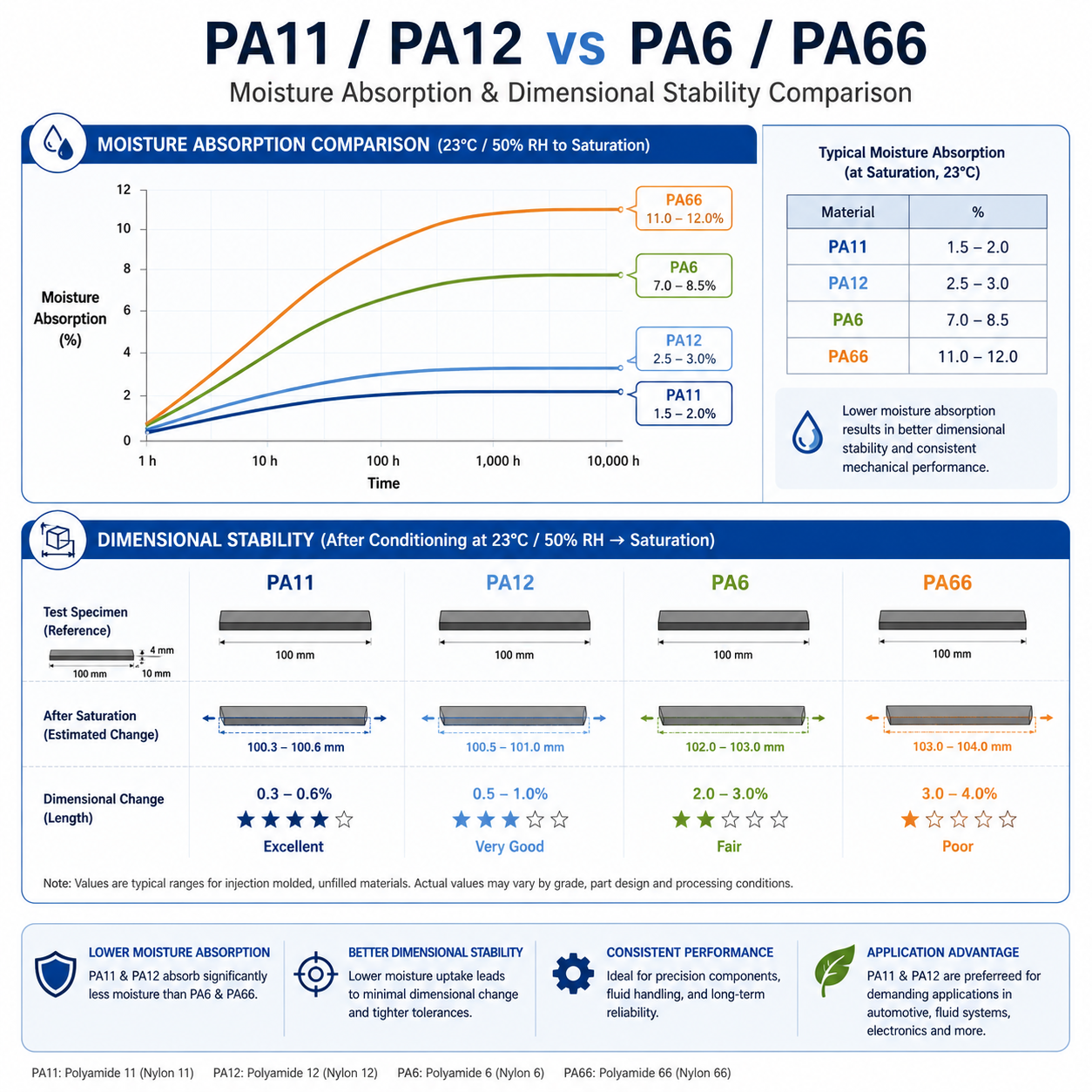
| Feuchtigkeitsaufnahme bei 23 °C, 50% relative Luftfeuchtigkeit (%) | 0.3–0,5 | 0.2–0,3 | 0,6–0,8 | 2,5–3,0 | 1,5–2,5 |
| Wasseraufnahme bei Sättigung (%) | ~1.9 | ~1.5 | ~3.0 | ~9.5 | ~8.5 |
| Zugfestigkeit bei Streckgrenze (MPa) | 40–50 | 45–55 | 50–60 | 70–80 | 75–85 |
| Bruchdehnung (%) | 200–300 | 200–300 | 150–250 | 100–200 | 60–150 |
| Biegemodul (GPa) | 0,9–1,2 | 1,1–1,4 | 1,5–2,0 | 2,5–3,0 | 2,8–3,3 |
| Izod-Schlagzähigkeit mit Kerbe bei 23 °C (kJ/m²) | Anmerkung | Anmerkung | 5–8 | 5–7 | 4–6 |
| Izod-Schlagzähigkeit mit Kerbe bei -40 °C (kJ/m²) | 8–12 | 6–10 | 3–5 | 2–3 | 1–2 |
| Melting Point (°C) | 185–190 | 175–180 | 210–220 | 220–225 | 255–265 |
| Chemical Resistance (acids/alkalis/hydrocarbons) | Ausgezeichnet | Ausgezeichnet | Sehr gut | Messe | Messe |
Long-chain nylons such as PA11 and PA12 are valued for low moisture absorption, dimensional stability, and chemical resistance.
Das Wichtigste auf einen Blick: PA11 and PA12 absorb approximately 0.3% moisture at 50% RH, compared with 1.5–2.5% for PA66 and 2.5–3.0% for PA6. This low moisture absorption means long-chain nylons maintain their mechanical properties and dimensions in humid environments without conditioning—a critical advantage for precision-engineered components.
Long-chain nylons such as PA11 and PA12 are valued for low moisture absorption, dimensional stability, and chemical resistance.
Additionally, PA11 and PA12 exhibit notched Izod impact values at -40°C that are up to 10x higher than PA6 and PA66, making them the nylon of choice for low-temperature applications.
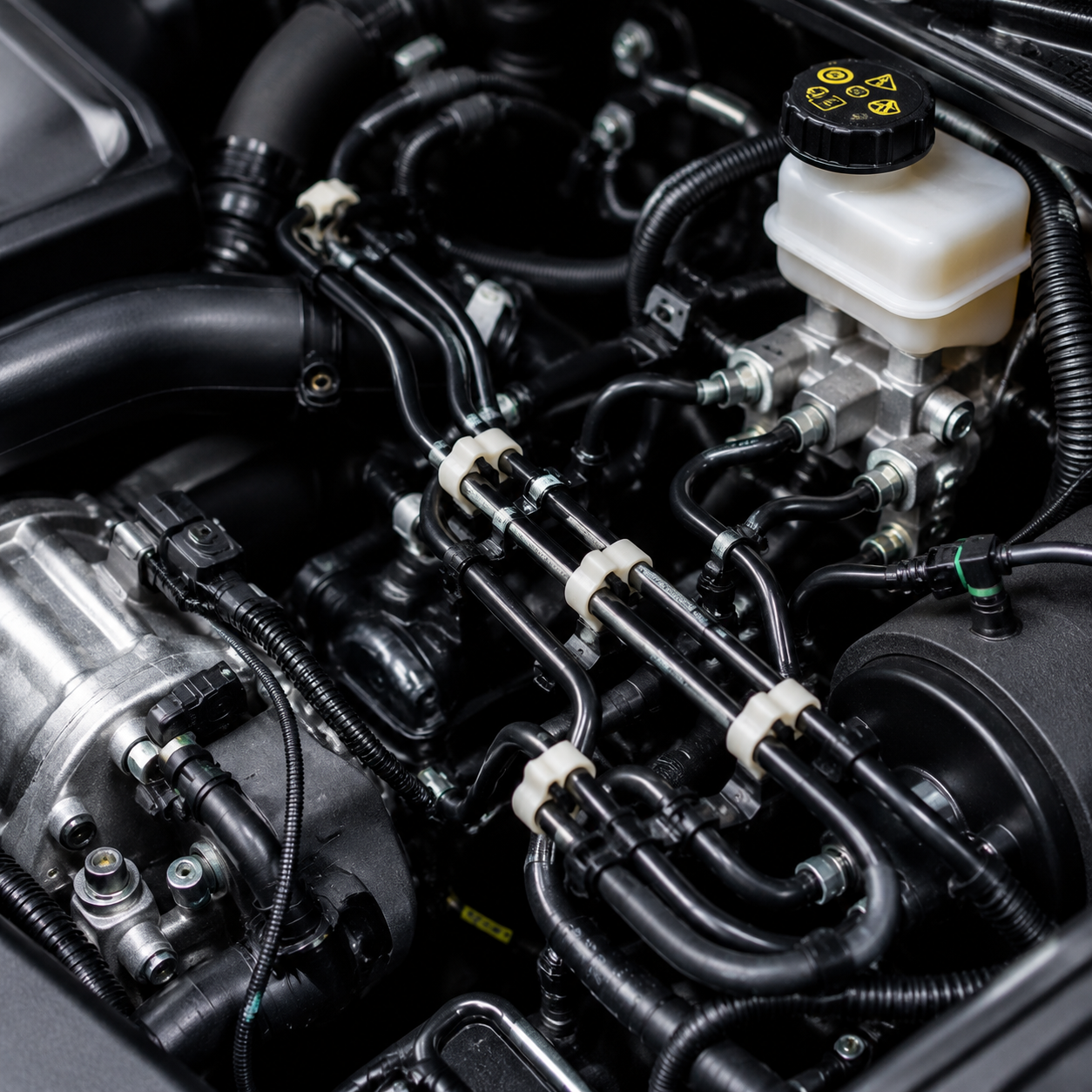
Key Advantages of Long-Chain Nylons
Long-chain nylons such as PA11 and PA12 are valued for low moisture absorption, dimensional stability, and chemical resistance.
The extended methylene sequence in PA11 and PA12 delivers a unique combination of properties not found in short-chain nylons:
- Lowest moisture absorption of all nylons — typically ~0.3% versus 1.5–3.0% for PA6/PA66, ensuring dimensional stability without pre-conditioning
- Superior low-temperature impact resistance — retains ductility and toughness down to -40°C and below, where short-chain nylons become brittle
- Excellent chemical resistance — particularly to hydrocarbons, oils, greases, and zinc chloride solutions, making them ideal for automotive fluid contact
- Lower density — PA11 (1.03 g/cm³) and PA12 (1.01 g/cm³) are among the lightest engineering thermoplastics
- Superior fatigue resistance — excellent flexural fatigue performance under repeated loading, critical for dynamic tubing applications
- Wide processing window — lower melt temperatures and slower crystallization rates facilitate extrusion and complex profile processing
Applications of PA11 and PA12
Long-chain nylons such as PA11 and PA12 are valued for low moisture absorption, dimensional stability, and chemical resistance.
The unique property profile of long-chain nylons has established them as essential materials across multiple demanding industries:
Automotive Fuel Systems
Long-chain nylons such as PA11 and PA12 are valued for low moisture absorption, dimensional stability, and chemical resistance.
PA12 multilayer fuel lines have been the industry standard for decades, offering near-zero permeation of modern oxygenated fuels while resisting road salts and zinc chloride. PA11 is increasingly specified for biodiesel-compatible fuel lines due to its excellent resistance to biofuel attack. Both grades are used in quick-connectors, vapor recovery lines, and filler neck assemblies.
Air Brake Tubing
Long-chain nylons such as PA11 and PA12 are valued for low moisture absorption, dimensional stability, and chemical resistance.
Commercial trucks and buses rely on PA11 and PA12 air brake tubing that remains flexible at sub-zero temperatures while resisting the oil mist present in compressed air systems. These tubes must pass stringent SAE J844 and ISO 7628 specifications including burst pressure, cold impact, and zinc chloride resistance testing.
Flexible Cable Ties and Fasteners
Long-chain nylons such as PA11 and PA12 are valued for low moisture absorption, dimensional stability, and chemical resistance.
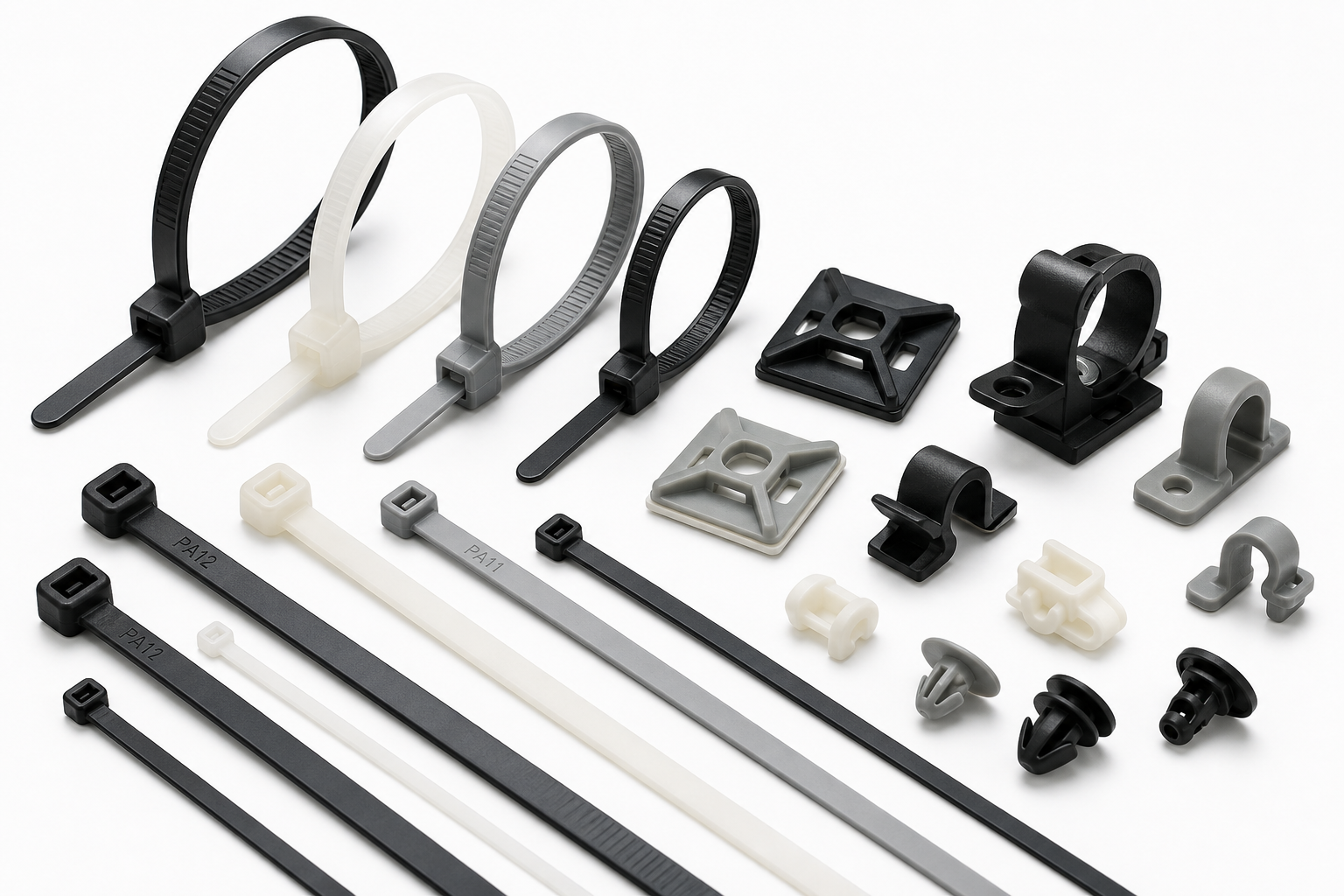
PA12 cable ties offer superior flexibility and UV resistance compared to PA66 ties, making them preferred for outdoor telecommunications, solar farm installations, and marine environments. The lower moisture absorption eliminates the loosening that occurs with PA66 ties in humid conditions.
Sports and Leisure Equipment
Long-chain nylons such as PA11 and PA12 are valued for low moisture absorption, dimensional stability, and chemical resistance.
PA11 and PA12 are widely used in ski boots, tennis racket strings, and high-performance athletic shoe components. The combination of flexibility, low-temperature impact resistance, and excellent energy return makes them ideal for dynamic sports applications. PA12 powder is also extensively used in SLS 3D printing of custom sports equipment.
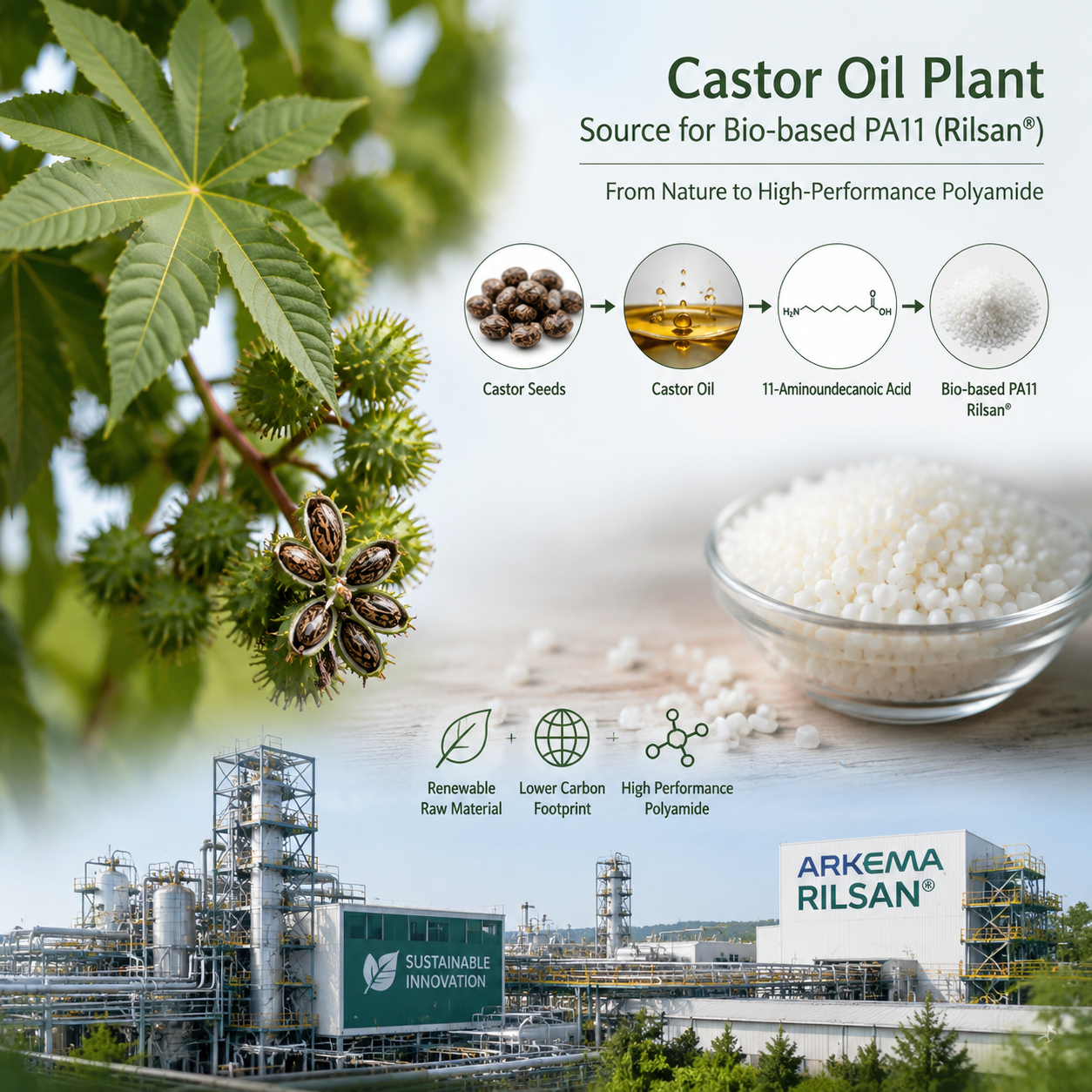
Bio-Based PA11: The Rilsan Legacy
Long-chain nylons such as PA11 and PA12 are valued for low moisture absorption, dimensional stability, and chemical resistance.
PA11 holds a unique position among engineering polymers as the only high-volume 100% bio-based polyamide. Arkema’s Rilsan PA11, commercialized in 1947, is polymerized from 11-aminoundecanoic acid produced by the pyrolysis of castor oil methyl ester. Castor beans grow on marginal, non-food agricultural land, and the plant requires minimal water and pesticide inputs.
Long-chain nylons such as PA11 and PA12 are valued for low moisture absorption, dimensional stability, and chemical resistance.
Modern Rilsan grades span a wide range of formulations including:
- Rilsan BESN — general-purpose extrusion and injection molding grade
- Rilsan BESNO — heat and light stabilized for outdoor applications
- Rilsan BZM — plasticized grade for maximum flexibility at extreme low temperatures
- Rilsan BECN — conductive grade for ATEX applications and fuel system components requiring electrostatic dissipation
Long-chain nylons such as PA11 and PA12 are valued for low moisture absorption, dimensional stability, and chemical resistance.
The carbon footprint of bio-based PA11 is approximately 40–50% lower than petrochemical PA12 on a cradle-to-gate basis, making it an increasingly attractive choice for OEMs with sustainability targets.
PA12 Grades: Grilamid, Vestamid, and Beyond
Long-chain nylons such as PA11 and PA12 are valued for low moisture absorption, dimensional stability, and chemical resistance.
PA12 is produced by several major chemical companies under well-recognized trade names:
- EMS-Grivory Grilamid — The Grilamid L series covers unreinforced PA12 for extrusion and injection molding, while Grilamid TR grades are transparent amorphous PA12 copolymers for medical and optical applications. Grilamid LV grades offer enhanced laser marking performance.
- Evonik Vestamid — Vestamid L is Evonik’s PA12 portfolio, with specialized grades for flexible tubing (Vestamid L1670), powder coatings (Vestamid L1901), and high-viscosity extrusion (Vestamid L2140). Vestamid NRG offers enhanced impact modification.
- UBE UBESTA — UBE Industries produces UBESTA PA12, with strong market presence in Asia for automotive and industrial tubing applications.
- Wanhua WANAMID — A growing Chinese producer of PA12 resin, expanding global supply diversity for long-chain nylons.
Processing: Extrusion and Injection Molding
Long-chain nylons such as PA11 and PA12 are valued for low moisture absorption, dimensional stability, and chemical resistance.
Long-chain nylons are most commonly processed by extrusion, which is the dominant method for producing tubing, profiles, and monofilament. Key processing considerations include:
- Trocknen — PA11 and PA12 must be dried to <0.1% moisture before processing. Typical drying conditions: 80–90°C for 4–6 hours in a desiccant dryer. Unlike PA6/PA66, the lower equilibrium moisture content means dryers can maintain target moisture more easily.
- Melt temperature — PA11: 210–250°C; PA12: 200–240°C. These are significantly lower than PA66 (270–290°C), reducing energy consumption and thermal degradation risk.
- Mold temperature (injection molding) — 40–80°C for unreinforced grades, 80–120°C for glass-filled. The slower crystallization rate of long-chain nylons allows lower mold temperatures than PA66.
- Schrumpfung — Typically 1.0–1.5% in flow direction, slightly higher than PA6/PA66, requiring careful tool design compensation.
- Post-processing — Unlike PA6/PA66, which gain toughness through moisture conditioning, PA11/PA12 achieve near-equilibrium properties straight from the mold. Annealing at 150–165°C can further improve crystallinity and dimensional stability.
Häufig gestellte Fragen
Was ist der Hauptunterschied zwischen PA11 und PA12?
Long-chain nylons such as PA11 and PA12 are valued for low moisture absorption, dimensional stability, and chemical resistance.
While both are long-chain nylons with similar mechanical and chemical properties, the key differences are: (1) Raw material origin—PA11 is bio-based (castor oil), while PA12 is petrochemical-based (laurolactam). (2) Melting point—PA11 melts at 185–190°C vs. 175–180°C for PA12, giving PA11 a slight thermal advantage. (3) Dichte—PA12 at 1.01–1.02 g/cm³ is slightly lighter than PA11 at 1.03–1.04 g/cm³. (4) Feuchtigkeitsaufnahme—PA12 absorbs marginally less moisture (~0.2–0.3%) than PA11 (~0.3–0.5%). For most applications, they are functionally interchangeable, with selection driven by supply chain preference, sustainability requirements, or specific regulatory approvals.
Warum wird PA12 für Kraftstoffleitungen im Automobilbereich bevorzugt?
Long-chain nylons such as PA11 and PA12 are valued for low moisture absorption, dimensional stability, and chemical resistance.
PA12 dominates automotive fuel line applications for several compelling reasons: (1) Superior hydrocarbon barrier performance—PA12 multilayer constructions achieve permeation rates well below CARB and EPA LEV III limits. (2) Exceptional zinc chloride resistance—PA12 resists stress cracking from road de-icing salts that can attack PA6 and PA66. (3) Cold impact toughness—fuel lines must survive stone impacts at sub-zero temperatures without brittle fracture. (4) Processing versatility—PA12 can be coextruded with EVOH or fluorpolymer barrier layers in a single step. (5) Long field history—over 40 years of proven performance with billions of vehicle-kilometers of service data supporting its reliability.
Wie unterscheiden sich PA11 und PA12 hinsichtlich der Kosten?
Long-chain nylons such as PA11 and PA12 are valued for low moisture absorption, dimensional stability, and chemical resistance.
Long-chain nylons are significantly more expensive than commodity PA6 and PA66. Typical price hierarchy: PA6 ($2–3/kg) < PA66 ($3–4/kg) < PA12 ($8–12/kg) < PA11 ($10–15/kg). The premium reflects: (1) more complex monomer synthesis with longer carbon chains, (2) smaller production volumes with less economies of scale, and (3) historically concentrated supply (particularly for PA12). However, the total cost of ownership can favor PA11/PA12 in applications where moisture-conditioning steps are eliminated, scrap rates from dimensional instability are reduced, or lighter-weight designs reduce material usage. New Chinese PA12 capacity from Wanhua is gradually improving global supply diversity and price competitiveness.
Welche Verbindungsmethoden eignen sich am besten für PA11 und PA12?
Long-chain nylons such as PA11 and PA12 are valued for low moisture absorption, dimensional stability, and chemical resistance.
PA11 and PA12 can be joined using multiple techniques: (1) Schweißen—hot plate, vibration, ultrasonic, and laser welding all produce strong joints, with hot plate being most common for tubing assemblies. (2) Adhesive bonding—cyanoacrylates and two-part epoxies work well, but surface preparation (plasma or corona treatment) significantly improves bond strength because the low surface energy of PA11/PA12 (~34–36 mN/m) can limit wetting. (3) Mechanical fastening—quick-connectors and compression fittings are standard for tubing systems, especially in automotive applications. (4) Overmolding—PA11/PA12 can be overmolded onto metal inserts, and TPEs can be overmolded onto PA11/PA12 substrates with proper bonding agents. Unlike PA6/PA66, long-chain nylons are less susceptible to stress cracking from aggressive thread-cutting screws, reducing the need for insert molding in some assembly designs.
Schlussfolgerung
Long-chain nylons such as PA11 and PA12 are valued for low moisture absorption, dimensional stability, and chemical resistance.
Long-chain nylons PA11 and PA12 offer a unique combination of exceptionally low moisture absorption, outstanding low-temperature impact resistance, and broad chemical compatibility that distinguishes them from conventional PA6 and PA66. Whether the application demands bio-based sustainability (PA11/Rilsan), proven automotive fuel system performance (PA12/Grilamid/Vestamid), or flexible outdoor durability, these advanced polyamides deliver performance that short-chain nylons simply cannot match in moisture-sensitive and low-temperature environments. As global PA12 capacity expands and bio-based PA11 gains momentum from sustainability mandates, long-chain nylons are positioned for continued growth across automotive, industrial, and consumer markets.
Long-chain nylons such as PA11 and PA12 are valued for low moisture absorption, dimensional stability, and chemical resistance.

