Industrial Plastic Parts Manufacturer: Material, Process and Supplier Guide
Industrial plastic parts must keep working after repeated loads, contact with chemicals, temperature changes, cleaning cycles, and long service intervals. The right industrial plastic parts manufacturer therefore starts with the duty cycle and mating assembly, then selects the material, process, tooling, inspection method, and replacement plan around those conditions.
At Nylon Plastic, we support industrial equipment programs from application review and CAD feedback through mold development, injection molding, CNC machining, inspection, secondary operations, and repeat production. A useful RFQ should make the service conditions visible so the proposed resin and manufacturing route can be judged against the actual part requirements.
What qualifies an industrial plastic part supplier?
A supplier should be able to connect four decisions: what the part experiences in service, what material can withstand it, how the geometry should be made, and how the finished part will be accepted. A material name alone does not prove that a guide, housing, roller, manifold, or bracket will perform in your machine.
| Requirement to define | Questions for the project team | Evidence to request |
|---|
| Load and motion | Is the load static, cyclic, impact-driven, or supported by a bearing surface? | Load case, duty cycle, contact area, speed, and service interval |
| Environment | Will the part see oil, coolant, solvents, moisture, UV, heat, or abrasive dust? | Fluid list, temperature range, cleaning method, and exposure duration |
| Montage | Which surfaces locate the part and which interfaces need clearance or sealing? | Assembly drawings, mating parts, datum scheme, threads, inserts, and gasket details |
| Supply continuity | How will replacement parts remain interchangeable after the first release? | Approved material, tool ownership, revision control, inspection records, and change notification |
Application families for industrial molded parts
Different industrial components fail in different ways. Separating the application family early helps the supplier focus the design review on the most important risks instead of treating every plastic part as a general-purpose molding job.
| Part family | Typical risk | Design and manufacturing focus |
|---|
| Wear parts, guides, and bushings | Friction, abrasion, creep, and clearance change | Counterface material, lubrication, fiber orientation, bearing length, and wear test method |
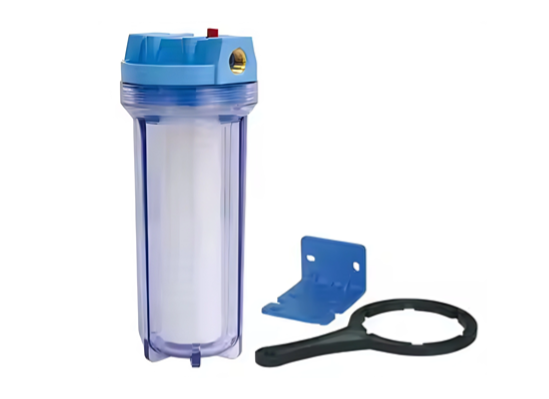
| Fluid-handling parts | Leakage, chemical attack, pressure cycling, and thread damage | Sealing faces, wall uniformity, inserts, weld lines, pressure test, and compatible resin grade |
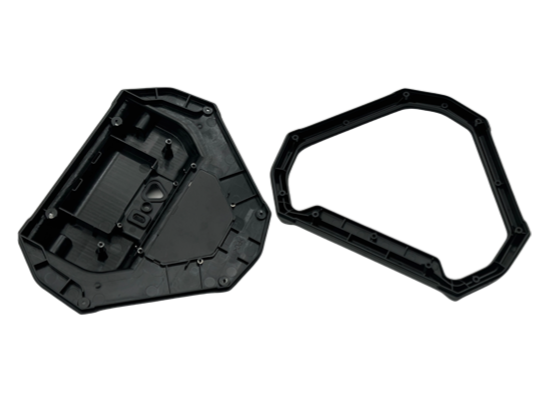
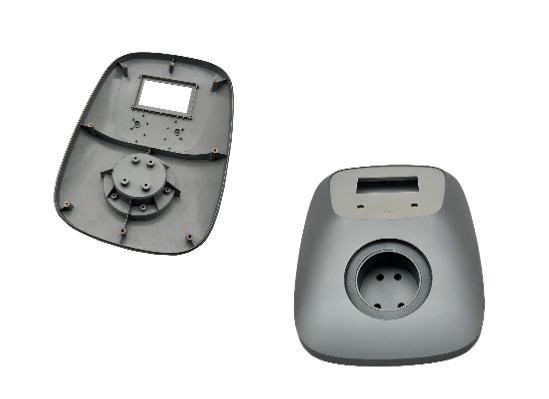
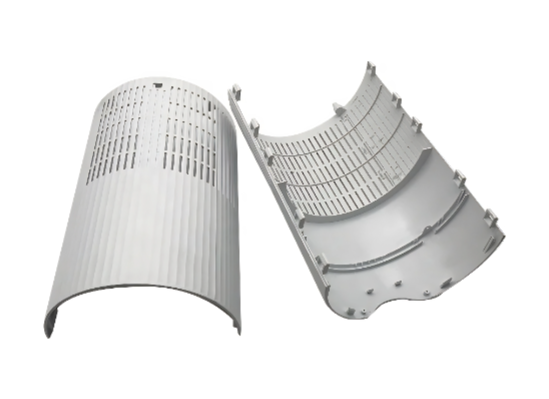
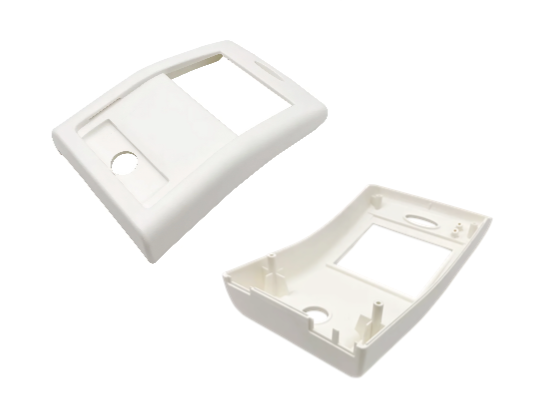
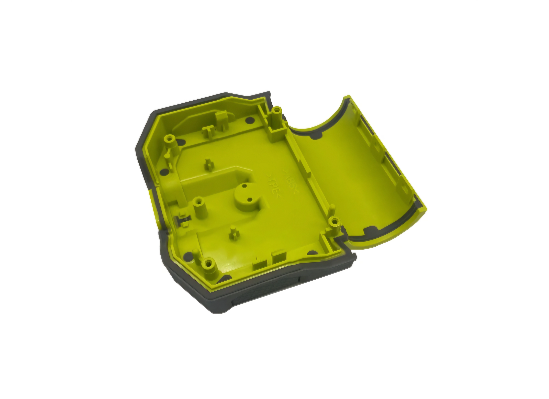
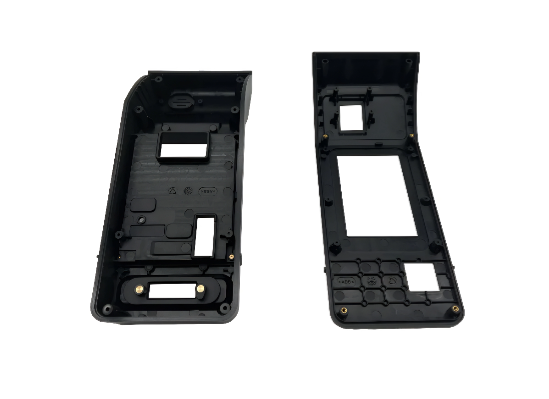
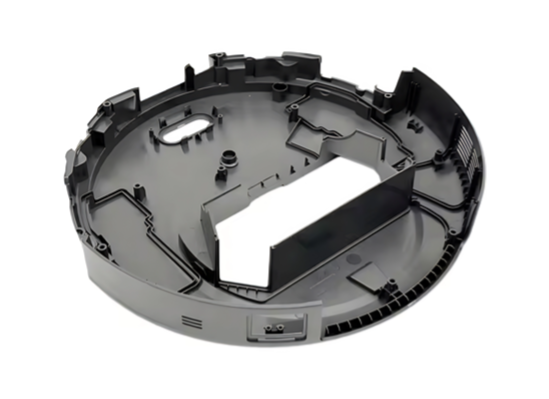
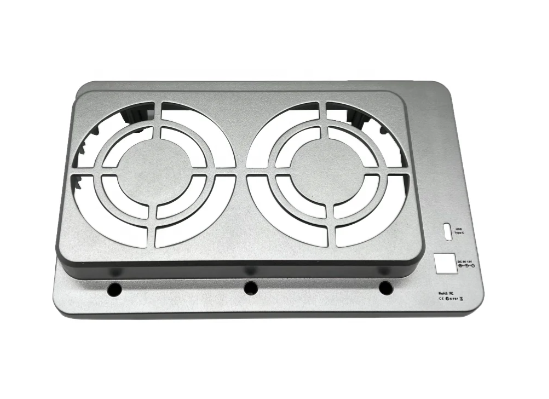
| Machine guards, covers, and housings | Impact, vibration, heat, assembly distortion, and cosmetic damage | Ribs, bosses, snap fits, fasteners, draft, ventilation, and stable mounting datums |
| Structural brackets and supports | Deflection, fatigue, fastener pull-out, and local stress | Load path, radii, fiber direction, inserts, wall transitions, and fixture-based inspection |
Material selection by load, friction, chemical exposure, and temperature
Material selection should use the complete operating window rather than a single tensile-strength value. Reinforcement can improve stiffness while increasing anisotropic shrinkage, abrasive wear on tooling, and sensitivity to gate location. Unfilled grades may give better impact or surface behavior but can require a different section design and support strategy.
| Candidate family | Where it may fit | Points to verify before release |
|---|
| PA6 or PA66, including reinforced grades | Brackets, guides, housings, and machine components needing strength and wear resistance | Moisture conditioning, dimensional change, fiber direction, temperature, and chemical compatibility |
| POM or acetal | Low-friction guides, bushings, rollers, and precision moving interfaces | Load-speed combination, creep, mating material, lubrication, and molding shrinkage |
| PPS, PEEK, or other high-temperature engineering grades | Hot zones, chemical exposure, electrical isolation, or demanding stability requirements | Required temperature rating, processing equipment, tooling wear, annealing or conditioning, and cost |
| PC, ABS, or PC/ABS | Protective housings, covers, operator-facing components, and impact-sensitive enclosures | Impact temperature, chemical cleaners, flame requirements, appearance, and stress cracking risk |
| UHMW-PE or other wear-focused grades | Low-friction wear strips, liners, and parts where impact and abrasion dominate | Machining versus molding route, creep, dimensional stability, and the actual counterface |
We can compare candidate grades against the operating temperature, media, load, expected volume, and inspection requirements in the RFQ. Where the application is safety-critical or highly chemical, the final grade and test plan should be confirmed with the resin supplier and the customer's validation requirements.
Injection molding, CNC machining, or fabrication?
The best process depends on quantity, geometry, tolerance, lead time, and how often the design may change. A machined sample can be useful for fit and function, while a molded part may be necessary to validate orientation, shrinkage, weld lines, and production assembly behavior.
| Route | Optimale Passform | Trade-offs to discuss |
|---|
| Spritzguss | Repeat production, multi-feature parts, consistent cycle-based output, and cost control at volume | Tooling investment, draft, parting line, gates, cooling, cavity balance, and design freeze |
| CNC-Bearbeitung von Kunststoffen | Low volume, large blocks, tight local features, replacement parts, and designs still changing | Material availability, machining direction, support of thin walls, burrs, and higher unit cost |
| Fabrication or assembly | Large covers, simple panels, welded or fastened structures, and one-off equipment builds | Joint strength, flatness, sealing, appearance, and repeatability between subcomponents |
For a new industrial component, we often compare a short-run machined or rapid route with the eventual molded design. That comparison should include fixture and inspection costs, not only the piece price. It should also state which dimensions can be held by each route and how the customer will approve the transition.
Tolerance, inserts, threads, and assembly DFM
Industrial equipment parts often fail at interfaces rather than across the nominal body. Start with the functional datums and mating conditions. Then separate critical dimensions from reference dimensions, allow for material movement, and decide whether a thread, metal insert, heat stake, press fit, or captured fastener is the most reliable assembly feature.
| Funktion | Common concern | DFM review action |
|---|
| Holes and locating features | Draft, shrinkage, ovality, flash, or tool wear changes the fit | Define datum references, fit class, measurement method, and whether a reaming or machining step is needed |
| Threads and fasteners | Stripped plastic, cross-threading, or excessive boss stress | Compare molded threads, self-tapping screws, brass inserts, and captured hardware for the duty cycle |
| Sealing surfaces | Warpage, sink, weld lines, or uneven compression causes leakage | Control wall transitions, clamp support, gate location, flatness measurement, and pressure testing |
| Thin walls and ribs | Short shot, sink, distortion, or inconsistent stiffness | Balance wall thickness, rib height, draft, venting, filling direction, and cooling access |
Quality plan, traceability, and replacement interchangeability
A quality plan should match each important characteristic with a datum, method, sample frequency, and acceptance record. For molded parts, inspection should consider the time and condition of the sample because moisture, temperature, and post-mold relaxation can influence dimensions. For assemblies, functional checks can be as important as a dimensional report.
- FAI or first-off approval: inspect the drawing characteristics against the approved revision, material, cavity, and process condition.
- Control plan: identify critical dimensions, appearance points, process checks, sampling frequency, and reaction steps.
- Traceability: retain resin grade and lot, tool or cavity identification, production date, inspection result, and approved revision.
- Functional verification: check fit, motion, sealing, retention, electrical isolation, pressure, or wear as the application requires.
- Change control: review resin substitutions, tooling repairs, process changes, secondary operations, and supplier changes before release.
For replacement parts, the approved drawing and interface datums should remain the controlling reference. A supplier should be able to explain how an existing mold, a repaired mold, or a replacement tool will preserve the characteristics that make the part interchangeable.
Total cost, tooling ownership, and spare-part continuity
The lowest quoted piece price is not always the lowest equipment cost. Compare tooling, fixtures, inspection, secondary operations, packaging, scrap risk, minimum order quantities, and the cost of an unplanned line stop. For low or irregular demand, machining may avoid a tool investment. For stable demand, a well-designed mold can reduce unit cost and improve consistency.
Before approving a production route, clarify who owns the mold, where it is stored, how preventive maintenance is recorded, what happens when a cavity is repaired, and how long replacement parts can be supplied. These questions matter especially for industrial equipment that remains in service for years after the original launch.
Industrial plastic parts RFQ checklist
Send the following information with the CAD files or drawings so the supplier can respond with a useful process and inspection proposal:
- Part number, revision, annual volume, release quantity, and expected service life.
- Material preference, operating temperature, chemicals, moisture, UV, load, speed, and cleaning conditions.
- 3D CAD, 2D drawing, critical characteristics, datums, tolerance notes, surface requirements, and appearance zones.
- Mating components, fasteners, inserts, seals, clearances, assembly sequence, and functional test requirements.
- Preferred process, acceptable prototype route, tooling expectations, cavity quantity, and tool ownership requirements.
- FAI, control plan, material certificate, traceability, sampling, packaging, and replacement-part documentation needs.
We can review the application and recommend a practical route for molded, machined, or hybrid production. Submit the CAD or drawing together with the duty cycle, mating parts, annual demand, material constraints, and required inspection evidence for a project review.
Häufig gestellte Fragen
Which plastics can replace metal in industrial equipment?
PA6 or PA66, POM, PPS, PEEK, PC/ABS, and wear-focused polyethylene grades can replace metal in selected applications. The correct choice depends on load, temperature, chemical exposure, friction, creep, electrical requirements, and the mating material. Validate the grade against the actual duty cycle rather than choosing by strength data alone.
When should an industrial part be molded instead of machined?
Injection molding is usually attractive when the design is stable, the volume justifies tooling, and consistent repeat production matters. CNC machining is often better for low quantities, large solid sections, tight local features, replacement parts, or designs that are still changing. A comparison should include tooling, fixtures, inspection, secondary operations, and unit cost.
How are industrial wear parts inspected?
Inspect the functional dimensions from the approved datums, then verify surface condition, flatness, holes, mating fit, and any wear-related geometry. Depending on the feature, use calibrated gauges, CMM, optical measurement, a functional fixture, or a wear test. Record the material, conditioning state, sample size, and acceptance result.
What production volume justifies injection molding tooling?
There is no single volume threshold. Compare the tooling and maintenance cost with the expected machined or fabricated piece cost, the required consistency, the design life, and the cost of downtime. A simple part with stable demand may justify tooling early, while a complex part with uncertain demand may benefit from a staged route.
What belongs in an industrial parts RFQ?
Include the CAD and drawing revision, material and service conditions, load and duty cycle, mating parts, tolerances and datums, annual demand, preferred process, tooling ownership, inspection records, packaging, and replacement strategy. Clear application information allows the supplier to explain material, DFM, tooling, inspection, and production risks before quotation.
Related engineering resources: custom plastic parts manufacturing, injection molding services, CNC-Bearbeitung von Kunststoffen, und plastic parts inspection and metrology.