
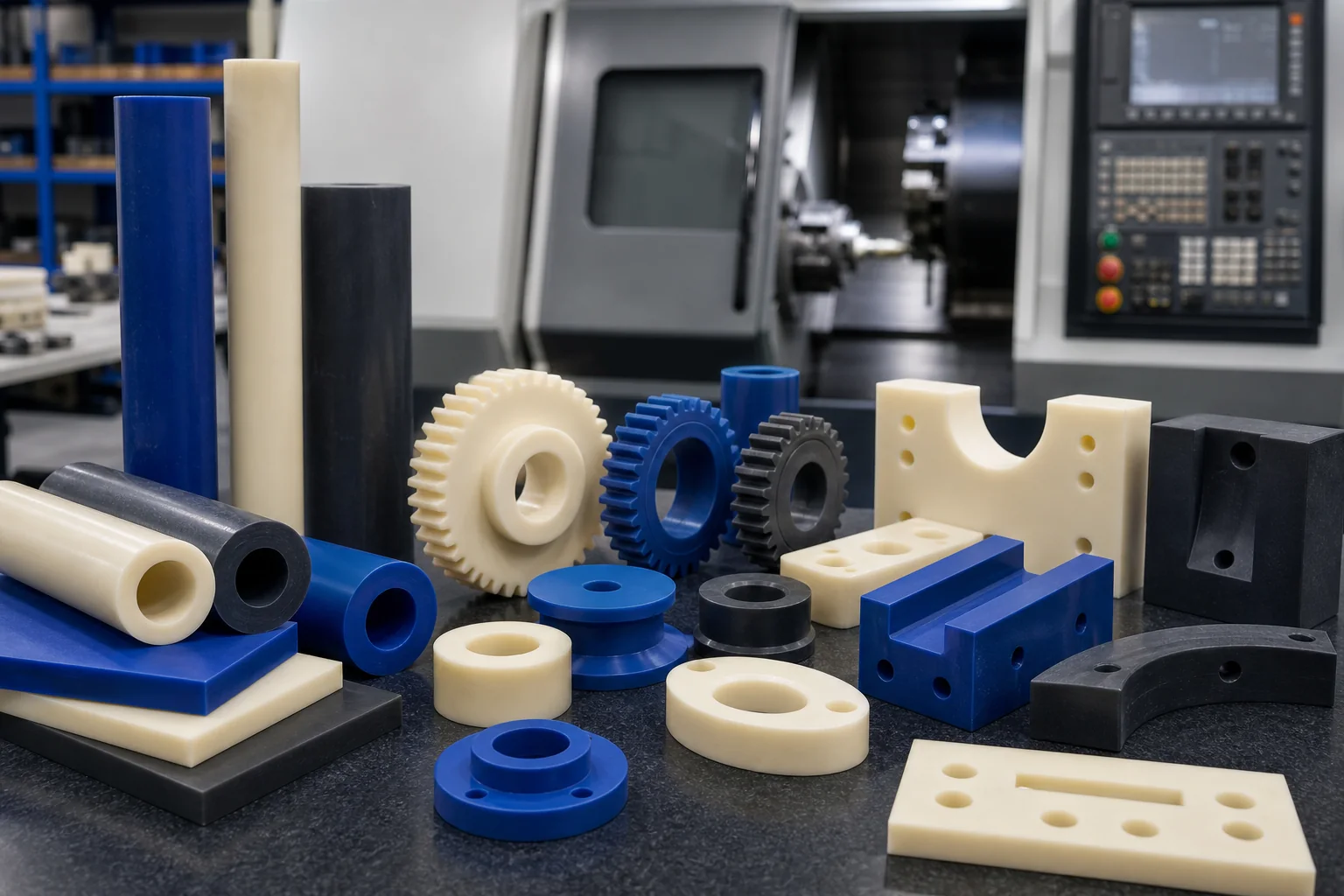
Bearbeitungsdienstleistungen für Nylatron Wir fertigen Zahnräder, Rollen, Scheiben, Buchsen, Lagerplatten, Führungsblöcke und andere Verschleißteile aus einer Produktfamilie von Hochleistungs-Nylon-Halbzeugen. Die Auswahl der besten Sorte erfolgt anhand von Anforderungen hinsichtlich Belastung, Drehzahl, Schmierung, Stoßbelastung, Feuchtigkeit, Temperatur und Maßhaltigkeit und nicht allein anhand der Farbe.
„Nylatron“ ist ein von der Mitsubishi Chemical Group verwendeter Handelsname für verschiedene Nylonwerkstoffe; es handelt sich dabei nicht um eine einzige, universell einsetzbare Kunststoffsorte. Käufer sollten vor dem Kauf von Lagerware die genaue Sorte angeben oder ein gleichwertiges Material auf der Grundlage dokumentierter Eigenschaften genehmigen.
Für Einkäufer von Förder-, Hebe-, Verpackungs- und Industrieanlagen
Wann sich bearbeitetes Nylonguss als die richtige Wahl erweist
Verwenden Sie bearbeitetes Nylongussmaterial, wenn ein Bauteil eine höhere Belastbarkeit und Steifigkeit als UHMW erfordert, dabei aber die vorteilhaften Eigenschaften hinsichtlich Verschleißfestigkeit, Schlagfestigkeit und Geräuschdämpfung beibehalten werden sollen.
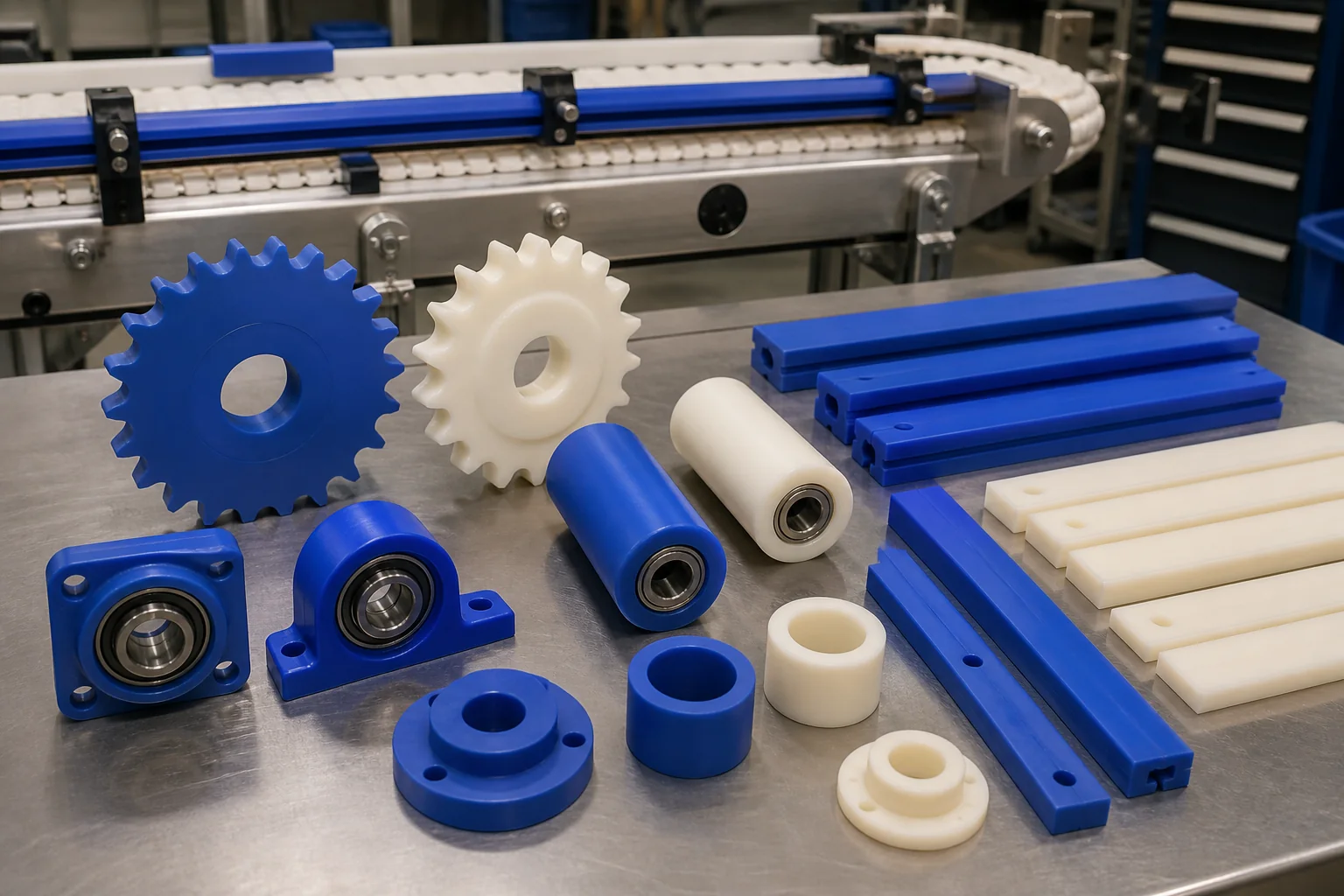
- Am besten geeignet für: große Zahnräder, Rollen, Scheiben, Auflagen, Führungen und austauschbare Lagerkomponenten
- Notenpriorität: Unterscheidung zwischen ungefüllten, schmierstoffmodifizierten, mit MoS₂ gefüllten und anderen Verschleißsorten je nach Einsatzzweck
- Priorität bei der Gestaltung: Feuchtigkeit, thermische Ausdehnung, Kriechen und Spannungen durch Presspassung berücksichtigen
Nylatron-Typen und Anwendungsübersicht
| Entscheidungspunkt | Gussnylon – Zusammenfassung | Hinweis für Käufer |
|---|---|---|
| Gradidentität | Nylatron umfasst mehrere Standardtypen auf PA6- und PA66-Basis | Fordern Sie die genaue Güteklasse und das aktuelle Datenblatt an |
| Verschleißverhalten | Geeignet für zahlreiche Gleit-, Roll- und Lageranwendungen | Druck, Drehzahl, Gegenmaterial und Schmierung bestätigen |
| Feuchtigkeitsreaktion | Nylon nimmt Feuchtigkeit auf und kann sich dadurch verziehen. | Feuchtigkeits-, Eintauch- und Prüfbedingungen im staatlichen Dienst |
| Teilegröße | Gussteile aus Nylon eignen sich für große Zahnräder, Rollen und Near-Net-Shapes | Vergleich von Materialzugabe, Bearbeitungszugabe und Jahresbedarf |
| Toleranz | Mit einer materialorientierten Strategie sind funktionale Anpassungen möglich | Wenden Sie Metalltoleranzen nicht auf jedes Maß an |
Auswahl der Güteklasse vor der Bearbeitung von Nylatron
Ein ungefüllter PA6-Typ ist ein gängiger Ausgangspunkt für allgemeine mechanische Bauteile. Mit Schmierstoffen modifizierte oder mit MoS₂ gefüllte Typen können das Reibungs- und Verschleißverhalten unter bestimmten Betriebsbedingungen verbessern, während PA66-basierte Werkstoffe ein anderes Gleichgewicht zwischen Steifigkeit, Temperaturverhalten und Feuchtigkeitsverhalten bieten können. Die Farbe des Typs ist kein Ersatz für die Herstellerbezeichnung.
Die Mitsubishi Chemical Group beschreibt Nylatron und Ertalon als Sortimente verschleißfester Nylon-Typen und veröffentlicht separate Datenblätter für die einzelnen Produkte. Ein Einkäufer sollte das aktuelle Datenblatt genau vergleichen und nicht Werte verschiedener Typen zu einer Spezifikation zusammenfassen.
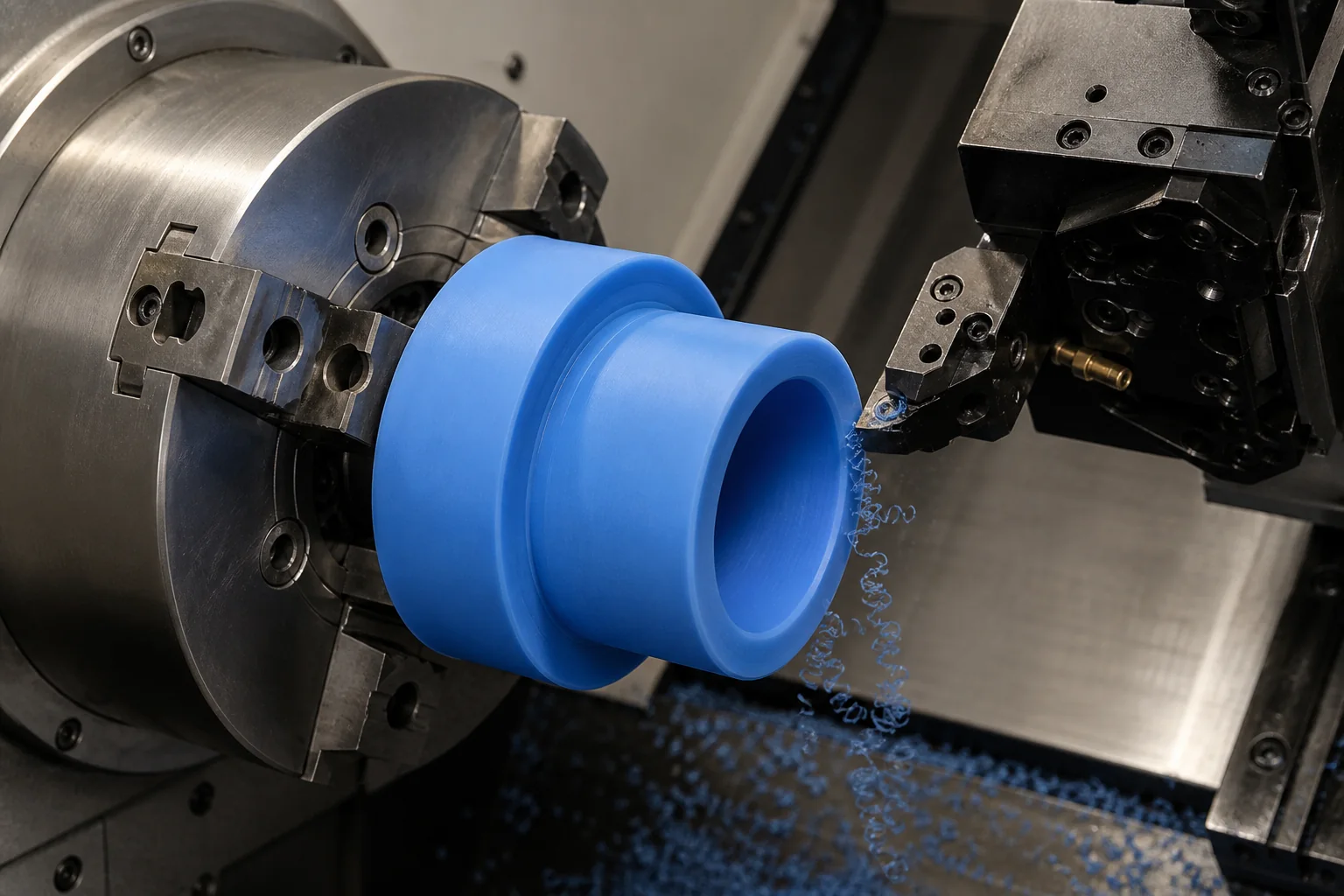
Die Bearbeitungsstrategie muss Wärmeentwicklung, Verformungen durch die Spannvorrichtung und Restspannungen berücksichtigen. Bei großen Rohlingen kann eine mehrstufige Schrupp- und Schlichtbearbeitung von Vorteil sein. Bohrungen, Presspassungen und lange Lagerflächen sollten unter Berücksichtigung der tatsächlichen Temperatur und Feuchtigkeit überprüft werden, da ein im trockenen Zustand ermitteltes Prüfergebnis möglicherweise nicht den Einbauzustand widerspiegelt.
Anwendungs- und Materialmatrix
| Anwendung | Materialausrichtung | Details zur Angebotsanfrage zur Bestätigung |
|---|---|---|
| Zahnrad oder Kettenrad | Ungefülltes oder verschleißmodifiziertes Gussnylon nach Belastungsprüfung | Drehmoment, Drehzahl, Zahnform, Gegenrad, Schmierung und Stoßbelastung |
| Rolle oder Scheibe | Für Lager- und Felgenanwendungen ausgewähltes Nylongussmaterial | Wellenpassung, Lageranordnung, Linienbelastung und Drehzahl |
| Buchse oder Lagerplatte | Schmierstoffmodifizierte oder für Verschleiß geeignete Güteklasse | PV-Bedingungen, Freiraum, Gehäuseanpassung und Betriebstemperatur |
| Verschleißleiste oder Führungsblock | Gussnylon oder UHMW nach einem Vergleich hinsichtlich Reibung und Belastung | Anpressdruck, Passfläche, Geräuschentwicklung und Austauschintervall |
| Großes Verschleißteil der Konstruktion | PA6-Rohlinge oder fast fertige Teile gießen | Rohteilgröße, Wandstärkenabweichungen, Bearbeitungszugabe und Stabilität |
Häufige Projektrisiken und praktische Lösungsansätze
| Risiko | Warum das so ist | Praktische Lösung |
|---|---|---|
| Falsche Note geliefert | In der Bestellung heißt es: ausschließlich blaues Nylon oder Nylatron | Geben Sie die vollständige Notenbezeichnung und die erforderlichen Unterlagen an |
| Die Bohrung verengt sich im Betrieb | Feuchtigkeit, Wärme oder Spannungen durch Presspassung wurden nicht berücksichtigt | Konstruktionsabstand unter Berücksichtigung der Einbaubedingungen berechnen und die Montage überprüfen |
| Ein großer Teil verändert seine Form | Restspannung und Bewegung zur Beseitigung von Ungleichgewichten bei der Bearbeitung | Stufenweise Bearbeitung, unterstützte Werkstückspannung und Stabilisierung einsetzen |
| Die Lebensdauer ist kürzer als erwartet | Angaben zu Belastung, Drehzahl, Ausrichtung oder Passfläche wurden nicht mitgeteilt | Betrachten Sie das gesamte tribologische System und nicht nur das Harz allein. |
| Der Kurs liegt über den Erwartungen. | Das ausgewählte Rohteil führt zu einer geringen Materialausbeute | Vergleichen Sie Optionen für Rohre, Platten, Stangen, Gusszugaben und Near-Net-Teile |
Nylatron im Vergleich zu POM, UHMW und PEEK für Verschleißteile
POM zeichnet sich in der Regel durch eine geringere Feuchtigkeitsaufnahme und eine hohe Formstabilität für Präzisionsmechanismen aus, während Gussnylon in vielen Anwendungsbereichen für größere Bauteile sowie höhere Stoß- oder Lagerbelastungen geeignet ist. UHMW bietet oft eine geringere Reibung und ein ausgezeichnetes Schlagverhalten, ist jedoch weniger steif. PEEK eignet sich für anspruchsvollere Temperatur- und chemische Bedingungen, ist jedoch mit deutlich höheren Materialkosten verbunden.
Die richtige Wahl hängt von der Verschleißpaarung, der Belastung, der Geschwindigkeit, der Temperatur, der Feuchtigkeit, der Geometrie und der Wirtschaftlichkeit des Austauschs ab. Bei einem Beschaffungsvergleich sollten für jedes in Frage kommende Material dieselben Annahmen hinsichtlich des Arbeitszyklus und der Toleranzen zugrunde gelegt werden.
Weiterführende Lektüre
- Kunststoffwerkstoffe für Wälzlager und selbstschmierende Sorten
- Maßgefertigte Kunststoffteile
- CNC-Fräsdienstleistungen für Kunststoffe
- Tabelle zur chemischen Verträglichkeit von Nylon
Häufig gestellte Fragen
Gibt es bei Nylatron nur eine Materialsorte?
Nein. Nylatron ist ein Markenname, der verschiedene Nylon-Halbzeuge umfasst. Die genaue Produktbezeichnung sollte in der Angebotsanfrage und in der Bestellung angegeben werden.
Welche Teile werden üblicherweise im Rahmen der Nylatron-Bearbeitung hergestellt?
Zu den gängigen Bauteilen zählen Zahnräder, Rollen, Riemenscheiben, Buchsen, Lagerplatten, Verschleißstreifen, Führungen und große industrielle Verschleißteile.
Kann Nylatron enge Toleranzen einhalten?
Kritische Passungen lassen sich kontrollieren, doch die Toleranz hängt von der Güteklasse, der Baugröße, der Wandstärke, der Feuchtigkeit, der Temperatur, der Werkstückspannung und der Konditionierung ab.
Wie entscheide ich mich zwischen Nylatron und POM?
Wählen Sie zwischen Belastbarkeit, Schlagfestigkeit, Feuchtigkeitsbeständigkeit, Formstabilität, Verschleißverhalten und Bauteilgröße. POM eignet sich oft besonders für Präzisionsanwendungen und zeichnet sich durch eine geringe Feuchtigkeitsaufnahme aus; gegossenes Nylon eignet sich eher für größere oder hochbelastete Verschleißteile.
Welche Informationen werden für ein Angebot zur Bearbeitung von Nylatron benötigt?
Geben Sie die Zeichnung, die genaue Güteklasse, die Menge, die Belastung, die Geschwindigkeit, das Gegenmaterial, die Schmierung, die Umgebungsbedingungen, kritische Passungen und die Prüfanforderungen an.
Prüfung von Nylatron-Bearbeitungsteilen anfordern
Für Zahnräder, Riemenscheiben, Rollen, Buchsen oder Verschleißteile, die aus Nylatron spezifiziert sind, senden Sie bitte die Zeichnung und die vollständige Typenbezeichnung des Herstellers. Nylon Plastic unterstützt seit 2005 die Auswahl von technischen Kunststoffen und die kundenspezifische Fertigung; im Rahmen der Prüfung werden vor der Angebotserstellung Fragen zu Lagerbeständen, Bearbeitung, Abmessungen und Konditionierung geklärt.
Was sollte Ihre Anfrage enthalten?
- Geben Sie die genaue Klassenstufe an: Geben Sie die Herstellerbezeichnung, die Farbe und die Richtlinie zu zugelassenen Äquivalenten an.
- Definieren Sie die Aufgabe: Geben Sie die Belastungs-, Drehzahl-, Zyklus-, Passflächen-, Stoß- und Schmierbedingungen an.
- Beschreiben Sie die Umgebung: Geben Sie die Belastung durch Temperatur, Luftfeuchtigkeit, Wasser, Chemikalien, UV-Strahlung und Reinigungsmittel an.
- Wichtige Passstellen markieren: Wellen-, Lager-, Dichtungs-, Getriebe- und Befestigungsschnittstellen separat kennzeichnen.
- Erläutere die Montage: Dazu gehören Presspassungen, Anzugsmomente, Einsätze, Trennlinien und Austauschverfahren.
- Prüfbedingungen festlegen: sich über die Konditionierung, die Temperatur, die Bezugspunkte und die Anforderungen an die Berichterstattung einigen.
- Anzahl der Anteile: Prototypen, Serienproduktion und der jährliche Bedarf beeinflussen die Lagerbestandsgröße, die Lagerausstattung und die Kosten.
- Lieferung und Genehmigung: Lieferform und Herkunft, Bearbeitungszugabe, Materialdokumentation und Rückverfolgbarkeit, Musterabnahme, Bestimmungsort und Verpackung. Bei einer reinen Materialanfrage sind die genaue Güteklasse und die erforderlichen Unterlagen anzugeben.
Lassen Sie sich im Angebot die tatsächliche Herstellergüte und die Bezugsquelle, die Richtlinien für zulässige Ersatzmaterialien, die Bearbeitung, Stabilisierung oder Spannungsentlastung, die Prüfbedingungen und die Verpackung angeben. Genehmigen Sie vor dem Einkauf jegliche gleichwertige Alternative; die Angabe einer Farbe oder einer allgemeinen Nylonbezeichnung reicht nicht aus. Vereinbaren Sie die Einbaupassung oder die Funktionsprüfung getrennt von der Materialdokumentation. Nylatron ist eine Werkstofffamilie der Mitsubishi Chemical Group; die Auswahl der Sorte bedeutet nicht automatisch die Freigabe der fertigen Baugruppe.

