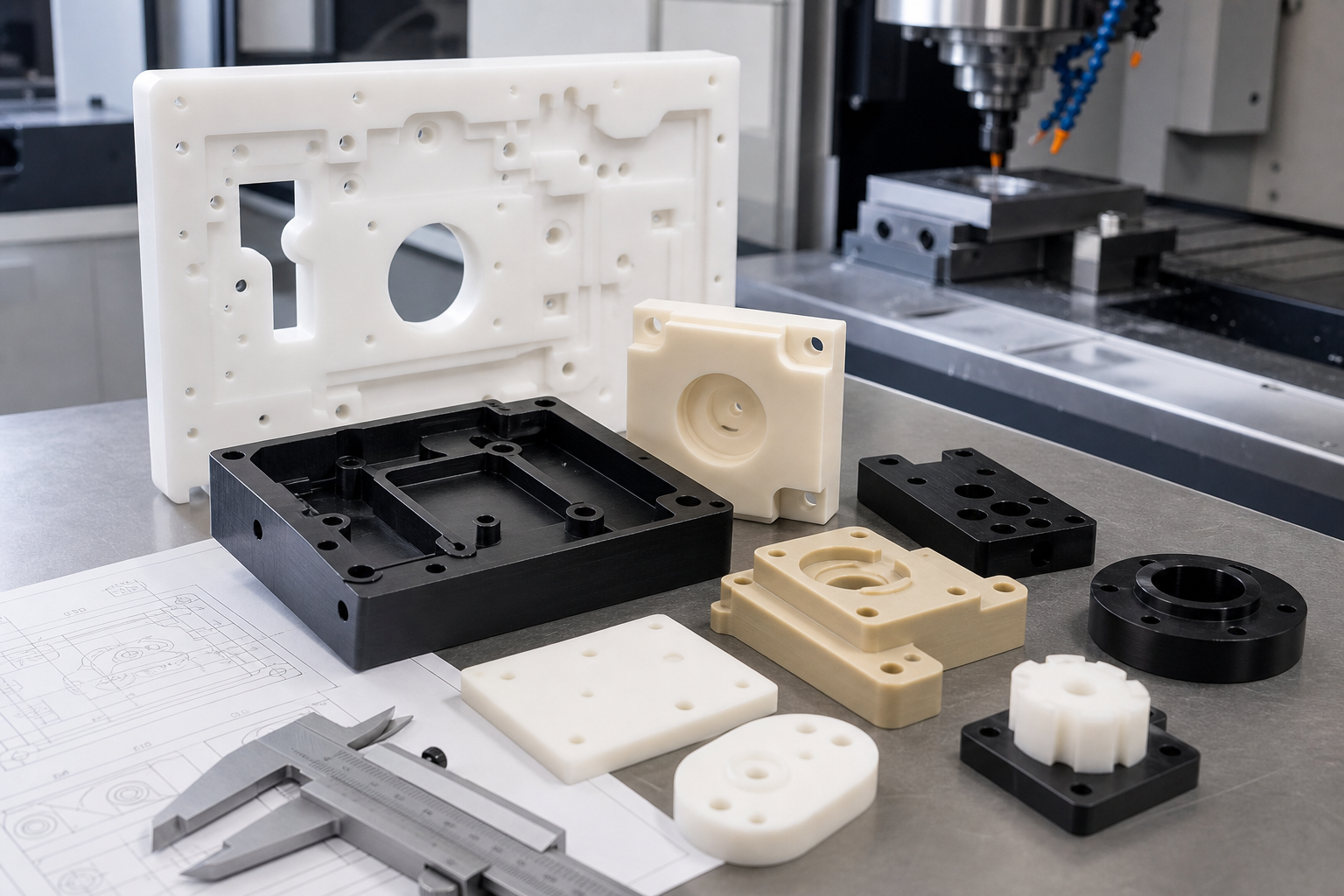
CNC-Fräsarbeiten für Kunststoffe werden für maßgefertigte flache, prismatische und mehrseitige Kunststoffbauteile eingesetzt, die eine höhere Genauigkeit, sauberere Kanten oder eine schnellere Fertigung erfordern, als dies bei Spritzgussteilen möglich ist. Einkäufer vergleichen das Fräsen von Kunststoffen in der Regel mit dem Drehen, dem 3D-Druck und dem Spritzguss, je nach Geometrie und Stückzahl.
Das beste Ergebnis erzielt man, wenn man das Bauteil auf den richtigen Kunststoff, die richtige Spannvorrichtung und den richtigen Toleranzplan abstimmt. Ein Fräsdienstleister, der Kunststoff wie Aluminium behandelt, verursacht häufig Probleme durch Wärmeentwicklung, Grate oder Verformungen, die bereits in der Angebotsphase hätten vermieden werden müssen.
Für maßgefertigte Kunststoffteile
Wann das Fräsen die richtige Wahl ist
Entscheiden Sie sich für das Fräsen, wenn das Bauteil plattenförmig, mehrseitig, prototypenlastig oder in geringer Stückzahl gefertigt wird und der Einsatz einer Form nicht gerechtfertigt ist. Vergleichen Sie das Fräsen mit dem Drehen bei runden Bauteilen und mit dem Formguss, wenn das Jahresvolumen steigt.
- Ideal geeignet für Armaturen, Verteiler, Abdeckungen, Elektroplatten und Kunststoff-Bausteine
- Verwenden Sie eine materialspezifische Strategie für POM, Nylon, PTFE, PEEK und Acryl
- Toleranzen sollten anhand der jeweiligen Funktion festgelegt werden und nicht anhand der standardmäßigen engen Bearbeitungswerte
Auf einen Blick
| Entscheidungspunkt | Zusammenfassung zum Fräsen | Hinweis für Käufer |
|---|---|---|
| Geometrie | Ideal für prismatische und vielflächige Werkstücke | Große flache oder mit Aussparungen versehene Teile kommen häufig vor |
| Umfang | Besonders geeignet für Prototypen und wiederkehrende Kleinserien | Formteilprüfung bei steigender Jahresmenge |
| Materialauswahl | Die Art des Kunststoffs beeinflusst das Verhalten in Bezug auf Wärme, Grate und Befestigung | Gehen Sie nicht davon aus, dass sich alle Kunststoffe auf dieselbe Weise schneiden lassen |
| Toleranz | Kann präzise sein, hängt jedoch von der Geometrie und dem Material ab | Feuchtigkeit und Belastungszustand spielen bei manchen Kunststoffen nach wie vor eine Rolle |
| Optimale Passform | Funktionale Sonderteile ohne Vorlaufzeit für den Werkzeugbau | Nützlich für Pilotversionen und technische Änderungen |
Werkstoffauswahl für das Fräsen von Kunststoffen
POM, nylon, PTFE, PEEK, acrylic, HDPE and UHMW all machine differently. Some cut cleanly and hold shape well. Others move under heat, burr easily or respond poorly to clamping. Good suppliers choose the plastic and workholding strategy together rather than treating Materialauswahl as a separate question.
Beispielsweise muss bei Nylon möglicherweise stärker auf Feuchtigkeit und den zeitlichen Ablauf der Maßveränderungen geachtet werden, bei Acryl ist eine konsequente Vermeidung von Rissen erforderlich, bei PTFE ist eine sanftere Spannlogik nötig und bei PEEK muss die Kostenrechtfertigung überzeugender sein.
Häufige Risiken beim Fräsen von Kunststoff und praktische Lösungen
| Risiko | Warum das so ist | Praktische Lösung |
|---|---|---|
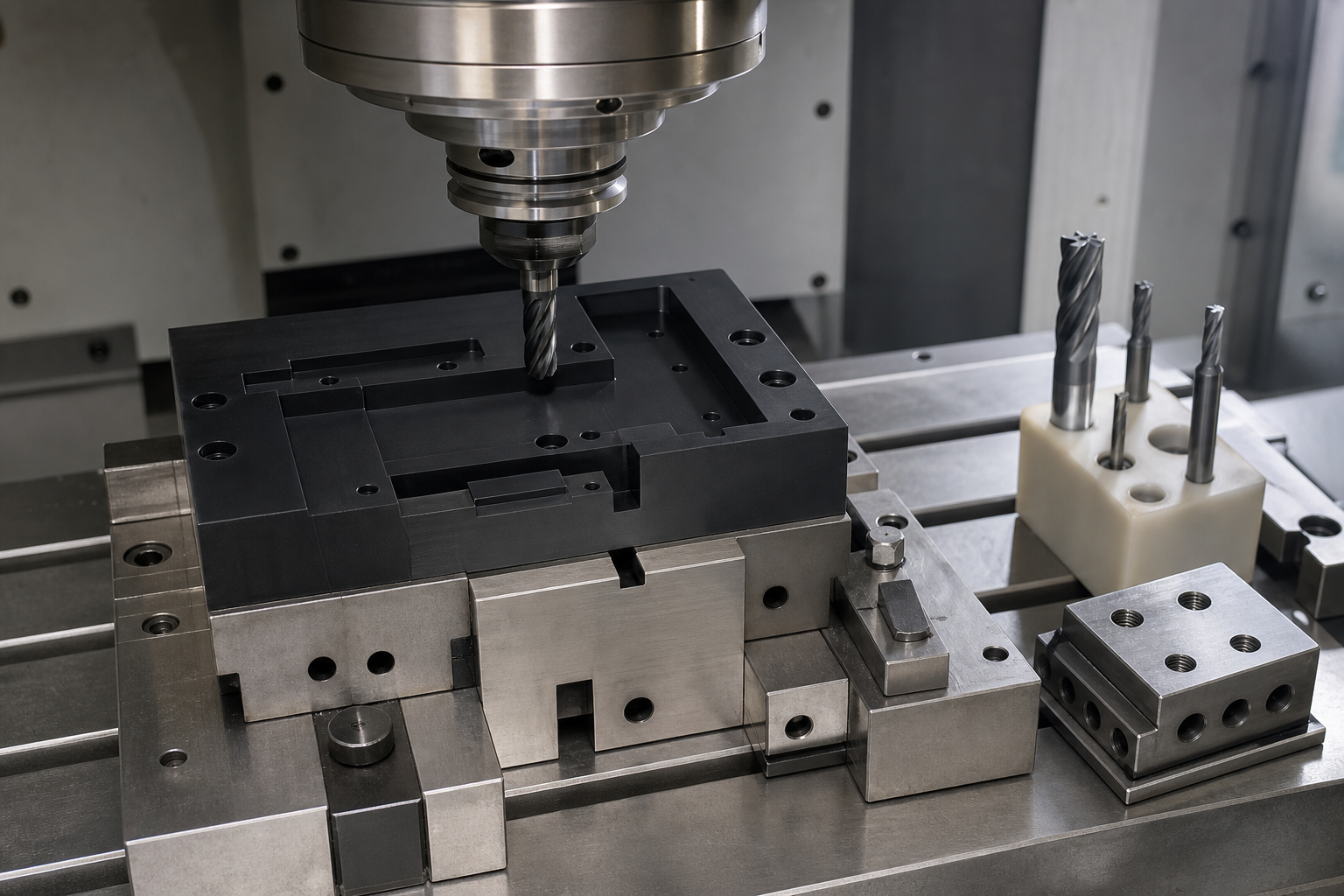
| Geschmolzene Kante oder mangelhafte Verarbeitung | Wärmeentwicklung durch falsche Zuführungen oder Werkzeuge | Verwendung von kunststoffspezifischen Werkzeugen und einer entsprechenden Spanabfuhrstrategie |
| Teilverzerrung | Dünne Wände oder der Klemmdruck versetzen das Bauteil in Bewegung | Verbesserung der Werkstückspannung und des Bearbeitungsablaufs |
| Unerwartete Toleranzabweichung | Materialbewegungen oder zu restriktive Annahmen bei der Angebotserstellung | Kritische Abmessungen nach Funktion und Materialverhalten definieren |
| Falscher Prozess ausgewählt | Fräsen, das zur Herstellung von Geometrien eingesetzt wird, die sich besser zum Drehen oder Formen eignen | Prüfen Sie das Bauteil frühzeitig im Hinblick auf alternative Fertigungsverfahren |
Verwenden Sie die Leitfaden zu Toleranzen bei Kunststoffteilen when defining the critical dimensions and material condition for inspection.
Fräsen, Drehen und Spritzgießen von Kunststoffteilen
Milling is usually better for plates, housings, pockets and irregular prismatic features. Drehen is more efficient for rotational parts. Molding wins when volume is high enough and the design is stable enough to justify tooling. The supplier should help compare these routes instead of forcing a single process answer.
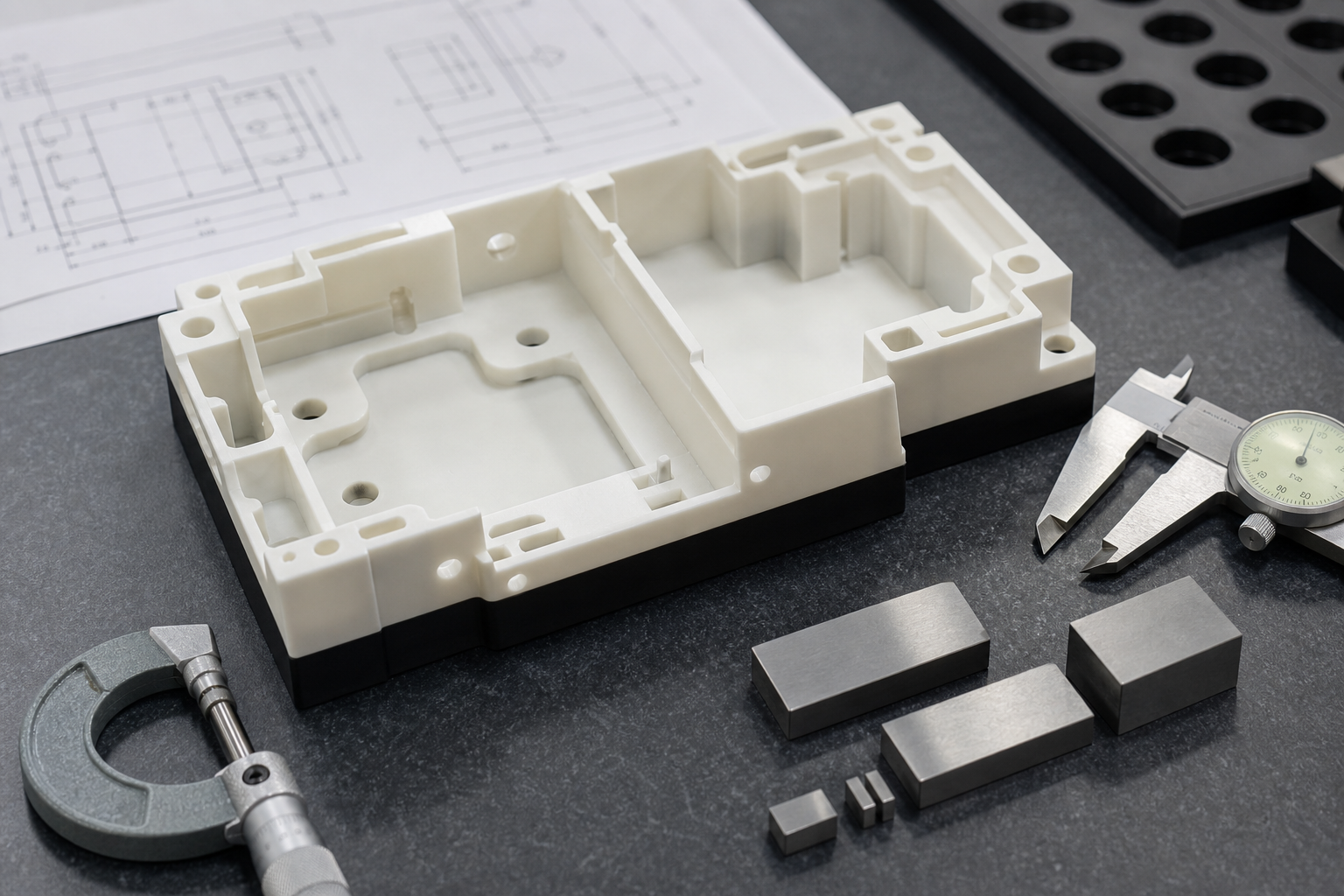
What Makes a Plastic Milling RFQ Comparable
| Angaben zur Angebotsanfrage | Why It Changes the Result | What to Provide |
|---|---|---|
| Material and stock form | Plastic stiffness, moisture, grain, and stock size affect tool load and deformation | Exact grade, plate or rod size, color, and backup material |
| Kritische Geometrie | Thin walls, deep pockets, bores and small radii affect access and fixturing | Controlled drawing, datums, tolerances, and surface zones |
| Quantity and repeat plan | Setup, inspection, nesting and tooling decisions change with volume | Prototype quantity, annual demand, and reorder pattern |
| Inspection and finish | Measurement method and edge treatment must match the functional requirement | FAI or report needs, appearance standard, deburring, and packaging |
Plastic milling quotes are difficult to compare when one supplier includes soft jaws, inspection, deburring, and packaging while another quotes machining only. Put the same scope and acceptance state in every RFQ.
Weiterführende Lektüre
Häufig gestellte Fragen
When is CNC milling the right route for plastic parts?
Milling is often suitable for prismatic, multi-face, pocketed, or low-volume parts that need controlled features without injection mold tooling. Quantity, geometry, material, and tolerance decide the route.
How do I avoid deformation during plastic milling?
Control workholding force, use suitable soft jaws or nests, keep tool engagement stable, allow rest or conditioning where needed, and inspect the part in a defined state.
Can reinforced nylon be CNC milled?
Yes, but PA-GF20 and PA-CF30 may increase tool wear, anisotropy, dust, and edge or surface considerations. Confirm the exact grade, stock condition, tooling, and inspection method.
What should be included in a plastic milling RFQ?
Send the CAD model, controlled drawing, exact material, quantity, critical dimensions, surface finish, deburring, inspection report, packaging, and end-use environment.
Request a CNC Plastic Milling Review
For CNC plastic milling services, share the controlled drawing and the features that determine function. Nylon Plastic can review material and stock, workholding, machining sequence and inspection alongside alternatives for the planned quantity.
Was vor der Angebotserstellung zu klären und zu vereinbaren ist
Nylon Plastic has supported material selection and finished plastic-part manufacturing since 2005. For custom CNC plastic milling, the useful review connects the drawing, material, tooling or machining route, inspection state, and production plan before a quote is approved.
- Include CAD, revision, exact material and permitted alternatives, prototype and repeat-order quantities, annual demand, destination and target timing.
- Mark functional datums, flatness, bores, thin walls, deep pockets, surface zones and acceptable clamp marks; define free-state or assembled measurement.
- State inserts, edge treatment, finishing, appearance reference, first-article records, packaging and sample acceptance responsibility.
Compare programming, stock preparation, fixtures or soft jaws, machining, secondary operations and inspection on the same drawing. Agree which critical features are measured and in what material condition before approving recurring parts.