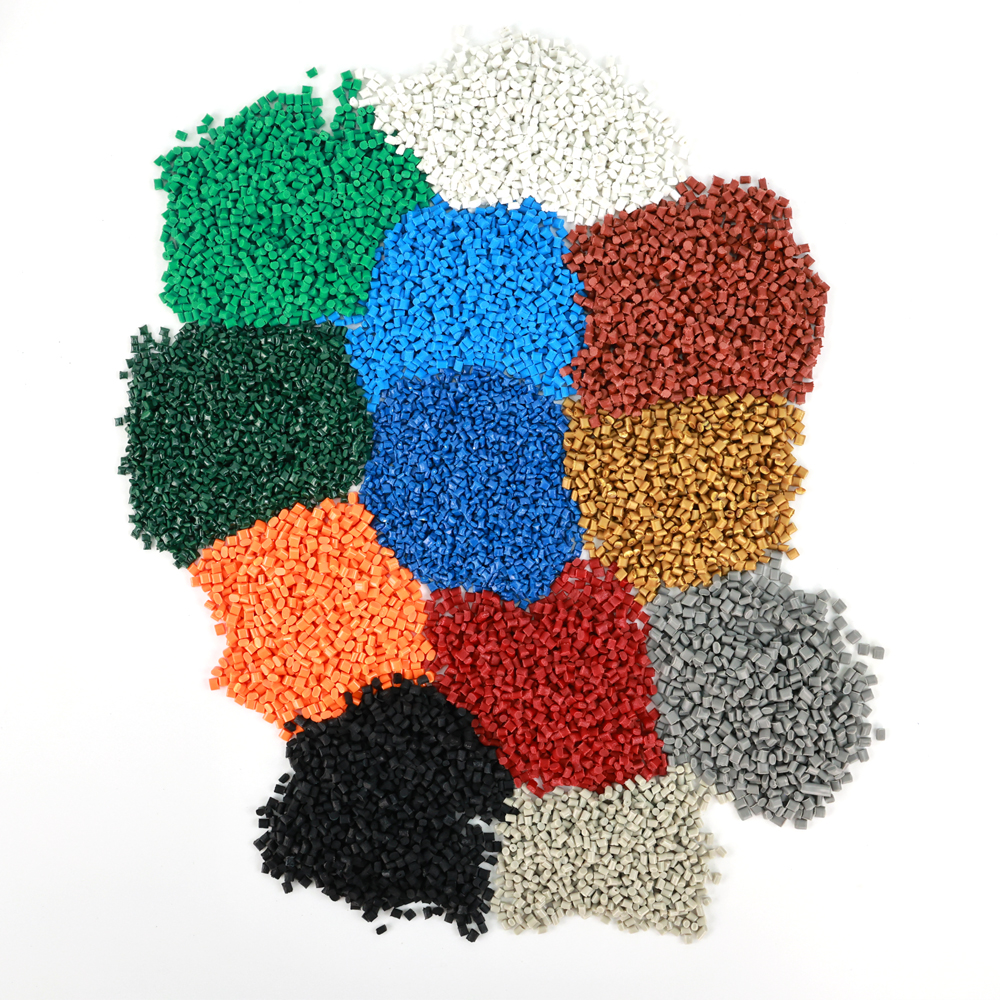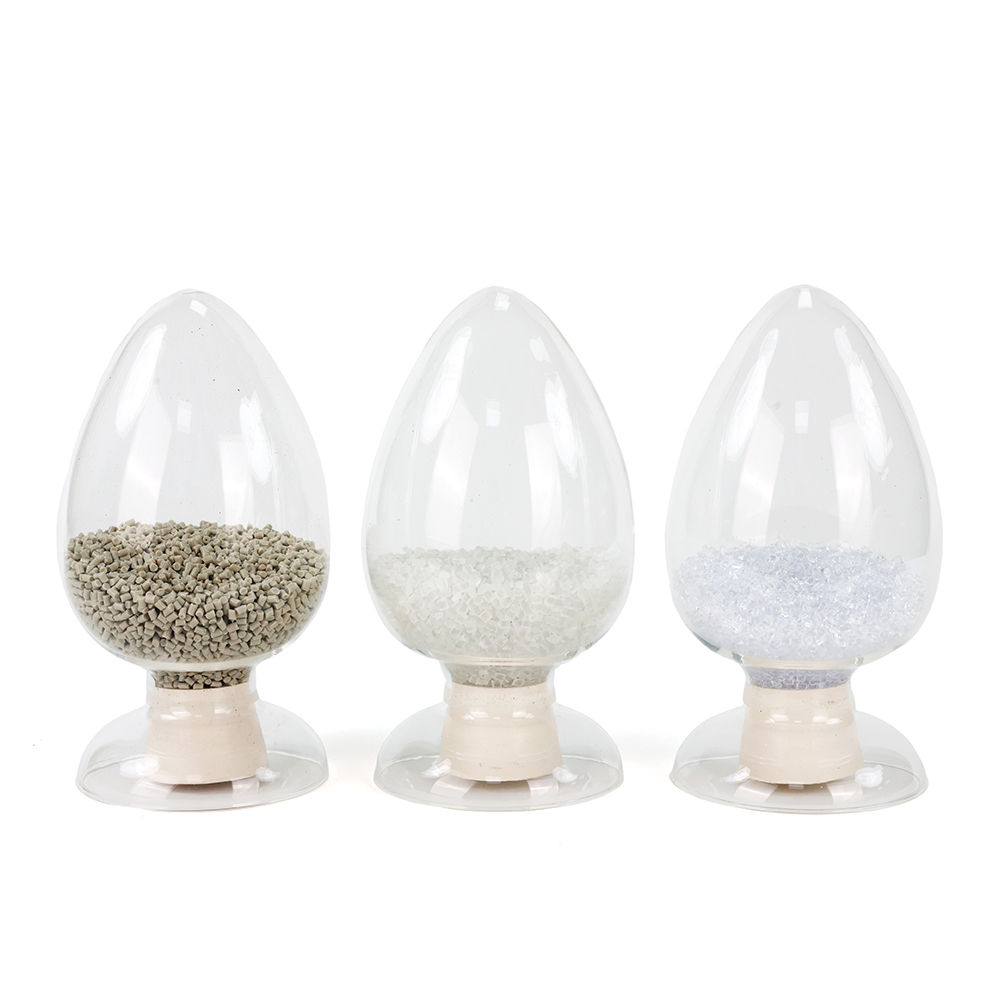

Choosing an ESD plastic is not simply a matter of asking for “anti-static nylon.” The correct material depends on electrical resistance, charge environment, mechanical load, humidity, wear, color, molding process and how the finished part will be grounded. This guide helps procurement teams and engineers define the requirement before ordering material or molded parts.
Start with the electrical behavior you need
Anti-static, static-dissipative and conductive describe different levels of charge control. An anti-static compound is intended to reduce charge generation or accumulation. A dissipative grade allows charge to leave in a controlled way. A conductive grade provides a lower resistance path and may be required for shielding, grounding or electrical contact. The target should be written as a test method and resistance range, not only as a material name.
| Material behavior | Typical design purpose | Key questions |
|---|---|---|
| Permanent anti-static | Reduce charge build-up on handling surfaces | Will humidity, washing or surface wear change performance? |
| Static dissipative | Control discharge speed around sensitive electronics | What surface or volume resistance range is required? |
| Leitfähig | Grounding, shielding or controlled electrical contact | Where is the conductive path, and how will it connect to ground? |
Surface resistance and volume resistance are not interchangeable. A molded housing may show a suitable surface reading while the interior remains electrically different, especially after machining, coating or exposure to moisture. Ask which measurement applies, what conditioning was used, and whether the result is a nominal value or a production acceptance limit.
Compare additive and polymer routes
| Route | Vorteile | Trade-offs |
|---|---|---|
| Carbon black | Strong conductivity, broad availability and cost efficiency | Usually black; can affect impact, appearance and flow |
| Carbon fiber | Conductivity with useful stiffness and dimensional support | Visible fiber, anisotropy and possible tool wear |
| Carbon nanotube or hybrid filler | Lower filler loading and more design flexibility in some grades | Higher material cost and greater process validation |
| Permanent antistat | Can preserve lighter appearance and softer electrical response | Performance may depend on humidity, migration and surface condition |
Nylon is useful where strength, wear resistance and temperature capability matter, but absorbed moisture can change dimensions and electrical readings. PC, ABS, POM, PP and high-temperature polymers can also be formulated for ESD control. Select the base polymer first for load, heat, chemicals and processing; qualify the electrical package in the finished geometry.
Design and processing risks
Filler orientation can make resistance vary by direction, particularly in injection-molded parts with long flow paths, ribs or weld lines. Gate location, packing, fiber alignment and local wall thickness can affect the measured result. A carbon-filled compound may meet a specification in a test plaque but miss it at a thin corner or across an insulating insert.
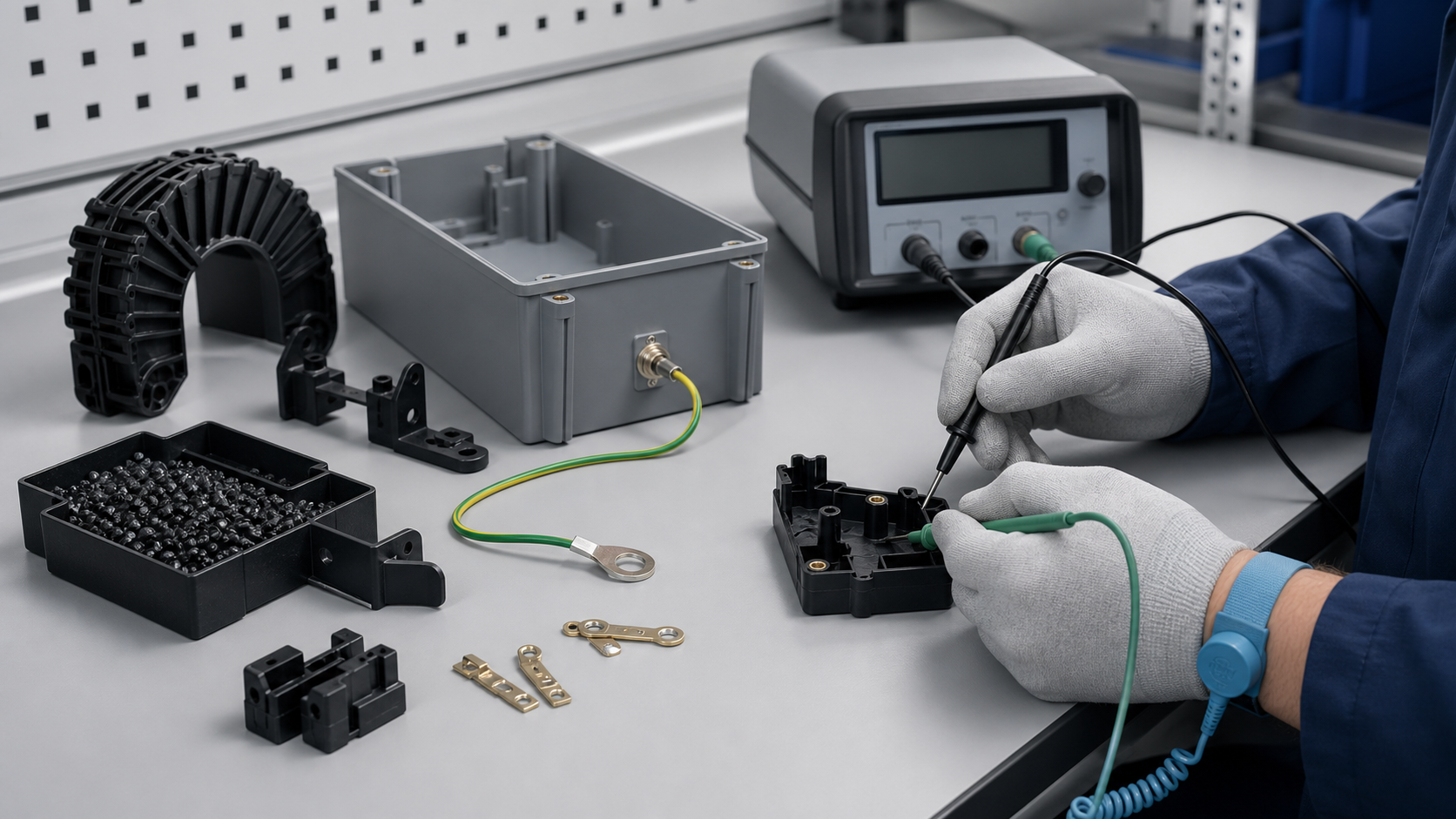
Surface texture, machining, polishing, paint, labels and assembly adhesives can interrupt the intended path. If grounding is required, define a metal contact, plated feature, conductive insert or approved grounding interface in the drawing. A dissipative housing that is never connected to ground may control charge accumulation but cannot replace a complete ESD protection design.
Wear and contamination also matter. Repeated sliding can expose a different filler concentration or create debris. Oils, cleaning agents and dust can change surface readings. Validate the finished part after representative handling, cleaning and aging instead of accepting only an incoming pellet certificate.
For assemblies with metal inserts or fasteners, measure the electrical path after assembly as well as on the plastic alone. Contact pressure, oxide films, paint overspray and loose tolerances can make a good material appear ineffective in the final product. Identify the contact location and the condition in which the assembly must pass.
Test planning and supplier documentation
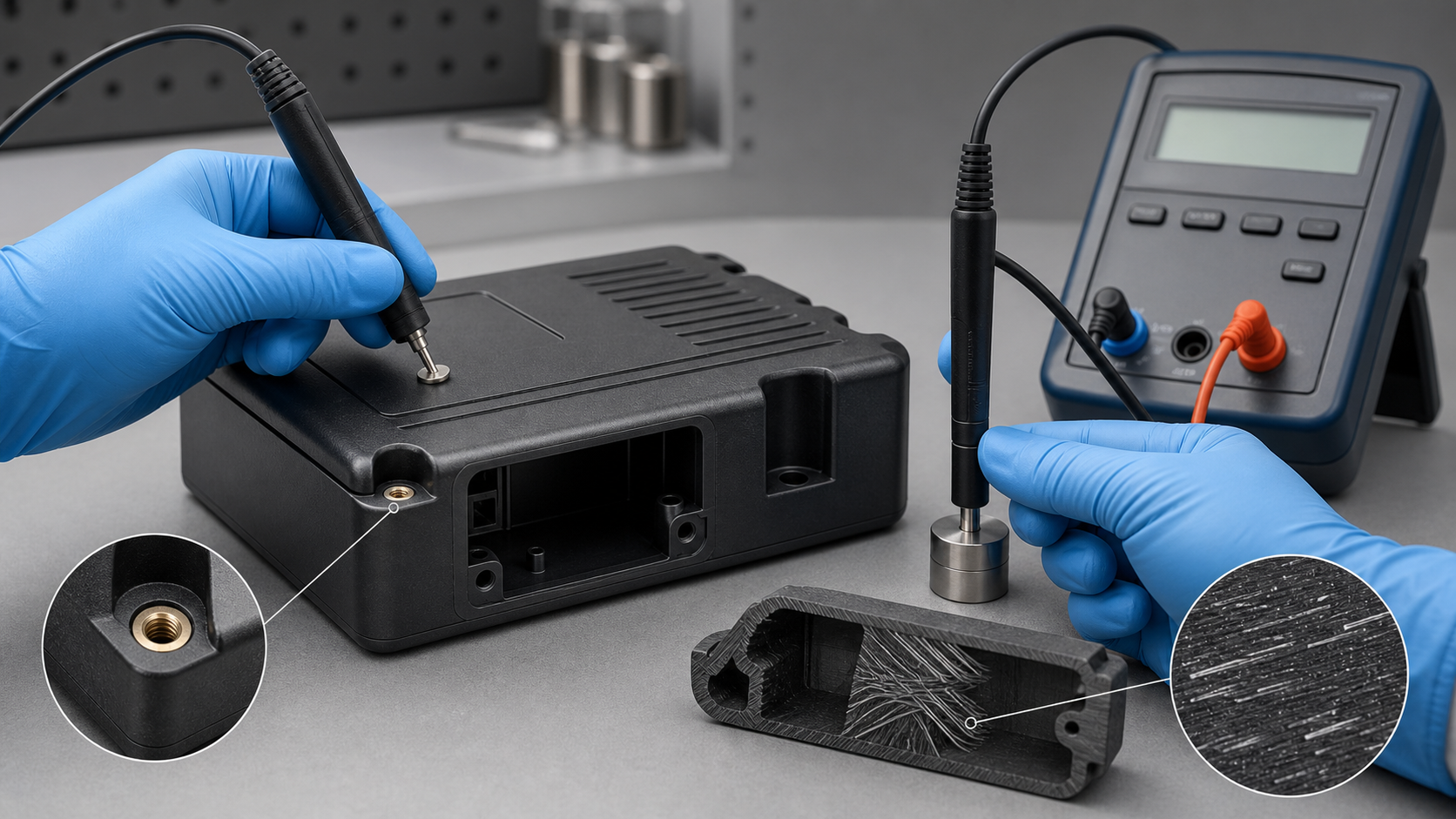
IEC 61340 methods, ANSI/ESD practices and customer-specific procedures may use different electrodes, conditioning times, applied voltages and acceptance limits. Put the required standard, sample preparation, humidity and pass/fail range on the RFQ. Ask for the grade datasheet, lot traceability, process route, test location and calibration status of the instrument.
- Define surface resistance, volume resistance or both.
- State the resistance range and the test standard.
- Identify temperature and relative humidity for conditioning.
- Specify color, filler visibility, surface finish and allowable contamination.
- Require testing on production parts or agreed representative coupons.
- Confirm how inserts, coatings and grounding contacts are handled.
RFQ checklist for ESD plastic parts
Send the 3D model, drawing, polymer family, electrical target, service environment, expected handling cycles, mating materials, grounding concept, annual volume and inspection plan. Tell the supplier whether the part is a tray, fixture, enclosure, connector carrier, wafer-handling component or protective packaging element. We can review material and process together, identify measurement locations and recommend a pilot validation plan before production approval.
Conductive plastics should be specified by resistance range, humidity condition, grounding method, mechanical load and the test method used for lot release.
For the broader material decision, review our plastic material guide und nylon injection molding guide.
Häufig gestellte Fragen
Is anti-static the same as ESD-safe?
No. Anti-static describes charge behavior, while ESD-safe performance depends on resistance, discharge control, grounding, geometry and the complete handling system.
Should I specify surface or volume resistance?
Specify the measurement that matches the application. Surface resistance is useful for exposed handling surfaces; volume resistance helps evaluate a bulk conductive path. Some designs need both.
Can ESD nylon be any color?
Some permanent antistat and lower-loading formulations can support lighter colors, but highly conductive carbon-filled grades are commonly dark. Confirm the available grade before fixing the appearance requirement.
Will humidity change conductive nylon performance?
It can change nylon dimensions and electrical readings. Condition and test parts at the humidity range expected in use, and do not rely only on a dry laboratory value.
What should be included in an ESD plastic RFQ?
Include the resistance range, test method, conditioning, grounding concept, polymer and filler preferences, geometry, finish, volume and production-part inspection requirements.