FDA-konformes Spritzgießen beginnt mit der Frage, die Ingenieure tatsächlich beantworten müssen: Womit kommt das Bauteil in Berührung, wie lange dauert diese Berührung, und welche Nachweise benötigen wir, wenn später jemand danach fragt?
Das bedeutet, dass es beim ersten Durchlauf nicht nur um die Auswahl des Harzes geht. Es geht um die Materialdokumentation, die Prozesskontrolle, die Reinigung, die Verpackung und darum, ob der Lieferant auch nach Abschluss der Bemusterung und Beginn der Produktion das gleiche Ergebnis gewährleisten kann.
FDA-konformes Kunststoffspritzgießen auf einen Blick
| Entscheidungsbereich | Was ist zu überprüfen? | Warum das wichtig ist |
|---|---|---|
| Anwendung | Lebensmittelkontakt, Medizin, Verpackung, Gerätegehäuse, Halterung oder berührungsfreies Bauteil | Unterschiedliche Verwendungszwecke erfordern unterschiedliche Nachweise |
| Material | Genaue Angabe der Harzsorte, Farbe, des Additivpakets und des Lieferanten | Die Einhaltung der Vorschriften hängt von der Güteklasse und der Zusammensetzung ab |
| Werkzeugbau | Trennfuge, Anguss, Auswerfer, Entlüftung und Oberflächengüte | Die Konstruktion der Werkzeuge beeinflusst die Qualität und das Kontaminationsrisiko |
| Prozess | Trocknung, Formung, Chargenkontrolle und Prüfung | Ein stabiler Prozess verringert Schwankungen |
| Dokumente | Werkstoffzertifikat, Prüfbericht, Chargenprotokolle, Zeichnungsrevision | Die Aufzeichnungen müssen mit dem Qualitätssicherungssystem des Käufers übereinstimmen |
Was die Einhaltung der FDA-Vorschriften im Kunststoffspritzguss bedeutet
Der FDA-konforme Kunststoffspritzguss beginnt in der Regel mit der Materialauswahl. Ein Kunststoff kann für eine bestimmte Sorte, Farbe und ein bestimmtes Additivpaket über eine Zulassung für den Kontakt mit Lebensmitteln oder für medizinische Anwendungen verfügen. Das bedeutet jedoch nicht automatisch, dass jedes Spritzgussteil für jede Anwendung zugelassen ist.
Käufer sollten die geltenden Vorschriften, die Kontaktbedingungen, die Temperatur, die chemische Beanspruchung, gegebenenfalls die Sterilisationsmethode sowie die für ihr internes Qualitätssicherungssystem erforderlichen Unterlagen angeben.
Materialauswahl und Dokumentation
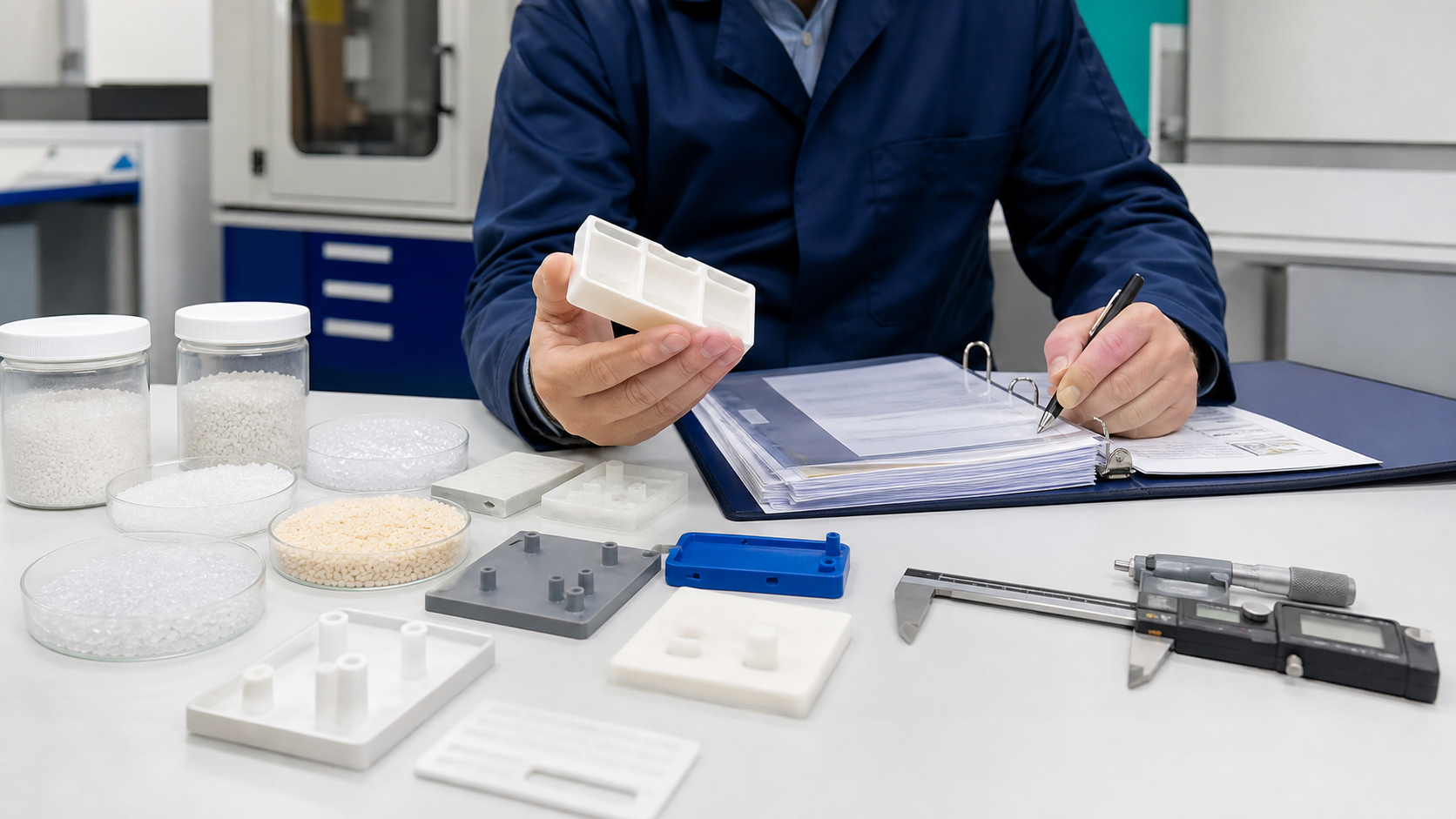
Zu den gängigen Werkstoffen für regulierte Kunststoffteile zählen je nach Verwendungszweck unter anderem PP, PE, PC, POM, Nylon, PEEK, PPSU oder andere technische Kunststoffe. Entscheidend ist dabei nicht nur die Polymerfamilie, sondern auch die genaue Typenbezeichnung und die dazugehörigen Unterlagen.
- Bitte klären Sie, ob naturbelassenes, weißes, schwarzes oder farbiges Material zulässig ist.
- Prüfen Sie, ob Zusatzstoffe, Glasfasern oder Farbstoffe Auswirkungen auf die erforderlichen Unterlagen haben.
- Fordern Sie vor der Einführung eines Tools die entsprechenden Unterlagen an, wenn die Einhaltung der Vorschriften von entscheidender Bedeutung ist.
- Sorgen Sie dafür, dass die genehmigte Qualität während der Validierung und in der Produktion konstant bleibt.
Überlegungen zur Werkzeug- und Teilekonstruktion
Der Werkzeugbau für regulierte Kunststoffteile sollte vermeidbare Qualitätsrisiken reduzieren. Die Lage der Angussstellen, Entlüftungen, Auswerfer, Einfallstellen, Schweißnähte, scharfen Ecken und Trennlinien sollte im Rahmen der DFM überprüft werden. Auch die Anforderungen an das Erscheinungsbild und die Reinigungsvorgaben sollten vor dem Werkzeugbau besprochen werden.
Falls das Bauteil mit Dichtungen, Filtern, Verschlusskappen, Schläuchen oder anderen Kunststoffkomponenten montiert werden muss, geben Sie bitte bei der Angebotsanfrage die Passungsanforderungen und kritischen Maße an.
Checkliste für Lieferanten bei FDA-relevanten Spritzgussprojekten

| Punkt auf der Checkliste | Fragen Sie den Lieferanten | Käuferausgabe |
|---|---|---|
| Werkstoffgüte | Kann genau dieses Harz und genau diese Farbe dauerhaft beschafft werden? | Liste der zugelassenen Materialien |
| Dokumentation | Welche Zertifikate, Datenblätter oder Chargenprotokolle können vorgelegt werden? | Liste der erforderlichen Unterlagen |
| DFM-Prüfung | Wo bestehen Risiken in Bezug auf Senken, Schweißnähte, Angussstellen und Auswurf? | DFM-Rückmeldung vor der Werkzeugfertigung |
| Prüfung | Welche Maße und Mängel werden geprüft? | Prüfplan oder FAI-Anfrage |
| Änderungskontrolle | Wie werden Material- oder Prozessänderungen kommuniziert? | Lieferantenvereinbarung oder Bestellbestätigung |
Häufige Risiken und wie man sie verringert
| Risiko | Ursache | Reduktionsverfahren |
|---|---|---|
| Falsche Materialannahme | Nur den Namen des Polymers angeben, nicht die genaue Typenbezeichnung | Geben Sie die Güteklasse, die Farbe und die Anforderungen an das Dokument an |
| Verspätete Anforderung von Unterlagen | Datensätze, die vor der Produktion nicht definiert wurden | List certificates and reports during RFQ |
| Part defects | Poor gate, venting or wall design | Run DFM before mold cutting |
| Validation mismatch | Prototype material differs from production material | Keep material and process route consistent |
Warum Nylon-Kunststoff?
Nylon Plastic supports custom plastic injection molding, material selection, tooling review, CNC machining and 3D printing. For regulated or FDA-related applications, the team can review drawings, discuss material documentation needs and help buyers define RFQ requirements before tooling starts.
Compliance Scope Before Tooling
| Anforderung | Question to Resolve | Evidence to Define |
|---|---|---|
| Exact resin and color | Which formulation, additive package and supplier are approved? | Grade, color, TDS, COA, lot traceability and change-notice process |
| Product contact | What does the part touch, for how long and under what temperature or cleaning cycle? | Application boundary, exposure list, qualification and customer responsibility |
| Tool and process | Where could gates, weld lines, flash, sink, venting or contamination affect the part? | DFM, mold layout, process controls, inspection and cleanliness requirements |
| Production records | What must be retained for each lot or change? | Material documents, inspection reports, sample approval, traceability and deviation path |
FDA-related molding is not a blanket claim that a factory or finished part is approved. The relevant question is whether the exact resin, color, additive package, process, cleaning exposure and product use have the documentation and validation required by the buyer’s application. Define that scope before the mold or material is locked.
How Nylon Plastic Supports Regulated-Part Reviews
Nylon Plastic supports material selection, injection molding, mold review, CNC machining and 3D printing for custom plastic parts. When nylon is considered, the team can compare unfilled PA, PA-GF20 or PA-CF30 with the application environment, documentation needs and production route without treating a generic polymer name as a compliance certificate.
- Separate material compliance, manufacturing controls, product validation and customer regulatory responsibility.
- Request exact grade documents and a change-control path before approving a substitute resin or color.
- Link DFM, inspection, cleanliness, traceability, packaging and lot-release records to the same part revision.
Weiterführende Lektüre
- Dienstleistungen im Bereich Nylon-Spritzguss
- Plastic Parts Inspection and Metrology
- Leitfaden zu den Kosten im Spritzgussverfahren
Häufig gestellte Fragen
Bedeutet „FDA-konformes Spritzgießen“, dass das Werk von der FDA zugelassen ist?
Nein. Die Käufer müssen die genauen Anforderungen hinsichtlich Material, Vorschriften, Produktkontakt, Validierung und Dokumentation festlegen. Der Lieferant kann eine kontrollierte Fertigung und Dokumentation unterstützen, jedoch muss der Umfang der Anwendungszulassung vereinbart werden.
Welche Kunststoffe werden für FDA-konforme Formteile verwendet?
Je nach Anwendungsbereich können PP, PE, PC, POM, Nylon, PEEK und PPSU zum Einsatz kommen. Dabei spielen die genaue Materialsorte, die Farbe, die Additive, die Kontaktbedingungen und die Dokumentation eine Rolle.
Welche Unterlagen sollte ich anfordern?
Zu den typischen Anfragen gehören das genaue Materialdatenblatt, das Zertifikat oder die Konformitätsbescheinigung (COA), Chargeninformationen, der Prüfbericht, der Erstmusternachweis, die Bestimmungen zur Änderungskontrolle sowie etwaige anwendungsspezifische Qualifizierungsunterlagen.
Wann sollten Compliance-Anforderungen besprochen werden?
Vor der Angebotserstellung und vor dem Werkzeugbau. Verspätete Material- oder Dokumentationsanforderungen können Änderungen hinsichtlich Harz, Farbe, Werkzeugbau, Verfahren oder Validierung erforderlich machen.
Ist ein Materialzertifikat dasselbe wie eine FDA-Zulassung?
Nein. Ein Zertifikat dient der Identifizierung oder Dokumentation wesentlicher Informationen, während die Eignung für eine bestimmte Anwendung von der genauen Güteklasse, der Zusammensetzung, den Kontaktbedingungen, der Verarbeitung, der Reinigung und der erforderlichen Validierung abhängt.
Request an FDA-Related Molding Review
Send the drawing, exact material or performance target, product-contact conditions, documentation needs, quantity and validation expectations for an RFQ review.