
Teile aus Kohlefaser-Nylon Sie kommen in der Regel zum Einsatz, wenn ein Projekt eine höhere Steifigkeit als ungefülltes Nylon, ein geringeres Gewicht als Metall und eine schnellere Iteration erfordert, als dies mit herkömmlichen Fertigungsverfahren möglich ist. Einkäufer verwenden sie am häufigsten für Halterungen, Vorrichtungen, Gehäuse, Roboterarm-Werkzeuge, Abdeckungen und leichte Strukturteile.
Dieser Leitfaden erläutert, wie man Teile aus Kohlefaser-Nylon beschafft, wann man sich für 3D-Druck oder zerspanende Fertigung entscheiden sollte, welche konstruktiven Einschränkungen zu beachten sind und wie man einen Lieferanten vor der Angebotsanfrage bewertet. Das Ziel besteht nicht darin, Kohlefaser-Nylon als universelles Wundermaterial zu betrachten, sondern die geeignete Sorte und das geeignete Verfahren auf die tatsächlichen Anforderungen hinsichtlich Belastung, Toleranz und Stückzahl abzustimmen.
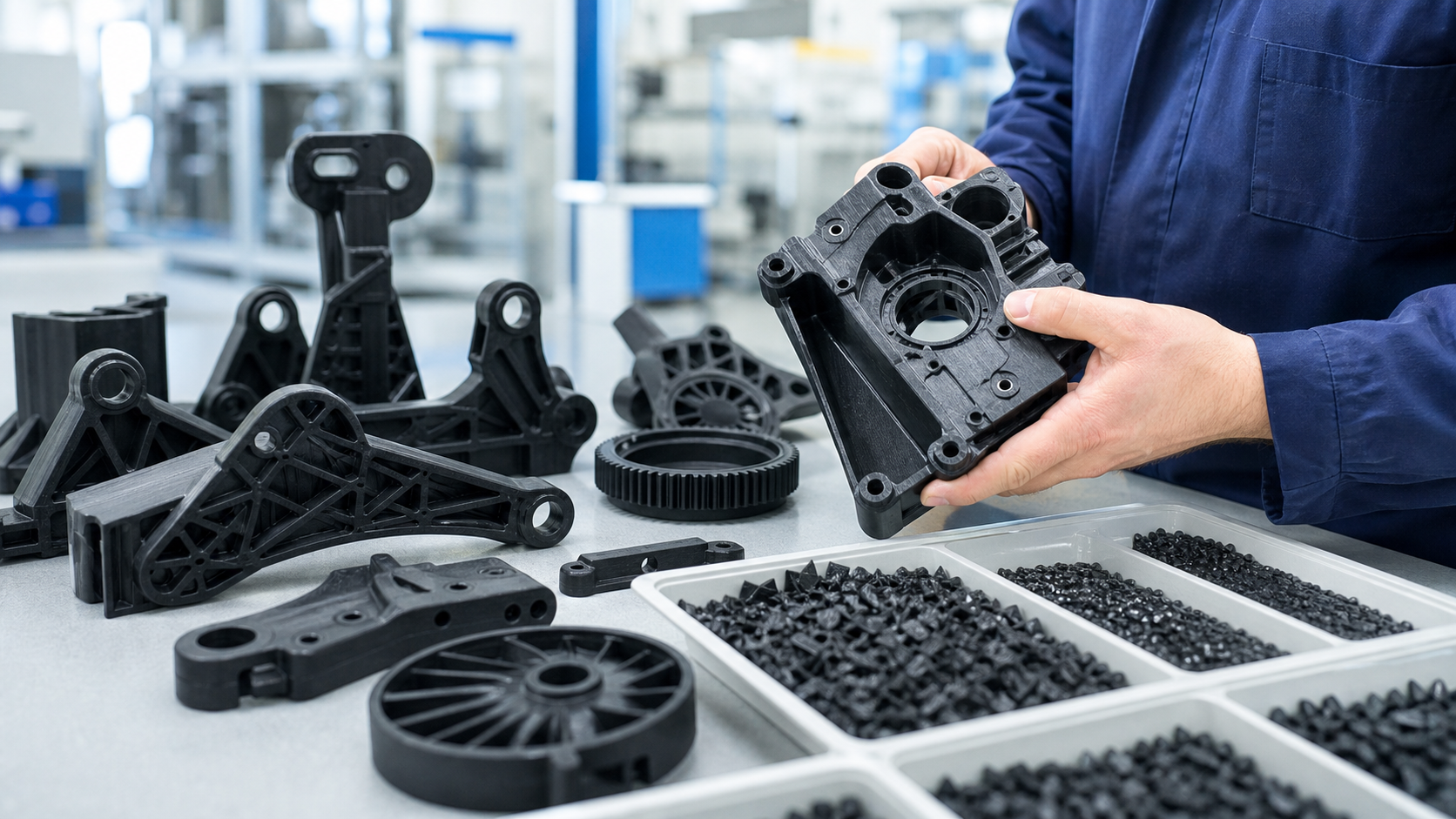
Kohlefaser-Nylon-Teile auf einen Blick
| Entscheidungsbereich | Allgemeine Optionen | Käuferprüfung |
|---|---|---|
| Grundmaterialien | PA6-CF, PA12-CF, kurzfaserverstärkte Nylon-Compounds | Überprüfen Sie die Steifigkeit, die Feuchtigkeitsempfindlichkeit, die Anforderungen an die Stoßfestigkeit und die Umgebungsbedingungen |
| Herstellungsverfahren | FDM, SLS, MJF, CNC-Bearbeitung, Formguss mit verstärktem Harz | Anpassung des Prozesses an Geometrie, Volumen und Toleranzvorgabe |
| Passgenaue Teile | Vorrichtungen, Halterungen, leichte Halter, Abdeckungen, Roboterwerkzeuge | Prüfen Sie, ob es sich um eine statische, wiederkehrende oder stoßintensive Belastung handelt |
| Hauptrisiken | Schwäche in Schichtrichtung, Feuchtigkeitsbewegung, spröde Kantenbereiche | Überprüfung der Faserausrichtung, der Wandkonstruktion und des Nachbearbeitungsplans |
| Angaben zur Angebotsanfrage | CAD-Modell, Lastfall, Toleranzangaben, Oberflächenanforderungen, Stückzahl | Senden Sie funktionale Anforderungen, nicht nur Geometriedaten |
Wann Carbonfaser-Nylon die richtige Wahl ist
Mit Kohlefaser verstärktes Nylon ist dann sinnvoll, wenn herkömmliches Nylon zu flexibel ist und Aluminium unnötiges Gewicht oder zusätzliche Bearbeitungskosten verursachen würde. Es eignet sich gut für den Einsatz im Werkzeugbau, in der Automatisierung sowie für Funktionsteile in kleinen bis mittleren Stückzahlen, bei denen die Steifigkeit wichtiger ist als das äußere Erscheinungsbild.
Es ist weniger geeignet, wenn das Bauteil glänzende Oberflächen, hohe Schlagzähigkeit an scharfen Kanten oder einen langfristigen Einsatz im Außenbereich ohne gesicherte UV- und Feuchtigkeitsschutzmaßnahmen erfordert. Wenn das Bauteil kontinuierlich hoher Hitze, chemischen Einflüssen oder starkem Verschleiß ausgesetzt ist, sollte der Lieferant prüfen, ob ein anderer technischer Kunststoff stabiler ist.
Compare the reinforcement trade-offs with the glass-filled nylon guide before fixing the material family.
Klären Sie zunächst, was Sie kaufen
Der Ausdruck Kohlefaser-Nylon Dies kann sich auf Verbundgranulate für den Spritzguss, Filamente oder Pulver für die additive Fertigung, verstärkte Rohlinge für die spanende Bearbeitung oder ein Fertigteil beziehen. Es handelt sich hierbei nicht um austauschbare Einkaufsartikel. In der Angebotsanfrage sollten sowohl die PA-Matrix als auch das vorgesehene Fertigungsverfahren angegeben werden.
| Artikel kaufen | Typische Spezifikation | Was der Lieferant benötigt |
|---|---|---|
| Modifizierte Nylon-Granulate | PA6-CF30-, PA66-CF30- oder PA12-CF30-Compound | Verarbeitungsweg, Jahresvolumen, Farbe, Zulassungen, Analysezertifikat und Verpackung |
| Rohmaterial für den 3D-Druck | Für einen bestimmten Drucker und ein bestimmtes Verfahren geeignetes Filament oder Pulver | Druckweg, Ausrichtung, Trocknung, Oberfläche und angestrebte Eigenschaften |
| Fertige Teile aus Kohlefaser-Nylon | Zeichnungsgesteuerte gedruckte, bearbeitete oder geformte Bauteile | CAD, kritische Toleranzen, Lastfall, Umgebungsbedingungen, Stückzahl und Prüfplan |
For a drawing-controlled finished part, review the custom plastic components scope alongside the material designation.
Materialoptionen und Verfahrenswege
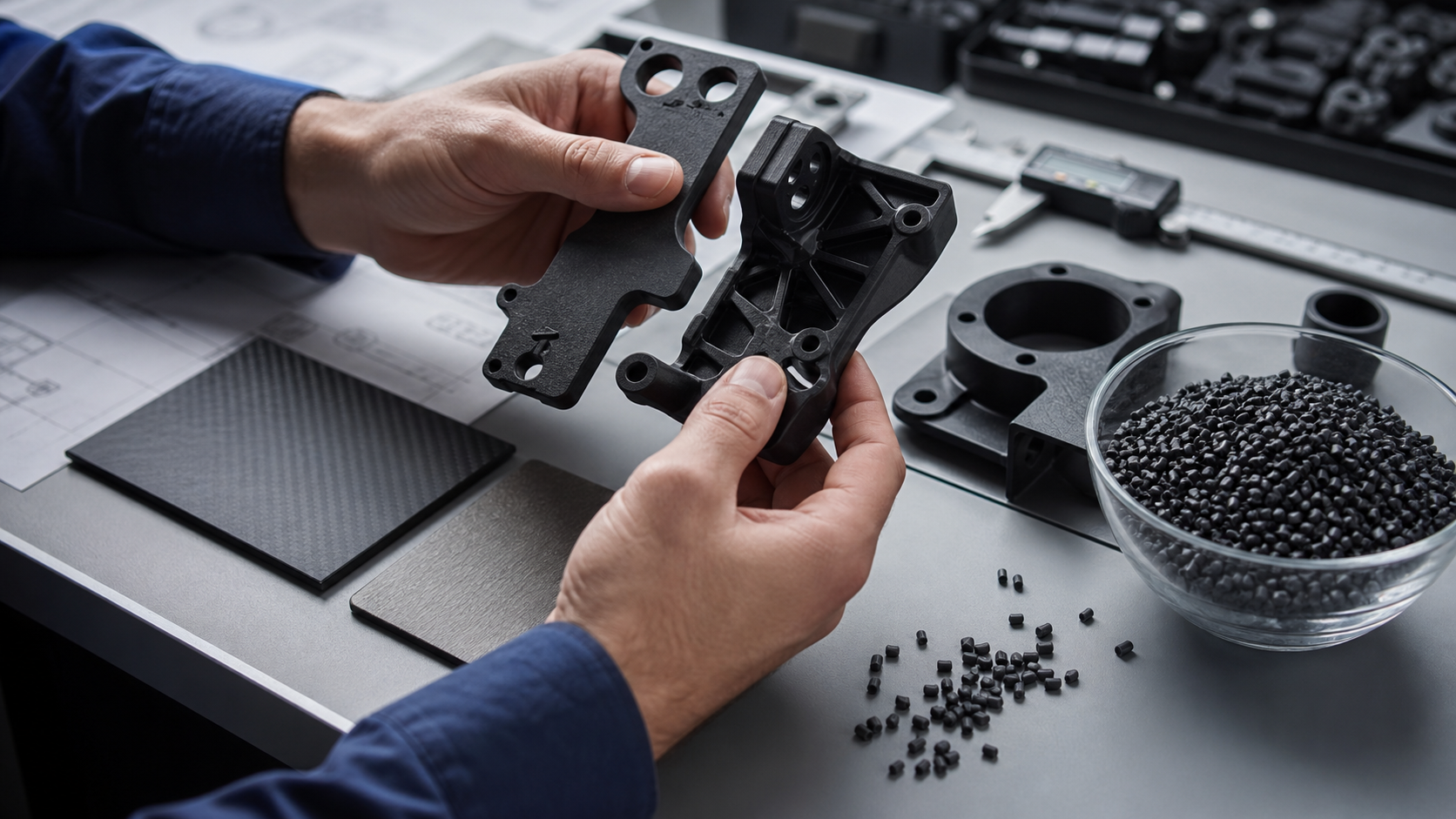
Käufer vergleichen PA6-CF und PA12-CF häufig hinsichtlich Steifigkeit, Feuchtigkeitsverhalten und Druckbarkeit. PA6-CF bietet zwar eine hohe Steifigkeit, ist jedoch feuchtigkeitsempfindlicher. PA12-CF wird oft wegen seiner stabileren Umwelteigenschaften und der besseren Prozesskonsistenz in der additiven Fertigung bevorzugt.
- 3D-Druck: Ideal für Prototypen, Vorrichtungen, komplexe Leichtbaukonstruktionen und Kleinserienfertigung.
- CNC-Bearbeitung: Nützlich, wenn eine Rohform vorliegt und kritische Merkmale einer kontrollierten Endbearbeitung bedürfen.
- Spritzguss: besser, wenn die Nachfrage stabil ist und sich die Werkzeugkosten rechtfertigen lassen.
For many custom-part projects, the fastest path is to validate the part with additive manufacturing first, then decide whether a machined or molded version is justified by annual usage.
For the printed route, the PA6-CF 3D printing guide covers feedstock and build considerations; it does not qualify a molded compound as printer filament.
Wichtige Designregeln
- Die Wandübergänge sollten fließend gestaltet werden, um Spannungskonzentrationen zu verringern.
- Vermeiden Sie extrem dünne, nicht abgestützte Rippen bei stark beanspruchten Bauteilen.
- Markieren Sie in der Zeichnung die Schraubenbereiche, Klemmbereiche und Verschleißflächen.
- Geben Sie die tatsächliche Belastungsrichtung an, falls das Bauteil additiv gefertigt werden soll.
- Geben Sie an, ob bei Abwägungen die Ebenheit oder die Steifigkeit eine größere Rolle spielt.
Häufige Probleme und praktische Lösungen
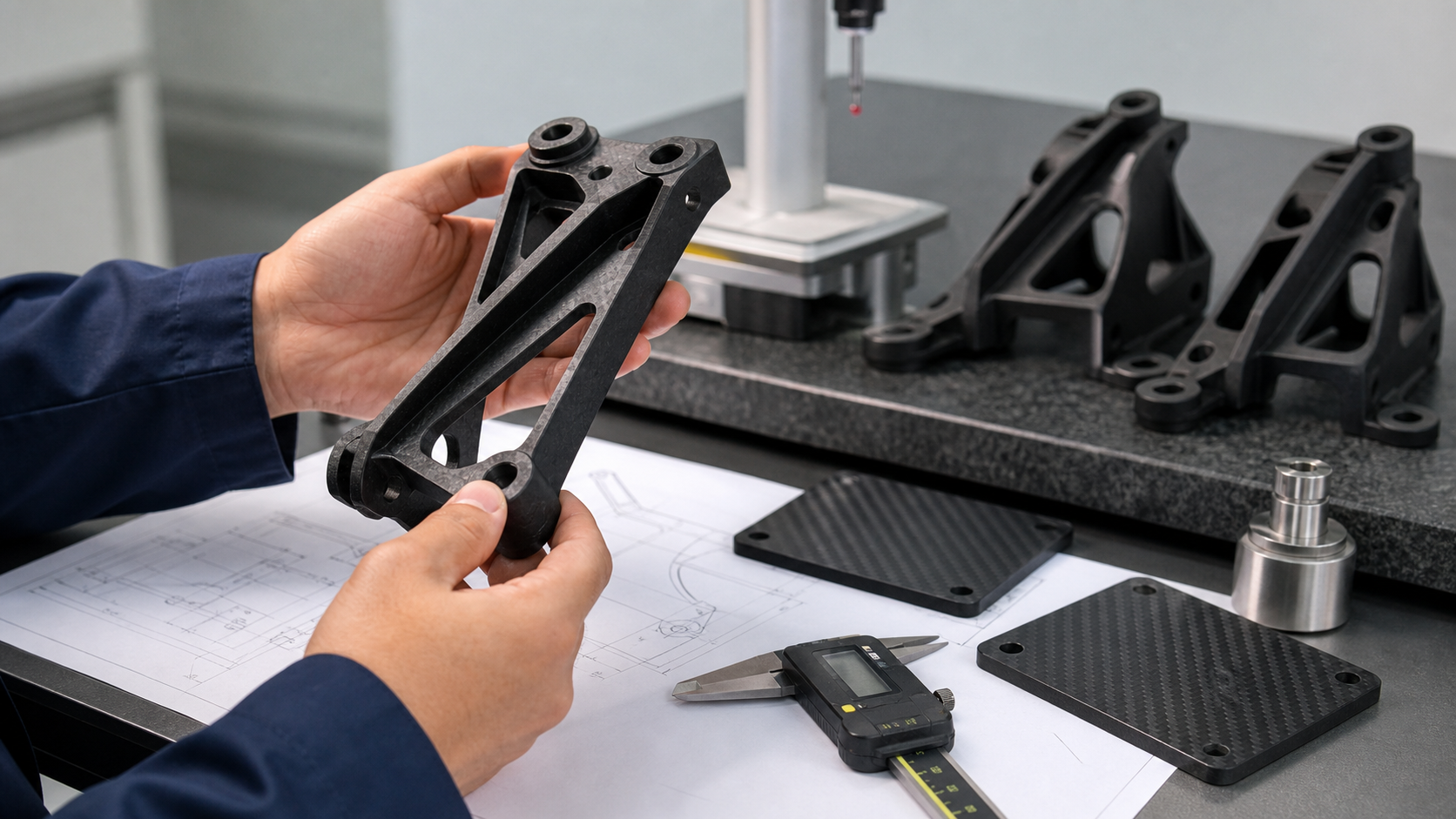
| Problem | Mögliche Ursache | Praktische Lösung |
|---|---|---|
| Risse an einer Kante | Scharfe Kanten oder falsche faserverstärkte Sorte | Radien hinzufügen, lokalen Querschnitt vergrößern, Stoßbelastung überprüfen |
| Unerwartete Durchbiegung | Der Lastpfad ist nicht auf die Prozessfähigkeit abgestimmt | Überprüfen Sie die Ausrichtung, die Querschnittsdicke und die Stützpunkte |
| Dimensionsdrift | Feuchtigkeitsaufnahme oder Veränderung nach der Verarbeitung | Prüfbedingungen und Endumgebung festlegen |
| Überteertes Angebot | Vor der Funktionsprüfung ausgewählter Prozess | Bitten Sie den Lieferanten, die Verfahren der additiven Fertigung, der spanenden Bearbeitung und des Formgusses zu vergleichen. |
Häufig gestellte Fragen
Sind Teile aus Kohlefaser-Nylon stabiler als Teile aus Standard-Nylon?
Sie sind in der Regel steifer und behalten unter Belastung besser ihre Form, sind jedoch nicht automatisch in jeder Hinsicht besser. Das Schlagverhalten und die Anisotropie müssen noch geprüft werden.
Können Teile aus Kohlefaser-Nylon in der Serienfertigung eingesetzt werden?
Ja, insbesondere bei Befestigungselementen, Halterungen, Automatisierungskomponenten und Funktionsteilen in kleinen Stückzahlen. Das geeignete Verfahren hängt von der Stückzahl, der Toleranz und den Umgebungsbedingungen ab.
Welche Dateien sollte ich für ein Angebot einsenden?
Senden Sie uns ein 3D-Modell, eine Zeichnung mit den wichtigsten Toleranzen, die Stückzahl, Angaben zur Belastung sowie etwaige Anforderungen an die Montage, wie z. B. Einsätze oder Befestigungselemente.
Sollte ich mich für gedruckte oder gefräste Teile aus Carbonfaser-Nylon entscheiden?
Gedruckte Teile eignen sich in der Regel besser für komplexe Geometrien und schnelle Iterationen. Gefräste Teile können vorteilhafter sein, wenn Rohlinge in geeigneter Form vorliegen und die Kontrolle der Merkmale wichtiger ist als die geometrische Freiheit.
Prüfung eines Teils aus Kohlefaser-Nylon anfordern
For finished carbon fiber nylon parts, send the drawing and load case. Nylon Plastic can compare a printed prototype, a machined component where suitable stock exists, and a molded production part against the same functional requirements.
Was vor der Angebotserstellung zu klären und zu vereinbaren ist
Seit 2005 verbindet Nylon Plastic die Beratung zu technischen Kunststoffen mit der Fertigung von Fertigteilen. Im Rahmen einer einzigen Prüfung können kundenspezifische Compoundierung, 3D-Druck, CNC-Bearbeitung und Spritzguss anhand derselben Zeichnung, Stückzahl und Validierungsanforderungen miteinander verglichen werden.
State the current PA matrix and fiber content, exact grade or permitted alternative, environment, measurement condition, surface requirements, first order, annual demand, destination and timing.
| Was soll man schicken? | Warum das wichtig ist |
|---|---|
| STEP-Datei und revisionsgesteuerte Zeichnung | Unterstützt die Prozessüberprüfung und die Toleranzplanung |
| Lastfall oder Anwendungshinweis | Verhindert, dass die falsche Güteklasse oder Bauausrichtung angegeben wird |
| Menge und voraussichtlicher Nachbestellbedarf | Hilft bei der Entscheidung, ob gedruckt, bearbeitet oder geformt werden soll |
| Kritische Abmessungen | Konzentriert die Prüfung auf funktionale Merkmale |
| Montagedetails | Überprüft Einsätze, Befestigungselemente und Passbedingungen |
Vergleichen PA6-CF30, PA66-CF30 und PA12-CF30 as separate material routes. These compound designations do not establish qualification as printer filament or powder. Confirm the exact feedstock and process before comparing property data.
Agree the proposed grade and process, orientation, critical-feature inspection, inserts and finishing in the quotation. Qualify the intended production route separately: a printed prototype does not establish the properties of a molded PA-CF30 part.

