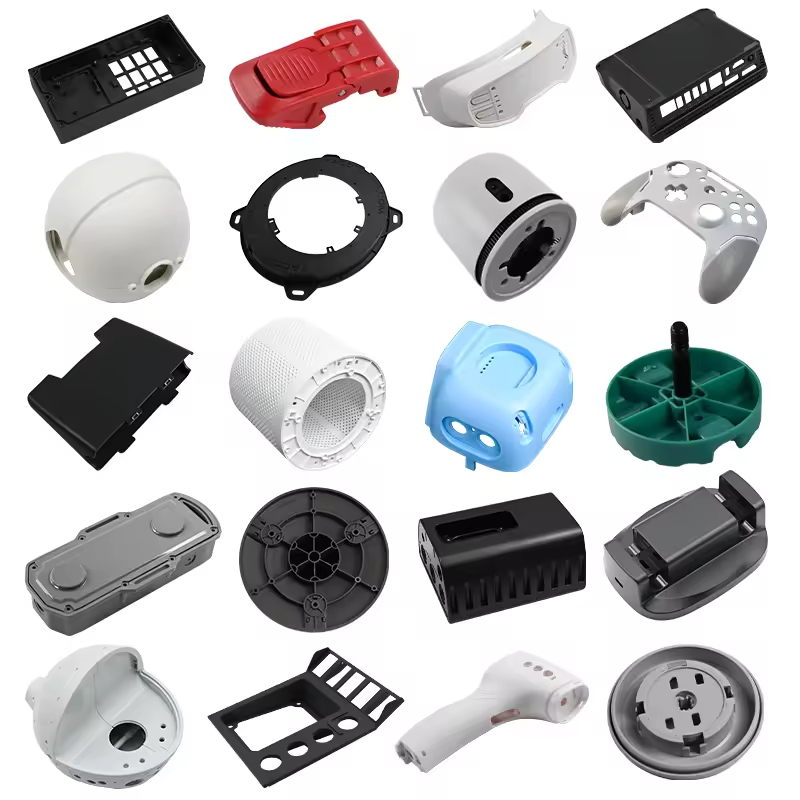
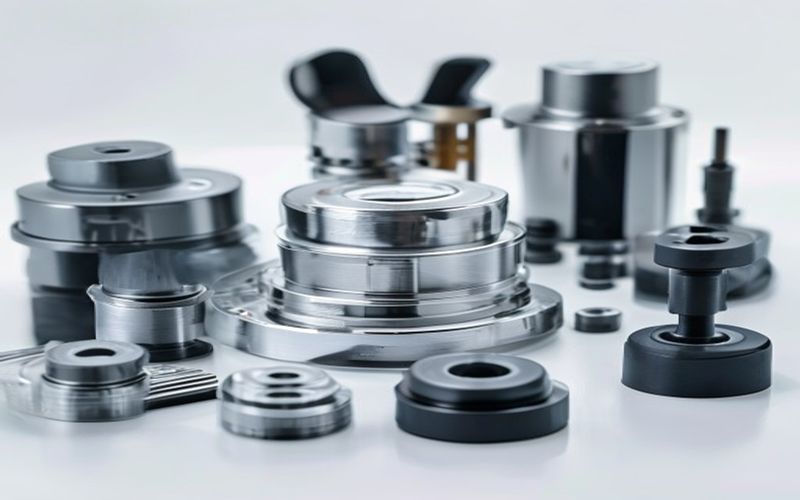
Behind virtually every plastic product we use daily lies a precisely engineered mold. These tools—often costing tens or hundreds of thousands of dollars—are the unsung heroes of modern manufacturing. They enable the consistent, high-speed production of complex parts that would be impossible or prohibitively expensive with any other method.
The Foundation of Mass Production
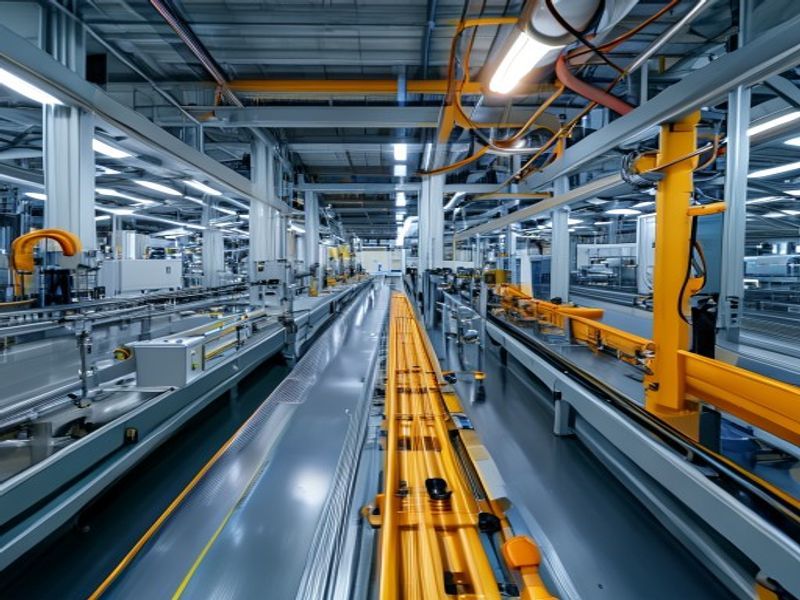
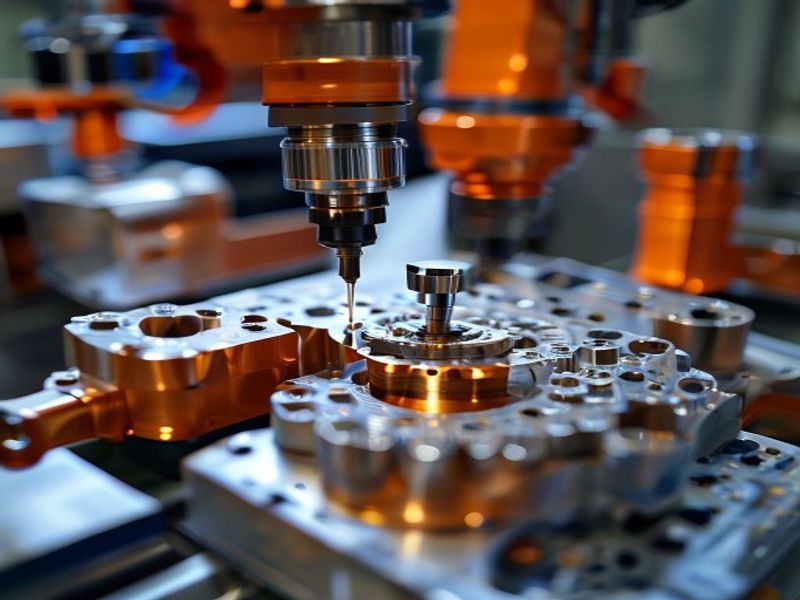
Injection molds make possible what no other manufacturing process can achieve: producing thousands or millions of identical parts with micron-level precision at speeds measured in seconds. Consider that a single production mold might produce over a million nylon components—each one meeting strict dimensional requirements—during its operational life.
Economic Impact
The mold represents the largest upfront investment in an injection molding project, but this investment enables extraordinary per-part economics. Once validated, a mold can produce parts for $0.10-5.00 each depending on size and material—costs impossible with CNC machining or 3D printing at volume.
Mold Engineering: Where Science Meets Art
Wärmemanagement
A mold is essentially a heat exchanger. Molten nylon at 280°C enters the cavity and must be cooled to ejection temperature (typically 80-120°C for nylon) within seconds. Cooling channel design—placement, diameter, flow rate—directly impacts cycle time and part quality. Poor cooling causes warpage, sink marks, and extended cycle times.
Gating and Flow
The gate is where material enters the cavity. Its size, location, and number determine flow patterns, weld line placement, and fiber orientation in reinforced materials. For nylon specifically, gate design affects crystallinity development and resulting mechanical properties.
Ejection Systems
Getting the part out of the mold seems simple but requires sophisticated engineering. Ejector pins, air blasts, stripper plates, or robotic extraction—each method suits different part geometries. For nylon, the semi-crystalline material shrinks tightly onto cores, requiring adequate draft angles and properly positioned ejection features.
Enabling Industries
| Industrie | Typical Nylon Applications | Mold Requirements |
|---|---|---|
| Automobilindustrie | Intake manifolds, gears, clips, covers | Multi-cavity, hot runner, high life |
| Medizinische | Device housings, surgical instrument handles | Cleanroom capable, validated processes |
| Elektronik | Connectors, enclosures, cable ties | High precision, ESD materials |
| Consumer | Appliance components, sporting goods | Aesthetic surfaces, family molds |
| Industriell | Bearings, bushings, conveyor components | Verschleißfestigkeit, Formstabilität |
The Evolution of Mold Technology
Modern molds incorporate technologies unimaginable decades ago:
- Formflusssimulation: Predict filling patterns, cooling efficiency, and warpage before steel is cut
- Conformal cooling: 3D-printed mold inserts with cooling channels following cavity contours
- In-mold sensing: Pressure and temperature sensors for real-time process monitoring
- Wissenschaftliches Formen: Data-driven process development for consistent quality
These advances reduce development time, improve part quality, and extend mold life—delivering better products at lower total cost.
FAQ
When does The Critical Role of Molds in Modern Manufacturing make sense?
The Critical Role of Molds in Modern Manufacturing makes sense when the part volume, material choice, geometry, and repeatability needs justify mold design and tooling investment.
What design factors matter most for The Critical Role of Molds in Modern Manufacturing?
Wandstärke, Rippen, Vorsprünge, Entformungsschräge, Angussposition, Schrumpfung, Trennfuge und Auswurf – all diese Faktoren beeinflussen die Qualität des Formteils.
Welche Informationen werden vor der Formenherstellung benötigt?
Der Lieferant sollte das 3D-Modell, das Material, das voraussichtliche Jahresvolumen, die Anforderungen an das Erscheinungsbild, die Toleranzanforderungen sowie etwaige Anforderungen an die Montage oder Funktionsprüfungen bestätigen.
What is the biggest risk in The Critical Role of Molds in Modern Manufacturing?
Das größte Risiko besteht darin, die Werkzeuge freizugeben, bevor das Materialverhalten, der Schwund, der Fließverhalten und die Funktion des Bauteils im Hinblick auf die tatsächliche Anwendung vollständig überprüft wurden.