Automotive plastic part DFM starts long before the tool is cut. Most late-stage cost and timing problems come from geometry, tolerance, and resin decisions that looked harmless in CAD but become expensive once the mold path is fixed.
This checklist is written for teams who need to get to tooling with fewer surprises, cleaner supplier communication, and better launch confidence.
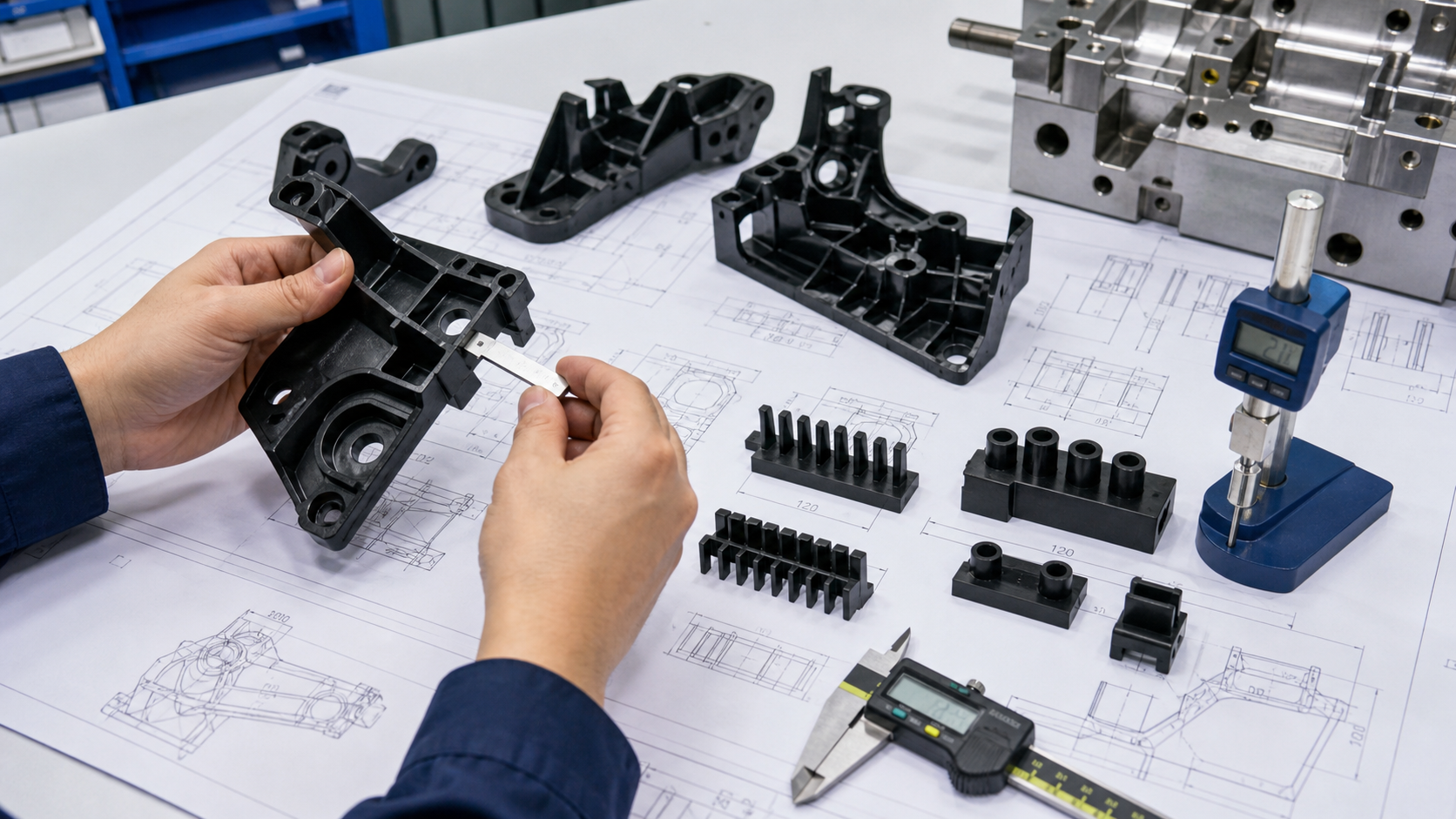
What Automotive DFM Must Solve
Automotive parts rarely fail only because of one dimension. They fail because heat, load, tolerance stack, assembly method, weld lines, and resin behavior all interact at once.
The goal of DFM is to catch those interactions while change is still cheap.
Core DFM Questions Before RFQ
A strong RFQ package should already answer whether the part is cosmetic or structural, how the datum scheme works, which features are assembly-critical, and what environmental loads actually matter in service.
- Is wall thickness uniform enough to avoid sink and warp?
- Are ribs and bosses sized for molding, not only for CAD intent?
- Are clips and snap features validated for assembly stress?
- Does the tolerance strategy match the molding process, not a machining mindset?
- Is the resin chosen for heat, fluid, UV, and creep together?
Where Projects Commonly Slip
Teams often release tooling with cosmetic expectations that conflict with gate location, venting, and ejection reality. Another common failure point is over-tolerancing secondary features that do not drive actual function.
When the tooling supplier raises these issues late, the schedule slips and the commercial conversation gets harder.
How to Turn the Checklist into a Faster Tooling Launch
Use the checklist as a supplier-communication tool, not just an internal review. The earlier the molder sees critical datums, sealing surfaces, clip loads, and cosmetic priorities, the more accurate the first DFM round becomes.
That usually saves more time than trying to make a rushed tool correction after T1.
Weiterführende Lektüre
- Plastic Injection Molding Automotive Parts
- Plastic Part Design for Manufacturing DFM Guide
- Automotive Plastic Parts Manufacturing Guide
FAQ
What should an automotive plastic part DFM checklist include?
It should review wall thickness, ribs, bosses, draft, clips, snap fits, gate location, parting line, tolerance, material shrinkage, assembly loads and inspection points before tooling starts.
Why is DFM important before automotive tooling?
DFM reduces the risk of sink marks, warpage, weak clips, difficult ejection, late mold changes and tolerance problems after the mold has already been cut.
Can DFM change the material choice?
Yes. Heat, impact, chemical exposure, UV, stiffness, cost and assembly requirements can lead to different material choices before the design is released to tooling.