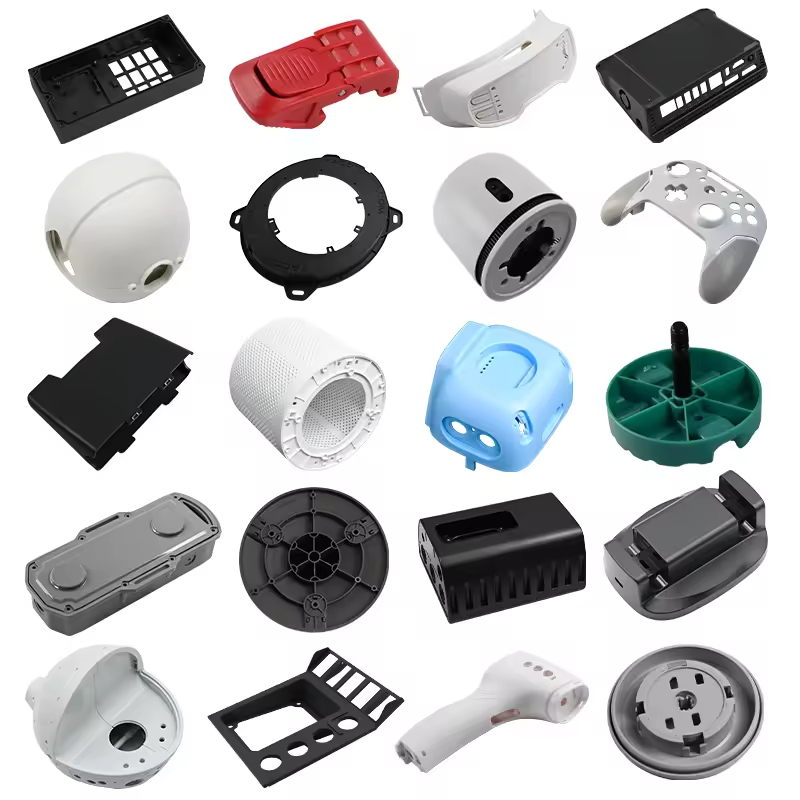
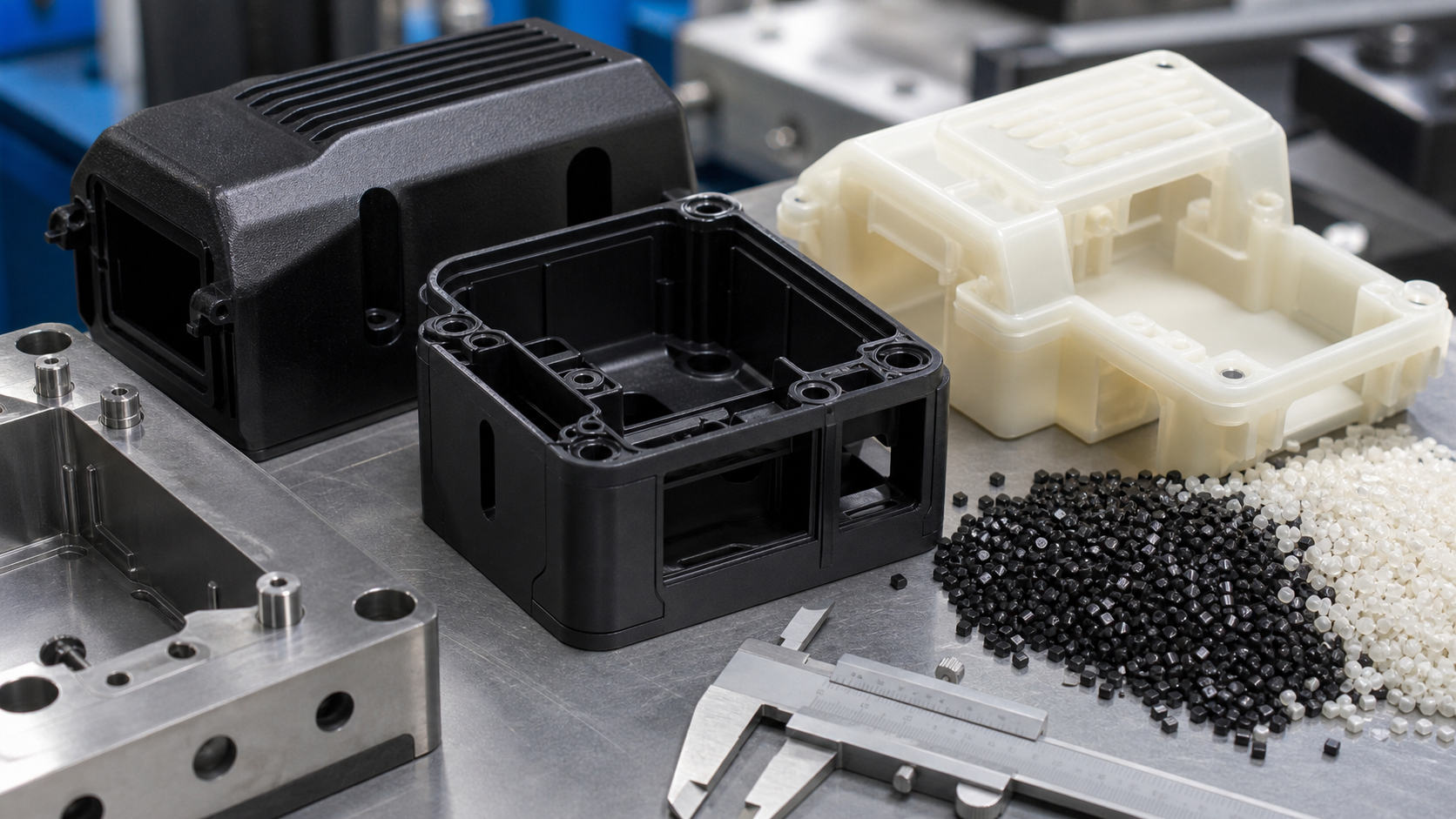
ABS plastic injection molding is widely used for custom housings, covers and interior components because ABS processes easily, accepts texture and color well, and balances impact strength, cost and surface quality.
ABS is often selected when buyers need a molded plastic part with good appearance and moderate toughness. It is not the best choice for every high-heat, outdoor or chemical exposure application, so the design review should include the service environment and finish requirements.
ABS Injection Molding Route
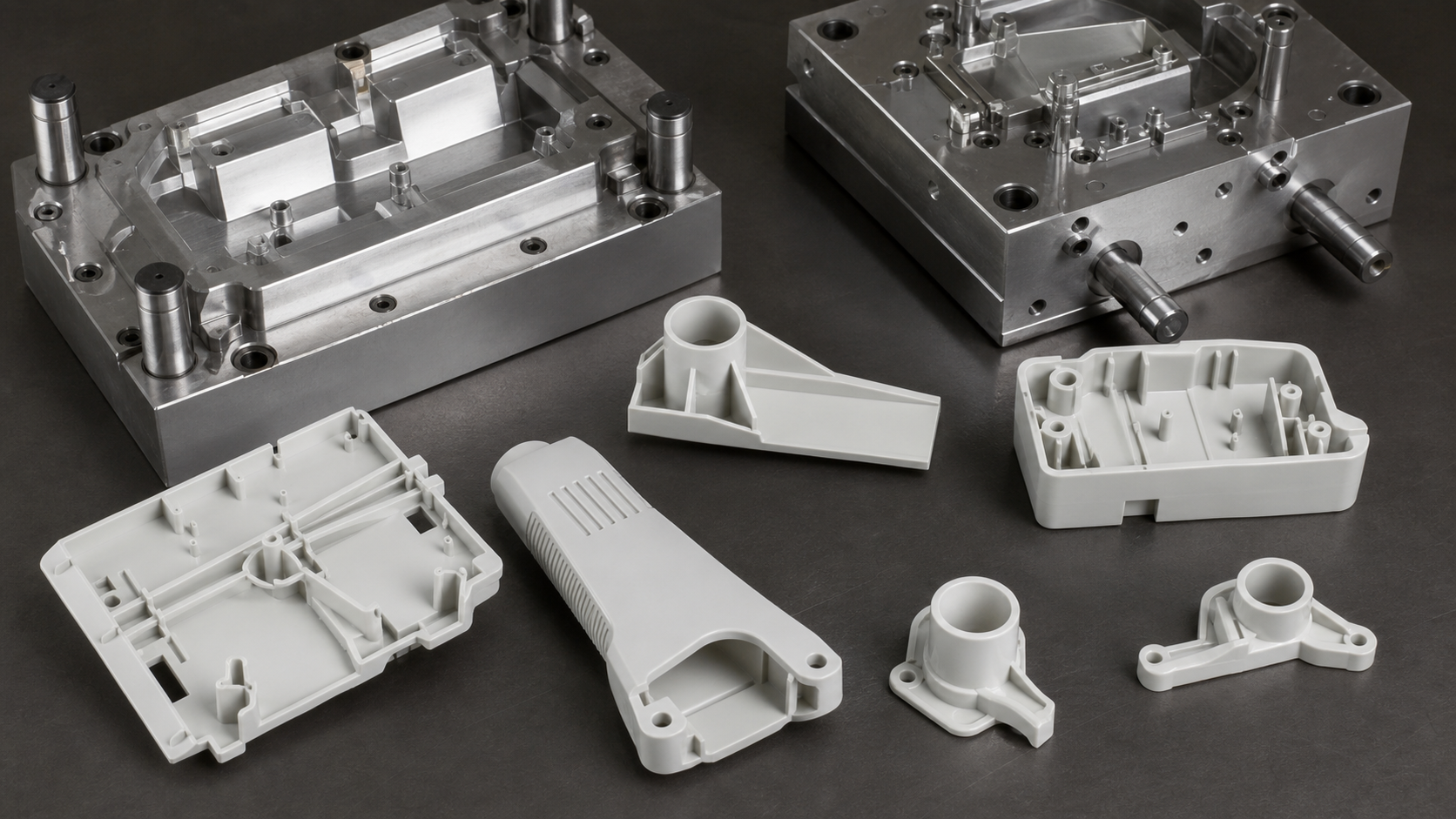
ABS molding is generally forgiving, but gate location, cooling, wall thickness and surface texture still affect part quality.
| Route | Optimale Verwendung | Hinweis für Käufer |
|---|---|---|
| Standard ABS molding | Housings, covers and brackets | Good balance of cost and appearance |
| Flame-retardant ABS | Electrical or appliance components | Confirm UL rating and color requirements |
| PC-ABS alternative | Higher impact or heat needs | Consider when ABS alone is not tough enough |
ABS Grades and Alternatives
ABS grades vary by impact strength, heat resistance, flame rating, color and finish.
| Material | Am besten geeignet für | Hinweis zur Auswahl |
|---|---|---|
| General ABS | Consumer and industrial housings | Good surface finish and processability |
| High-impact ABS | Parts needing better toughness | Useful for covers and protective shells |
| Heat-resistant ABS | Moderate heat applications | Still compare with PC-ABS or PC |
| FR ABS | Elektrogehäuse | Confirm flame rating and compliance |
Verwenden Sie die injection molding material selection guide when comparing the resin family and exact grade for the application.
ABS Part Design Checks
Good ABS molded part design prevents sink marks, stress whitening, warpage and visible gate defects.
- Avoid thick bosses and heavy ribs that create sink marks.
- Use draft angle appropriate for texture depth.
- Place gates away from key cosmetic surfaces when possible.
- Review screw bosses and inserts for cracking risk.
- Confirm color masterbatch and surface texture before sampling.
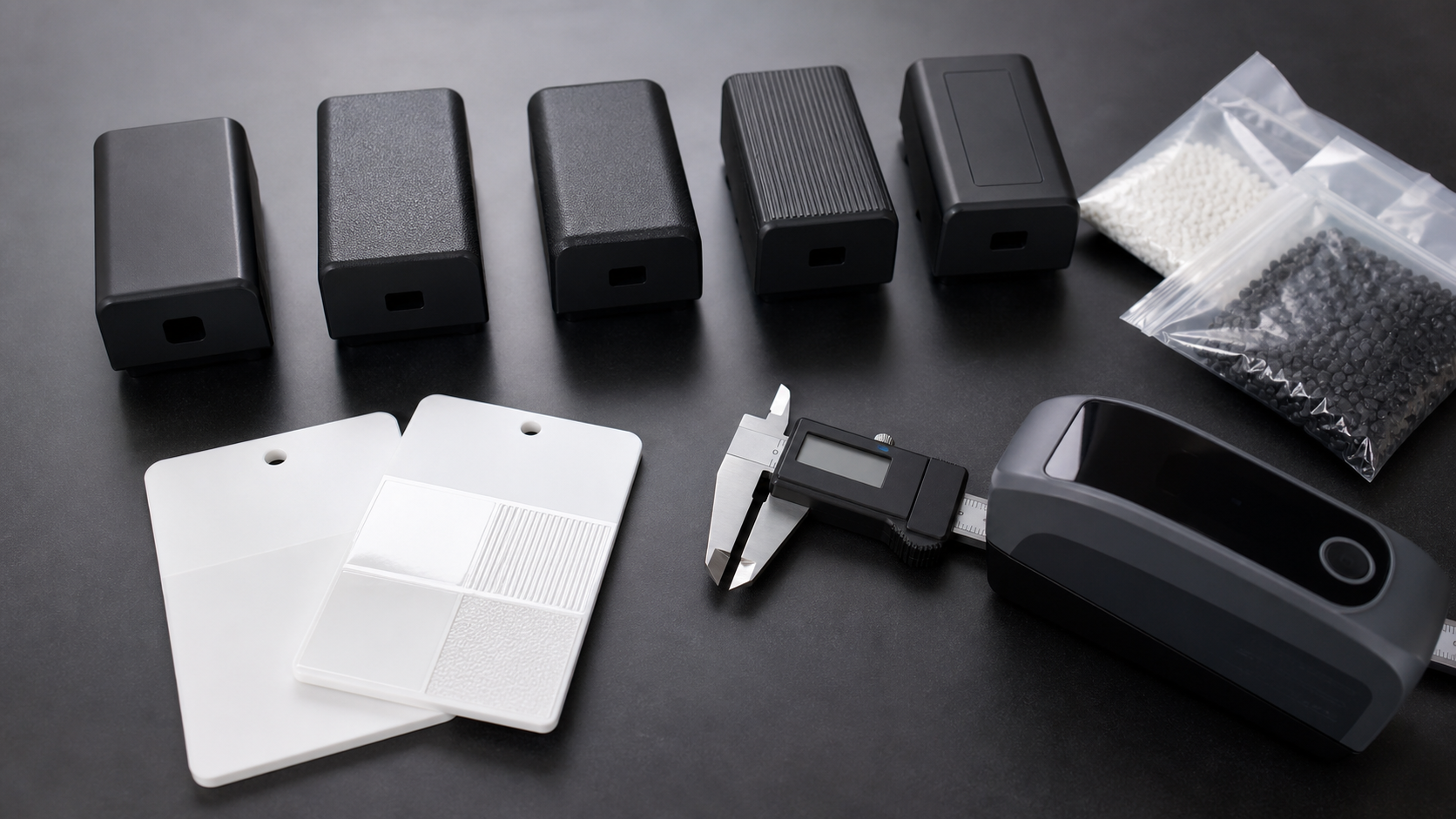
Use the ABS design and material checks below with our plastic injection molding services when planning a cosmetic enclosure or functional component.
ABS Molding Design and Processing Factors
| Faktor | Impact on molded parts | DFM note |
|---|---|---|
| Wall thickness | Uneven walls create sink, warpage and cooling imbalance. | Keep walls consistent and core out heavy bosses. |
| Schrumpfung | ABS shrinkage is moderate but still affects fit and tolerance. | Confirm grade and tooling shrinkage before steel cutting. |
| Oberflächengüte | ABS can support textures, paint, plating and cosmetic finishes. | Separate cosmetic A-surfaces from hidden gate or ejector areas. |
| Weld lines | Openings, ribs and multi-gate flow can create visible or weak weld lines. | Move weld lines away from clips, bosses and visible surfaces. |
ABS vs PC/ABS vs PC
| Material | Optimale Passform | Abwägung |
|---|---|---|
| ABS | General housings, covers and cosmetic molded parts. | Lower heat and impact performance than PC or PC/ABS. |
| PC/ABS | Tougher enclosures, electronics and automotive interior parts. | Higher material cost and grade selection matters. |
| PC | Impact-resistant and heat-resistant parts, including clear grades. | More drying, stress and processing control needed. |
ABS Injection Molding Checklist
- Confirm cosmetic surfaces, texture and color before mold design.
- Review ribs and bosses for sink marks behind visible walls.
- Add draft to textured surfaces and deep ribs.
- Place gates to support packing and hide vestige where possible.
- Check assembly clips, screw bosses and snap fits for stress concentration.
- Compare ABS with PC/ABS when impact, heat or automotive use matters.
For visible or dimensional defects, use the injection molding defects guide alongside the grade, geometry and process review.
Häufig gestellte Fragen
Is ABS good for injection molding?
ABS is widely used for injection molded housings, covers and components because it processes well, offers good toughness and supports many cosmetic surface finishes.
Does ABS need drying before injection molding?
ABS usually benefits from drying before molding, especially when cosmetic surfaces, dimensional control or consistent mechanical performance are important.
What causes defects in ABS injection molding?
ABS molding defects can come from moisture, overheating, poor venting, sink-prone walls, gate marks, insufficient packing or unstable process settings.
What should buyers specify for ABS molded parts?
Buyers should specify ABS grade, color, surface finish, tolerance, cosmetic requirements, expected quantity, application environment and inspection needs.
Weiterführende Lektüre
Request an ABS Molded-Part Review
For ABS housings, covers or functional components, send the assembly and cosmetic requirements. Nylon Plastic can review the ABS grade, mold design, texture, color, fit, sampling and production scope before quotation.
What should an ABS injection molding RFQ include for a cosmetic enclosure?
Provide the enclosure assembly, cosmetic zones, color reference, texture, screw or clip interfaces and the heat and impact requirement. Ask for resin, gate and rib review before committing to ABS rather than PC/ABS. Compare tooling, sample approval, molded parts and any painting or assembly as separate quoted items so the appearance requirement survives the price comparison.
- Include CAD, drawing revision, exact grade or permitted alternative, color reference, initial and annual quantity, destination and timing.
- Identify visible surfaces, texture, gate and ejector marks, screw bosses, clips, inserts and critical mating features.
- State heat, impact, outdoor or chemical exposure; define the sample test, appearance reference, dimensional report and required grade documents.
- Separate molded parts from paint, plating, printing, assembly or packaging. Match any flame requirement to the exact grade and part thickness.
Compare tooling, samples, molded parts and secondary finishing on the same specification. Agree cosmetic and fit approval together; an acceptable molded surface can change after painting, plating or assembly.