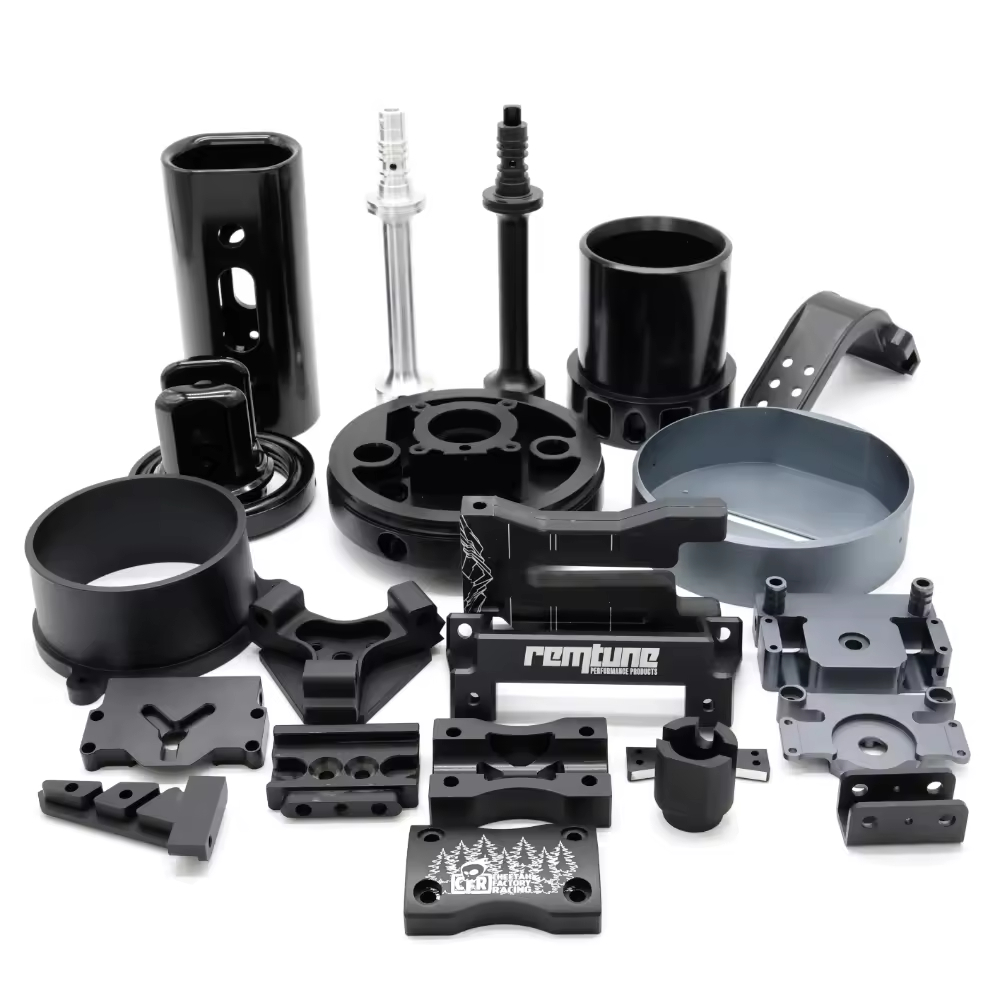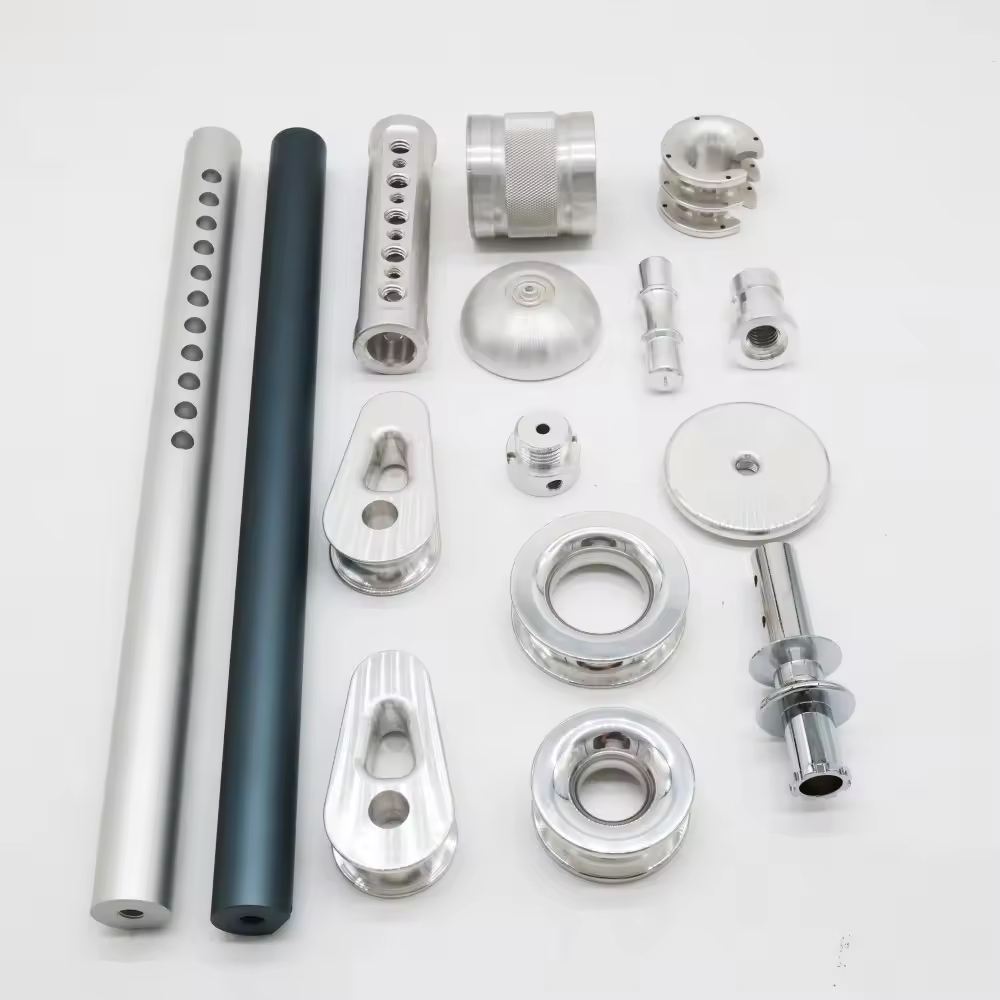

CNC-Bearbeitung von Teilen represent the gold standard in modern manufacturing, delivering unparalleled precision, repeatability, and design flexibility across virtually every industrial sector. From mission-critical aerospace components to intricate medical implants and custom automotive parts, Computer Numerical Control (CNC) machining transforms digital designs into high-tolerance physical reality. This guide explores the capabilities, materials, and applications of CNC machined parts, and how precision manufacturing partners deliver excellence from prototype to production.

The CNC Advantage: Precision, Repeatability, and Complexity
CNC machining has revolutionized manufacturing by offering capabilities that traditional manual machining cannot match. Understanding these advantages helps in selecting the right process for your components.
- Uncompromising Precision and Accuracy: Modern CNC machines achieve dimensional tolerances down to ±0.0001 inches (±2.5 microns), with measurement accuracy as tight as ±0.0000020 inches in specialized applications . This level of precision is essential for aerospace, defense, and medical components where even microscopic deviations can lead to failure .
- Exceptional Repeatability for Production Runs: Once a CNC program is perfected, every subsequent part is identical to the first. This repeatability ensures consistent quality across production volumes, from low-volume runs of 25-100 pieces to high-volume output exceeding 4,000 complex parts per month .
- Complex Geometries Made Possible: Multi-axis CNC machining centers—ranging from 3-axis to 5-axis and even 7-axis systems—enable the production of intricate shapes, undercuts, and compound angles in a single setup . This eliminates multiple fixtures and reduces error accumulation.
- Vielseitigkeit der Materialien: CNC machines work with an extensive range of engineering materials, from common metals and plastics to exotic alloys and advanced composites . This flexibility allows engineers to select the optimal material for their application without manufacturing constraints.
- Rapid Prototyping and Iteration: CNC machining enables quick turnaround of prototype parts for form, fit, and function testing. Design iterations can be produced in days rather than weeks, accelerating development cycles .

CNC Machining Materials: A Comprehensive Guide
Material selection is the most critical decision in any CNC machining project, directly impacting part performance, cost, and manufacturability . Below is a detailed overview of common materials and their applications.

The CNC Machining Process: From Design to Finished Part
Understanding the manufacturing workflow helps in planning projects and communicating effectively with machining partners.
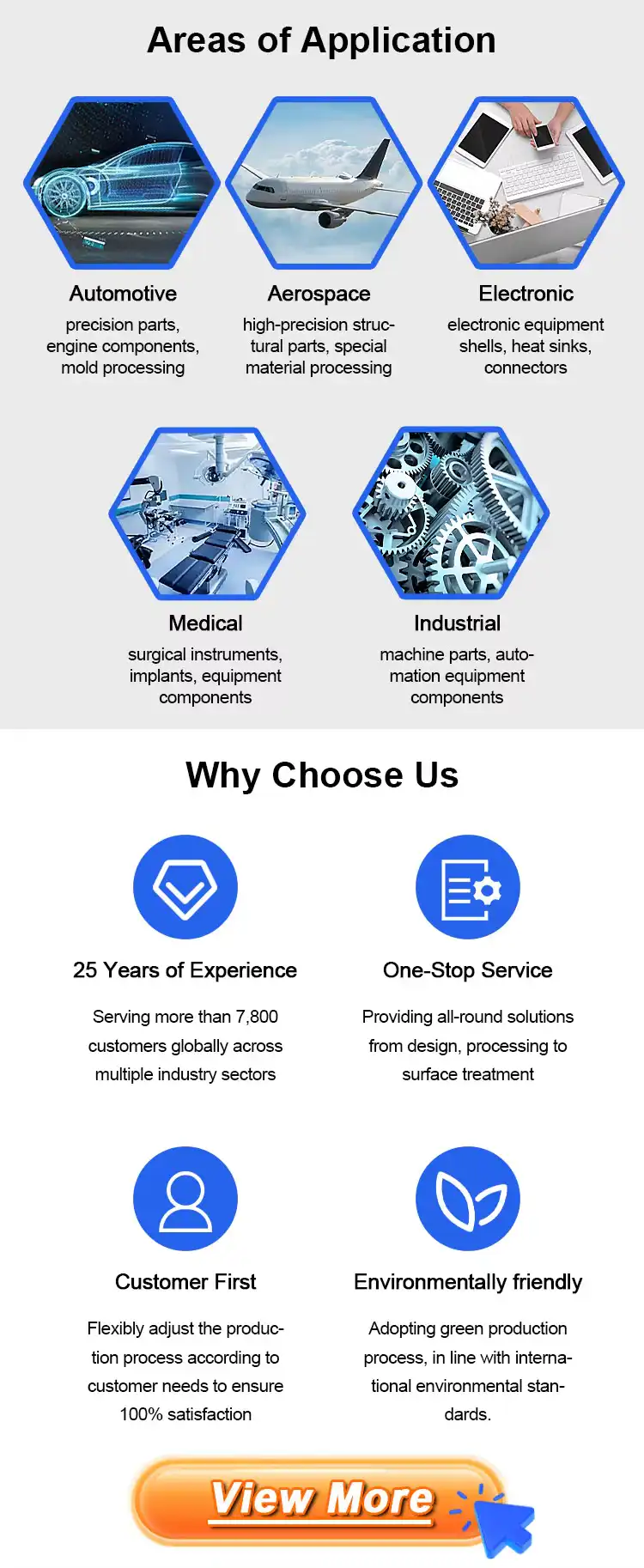
Industries Served by CNC Machining Parts
CNC machining is the backbone of modern manufacturing, serving virtually every industry that demands precision and reliability .

Precision Machining Capabilities: What to Look For in a Partner
Choosing the right CNC machining partner is critical for project success. Key capabilities to consider include:

FAQ: CNC Machining Parts
Q1: What is the difference between CNC milling and CNC turning?
A: CNC milling involves rotating a cutting tool against a stationary workpiece to remove material, allowing for complex shapes and features like slots, holes, and 3D contours. CNC turning involves rotating the workpiece while a stationary cutting tool shapes it, typically for producing cylindrical parts like shafts, bushings, and pulleys . Many modern parts require both operations, often performed on multi-tasking mill-turn machines .
Q2: How do I choose the right material for my CNC machined parts?
A: Material selection should be based on functional requirements first, then cost. Consider mechanical loads, operating environment (temperature, chemicals, moisture), required certifications (e.g., FDA, biocompatibility), and aesthetic needs. Aluminium 6061 and 304 stainless are excellent starting points for general-purpose parts due to their machinability and availability . For high-performance applications requiring maximum strength-to-weight, consider 7075 aluminum or titanium .
Q3: What are typical lead times for CNC machined parts?
A: Lead times vary based on complexity, material availability, and quantity. Simple prototypes can be produced in 3–5 Tage with rapid CNC services. Production tooling and first articles typically require 4-6 weeks, with subsequent production runs of 2-4 weeks after approval . Widely available materials like 6061 aluminum and 304 stainless enable faster turnaround .
Q4: What surface finishes are available for CNC machined parts?
A: Standard CNC machining produces a 3.2 µm Ra surface finish unless specified otherwise . Post-processing options include: anodizing (Type II or III) for aluminum, passivation for stainless steel, powder coating, painting, polishing (brass/aluminum achieve mirror finishes down to 0.2 µm Ra), bead blasting, and black oxide coating . Material choice affects achievable finish—brass and aluminum polish best, while glass-filled plastics are difficult to cosmetically finish .
Q5: How does CNC machining compare to 3D printing for parts?
A: CNC machining offers superior material properties, tighter tolerances, and better surface finishes, making it ideal for functional end-use parts and components requiring specific mechanical characteristics. 3D printing excels at highly complex geometries and rapid iteration with lower setup costs, but material options and mechanical properties are often more limited. Many manufacturers use both technologies complementarily—3D printing for early prototypes, CNC for production .
Q6: What is Design for Manufacturability (DFM) and why is it important?
A: DFM is the engineering practice of designing parts to optimize them for the manufacturing process. For CNC machining, DFM analysis identifies features that are difficult or expensive to machine—such as deep pockets with small tools, sharp internal corners, or very thin walls—and suggests alternatives that maintain functionality while reducing cost and lead time . Early DFM engagement can reduce production costs by up to 80% .
Q7: Can you manufacture custom CNC parts with tight tolerances?
A: Auf jeden Fall. Nylon Plastic specializes in precision CNC machining for custom parts across all industries. Our advanced 5-axis machining centers, experienced engineers, and rigorous quality management systems ensure that even the most demanding specifications are met consistently. Kontakt zu unserem Ingenieurteam to discuss your project requirements.
Conclusion: Precision Manufacturing for Your Critical Components
CNC-Bearbeitung von Teilen represent the intersection of advanced digital design and precision material removal, enabling the creation of components that drive modern industry. Whether you need mission-critical aerospace components, life-saving medical devices, or high-performance automotive parts, partnering with an experienced CNC machining provider ensures quality, reliability, and efficiency.
Sind Sie bereit, Ihr Design zum Leben zu erwecken? Nylon Plastic offers comprehensive CNC machining services backed by decades of material science expertise and precision manufacturing experience. From DFM analysis to production and finishing, we deliver parts that meet the most demanding specifications.
Angebot anfordern | Kontakt zu unserem Ingenieurteam
FAQ
When is CNC Machining Parts: Precision Engineering for Demanding Industries the right choice?
CNC Machining Parts: Precision Engineering for Demanding Industries is the right choice when the part requires machined accuracy, controlled surfaces, repeatable features, and a material that can be cut reliably.
What should be confirmed before ordering CNC Machining Parts: Precision Engineering for Demanding Industries?
Bestätigen Sie die Zeichnungsversion, die Materialqualität, die Toleranzen, die Menge, die kritischen Maße, die Oberflächenbeschaffenheit und die Prüfanforderungen, bevor Sie mit der Produktion beginnen.
What usually drives cost in CNC Machining Parts: Precision Engineering for Demanding Industries?
Die Kosten werden in der Regel durch Material, Rüstzeit, Maschinenzeit, Toleranzschwierigkeiten, Vorrichtungen, Werkzeugzugang, Endbearbeitung, Inspektion und Auftragsmenge bestimmt.
How can quality risk be reduced in CNC Machining Parts: Precision Engineering for Demanding Industries?
Das Qualitätsrisiko wird durch die eindeutige Kennzeichnung kritischer Merkmale, die Vermeidung unnötig enger Toleranzen, die frühzeitige Bestätigung der Herstellbarkeit und die Verwendung von Prüfdaten für wichtige Abmessungen verringert.