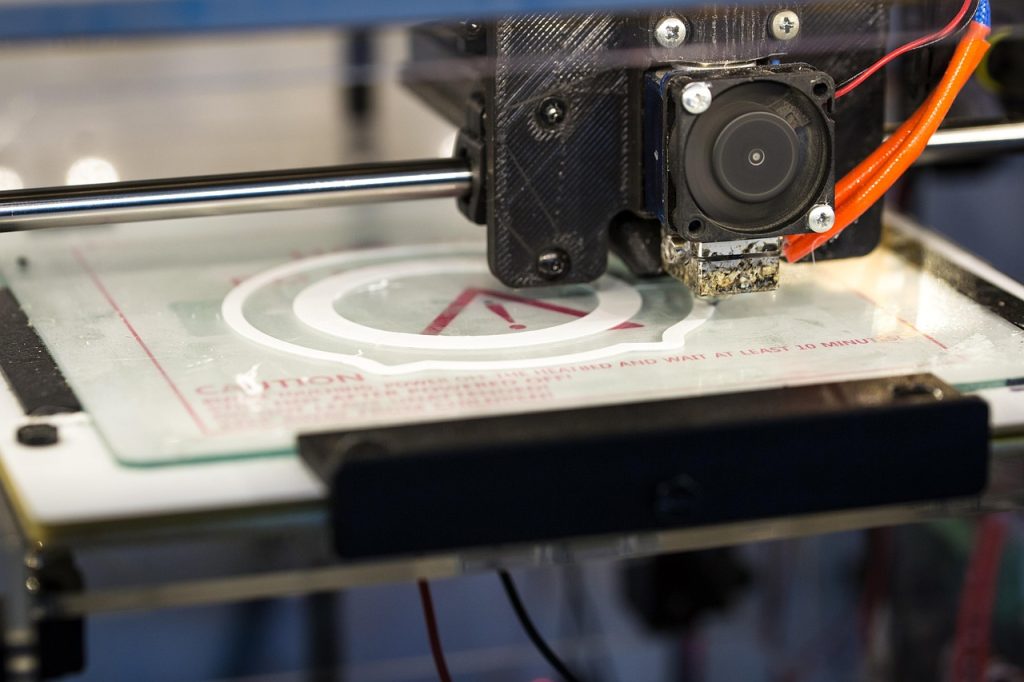
Nylon 3D printing service is the right term when the part needs functional performance, fast turnaround and a low-volume route that still behaves like an engineering component.
For SLA, SLS, MJF, FDM and PolyJet capabilities beyond nylon, see our 3D-Druck-Dienstleistungen page.
For nylon parts, the main production choices are usually SLS or MJF. The right service should help with material choice, wall thickness, nesting, post-processing and final tolerance expectations before production starts.
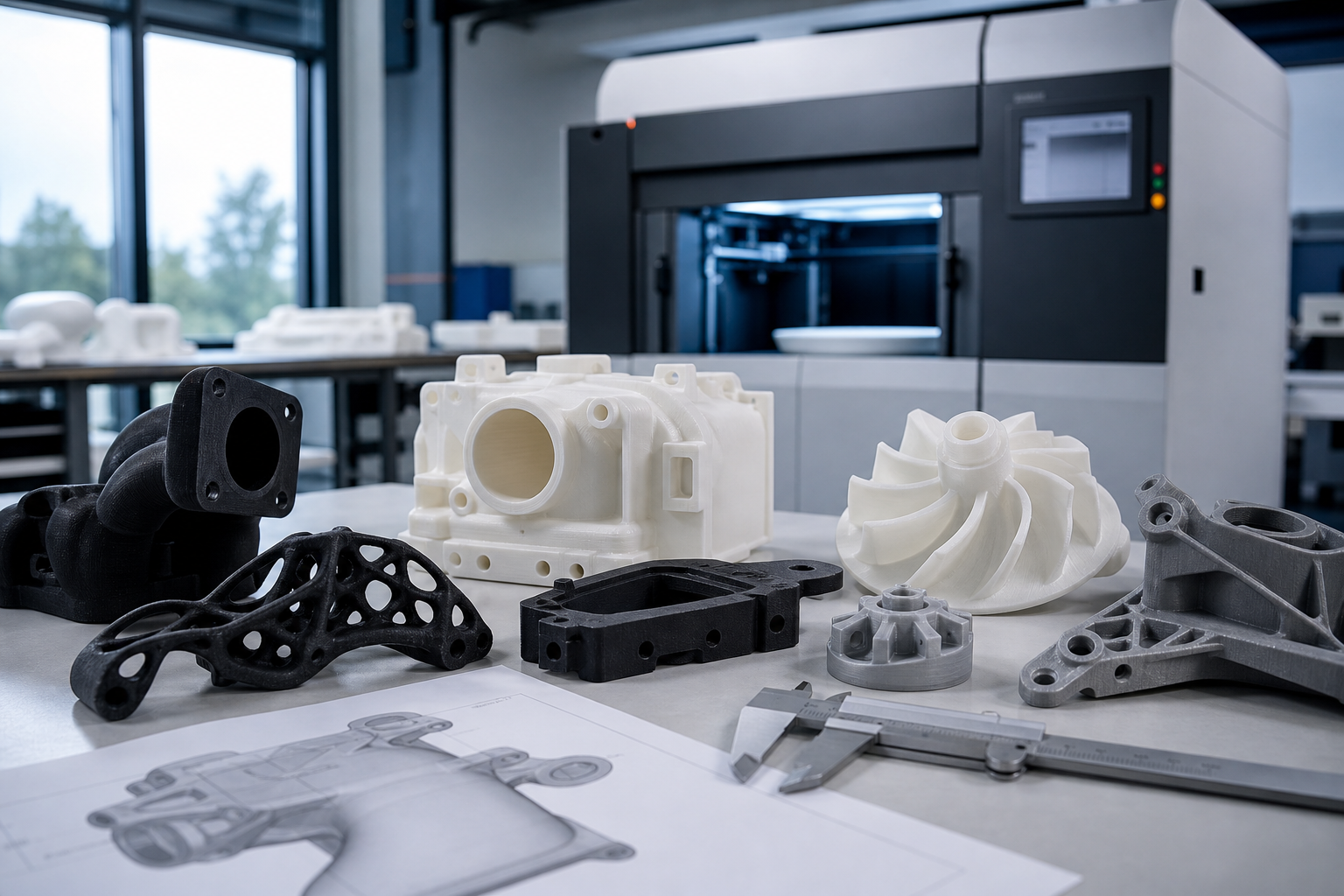
Auf einen Blick
| Artikel | Was ist zu prüfen? | Warum das wichtig ist |
|---|---|---|
| SLS-Nylon | Surface, fit and powder removal | Good for durable functional parts |
| MJF nylon | Detail, strength and batch consistency | Useful for stronger production-style runs |
| Prototype validation | Geometry, holes and assembly fit | Catch problems before tooling |
| RFQ package | Drawing, quantity and use case | Prevents bad quoting and wrong material choice |
| Nachbearbeitung | Bead blast, dye, machining or assembly | Controls finish and final fit |
Which Nylon 3D Printing Service Fits Best?
SLS and MJF are the most common choices for nylon functional parts. They are strong enough for brackets, housings, clips and fixtures, and they usually make more sense than visual-only processes when performance matters.
Use SLA or PolyJet when the goal is appearance, detail or form checking. Use CNC machining when you need tighter functional tolerances or a material block rather than a printed build.
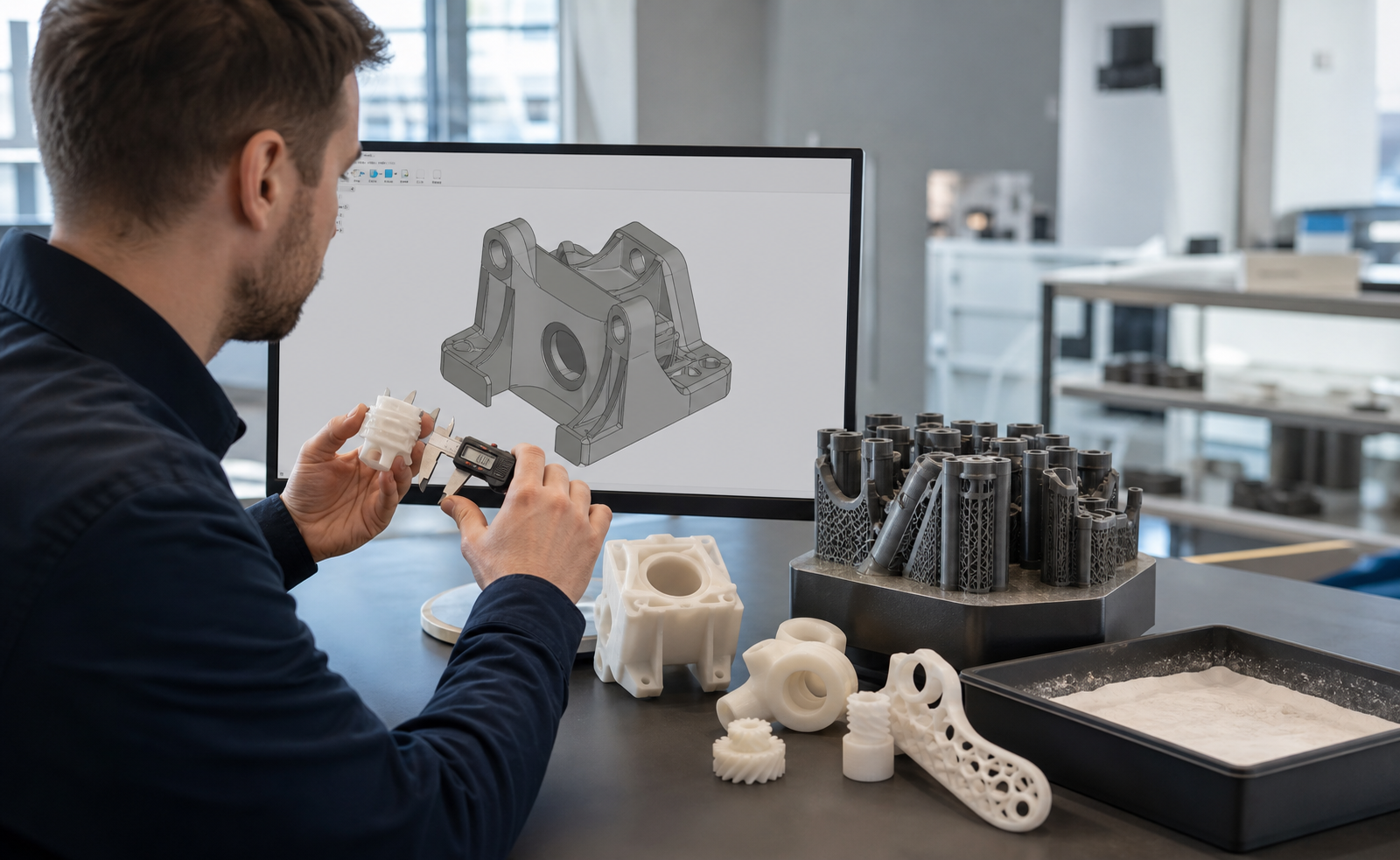
Material and Design Rules for Functional Nylon Parts
Good nylon printing starts with honest design limits. Wall thickness, escape holes, nesting orientation and post-processing requirements should be reviewed before the quote is finalized.
- Choose PA12 when dimensional stability and balanced performance matter.
- Choose PA11 when impact resistance and ductility matter more.
- Choose filled nylon when stiffness or wear resistance is the priority.
- Define the use condition so the supplier can set realistic tolerance and finish targets.
Common Nylon 3D Printing Problems and Fixes
| Problem | Ursache | Korrektur |
|---|---|---|
| Dimensionsdrift | Wrong build orientation or poor post-processing | Define critical dimensions and inspection state |
| Rough surface | Powder texture or surface finish mismatch | Specify bead blast, dye or machining needs |
| Weak fit | Tolerance assumptions too loose | Review hole size, wall thickness and assembly load |
| Verziehen | Unsupported geometry or heat concentration | Adjust nesting and add structural support |
SLS, MJF and Other Options
SLS and MJF are the main nylon production choices. If you only need a visual check, other plastic printing methods can work, but they usually do not offer the same functional durability for nylon parts.
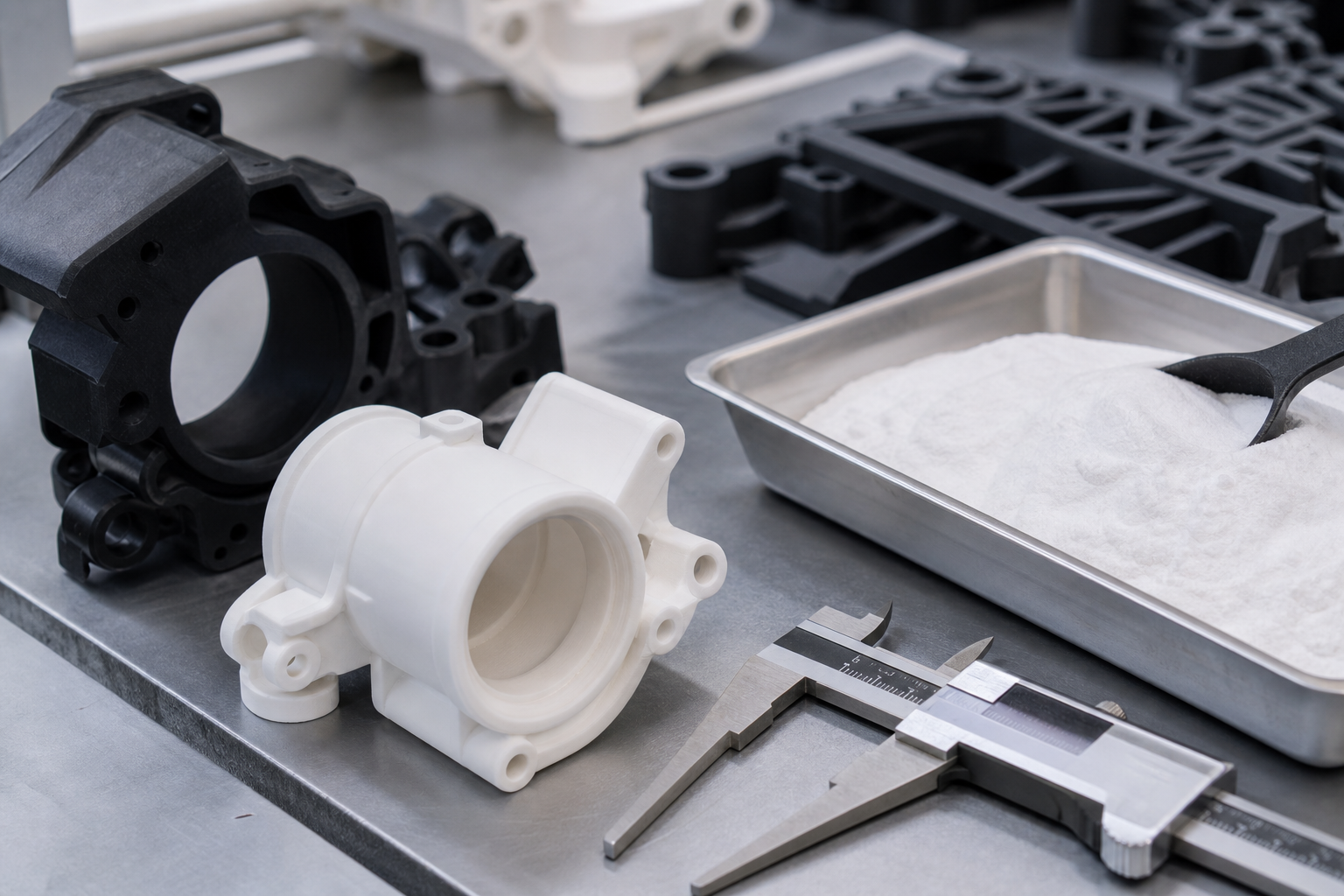
Warum Nylon-Kunststoff?
Nylon Plastic helps buyers turn nylon 3D printing requests into production-ready decisions, not just one-off printed parts. Before quoting, we look at the part function, tolerance target, surface requirement, load direction and expected quantity so the process route fits the real application.
- Process selection: compare SLS nylon, MJF nylon, FDM nylon and prototype machining when geometry, tolerance or volume changes the best route.
- Design review: check wall thickness, holes, threads, ribs, escape gaps, nesting limits and post-processing risk before printing starts.
- Functional-part focus: support jigs, fixtures, housings, brackets, wear parts and validation samples where strength and repeatability matter.
- Bridge-to-production thinking: help decide whether to stay with printed nylon, move to CNC-Bearbeitung von Nylon, or plan Nylon-Spritzguss after the design is proven.
This approach keeps the discussion practical: the goal is not only to print the file, but to choose the route that gives the part the right cost, lead time and functional performance.
Weiterführende Lektüre
- Leitfaden zu den Drucktemperaturen für Nylon
- Leitfaden zum 3D-Druck mit Nylon
- 3D-Druckdienstleistungen aus Kunststoff für Funktionsteile
- Selektives Lasersintern (SLS) 3D-Druck Dienstleistungen
- Multi Jet Fusion (MJF) 3D-Druck Dienstleistungen
Häufig gestellte Fragen
Was ist ein 3D-Druckdienst für Nylon?
Es handelt sich um einen Dienst, bei dem funktionale Nylonteile mithilfe von Verfahren wie SLS oder MJF hergestellt werden.
Was eignet sich besser für Nylonteile: SLS oder MJF?
Beide Verfahren sind nützlich. SLS wird sehr häufig für hochbelastbare Funktionsteile eingesetzt, während MJF eine gute Wahl für gleichbleibende Qualität und serienähnliche Fertigungsläufe sein kann.
Welches Nylonmaterial sollte ich verwenden?
PA12 ist ein gängiger Ausgangspunkt; PA11 und gefüllte Typen können hinsichtlich Schlagzähigkeit, Steifigkeit oder Verschleißfestigkeit vorteilhafter sein.
Können gedruckte Nylonteile später bearbeitet werden?
Ja. Eine Nachbearbeitung ist üblich, wenn kritische Bohrungen, Gewinde oder die Ebenheit einer strengeren Kontrolle bedürfen.
What should I send for a nylon 3D printing quote?
Send the CAD file, quantity, finish target, critical dimensions and the part’s real application.
Send the CAD file and part requirement. Nylon Plastic can review the process and quote the best fit.