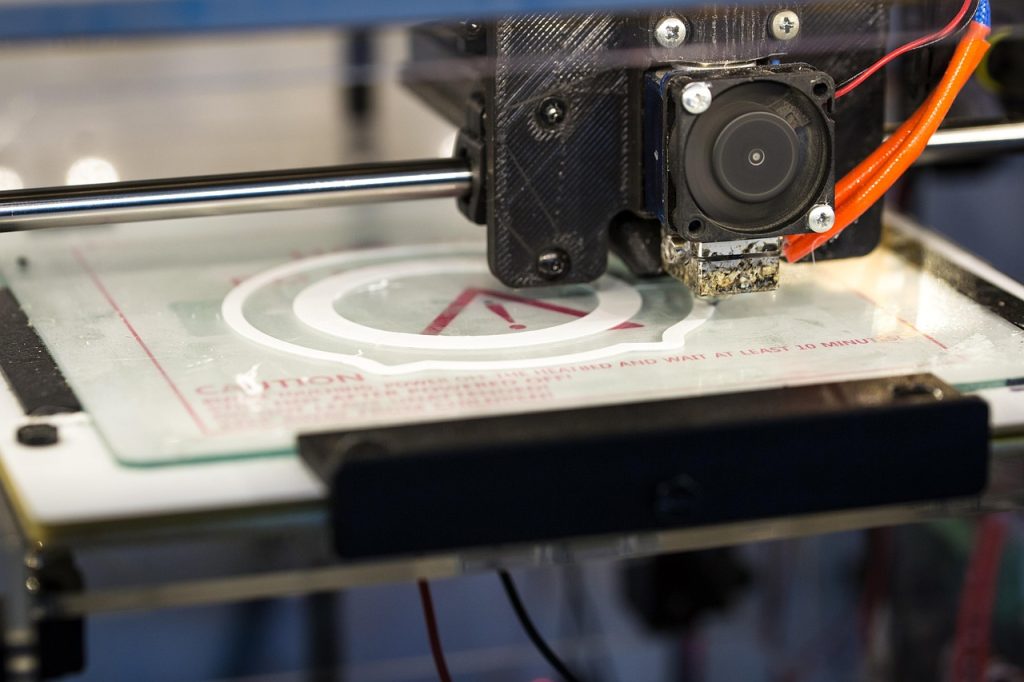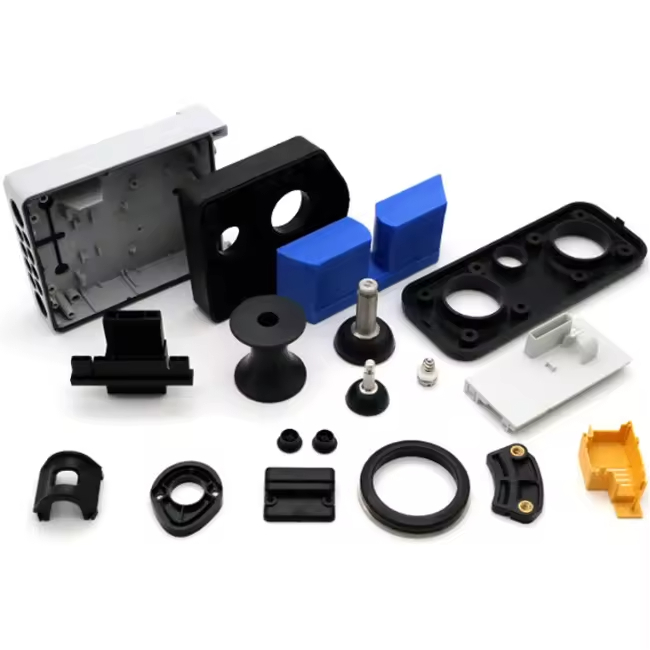
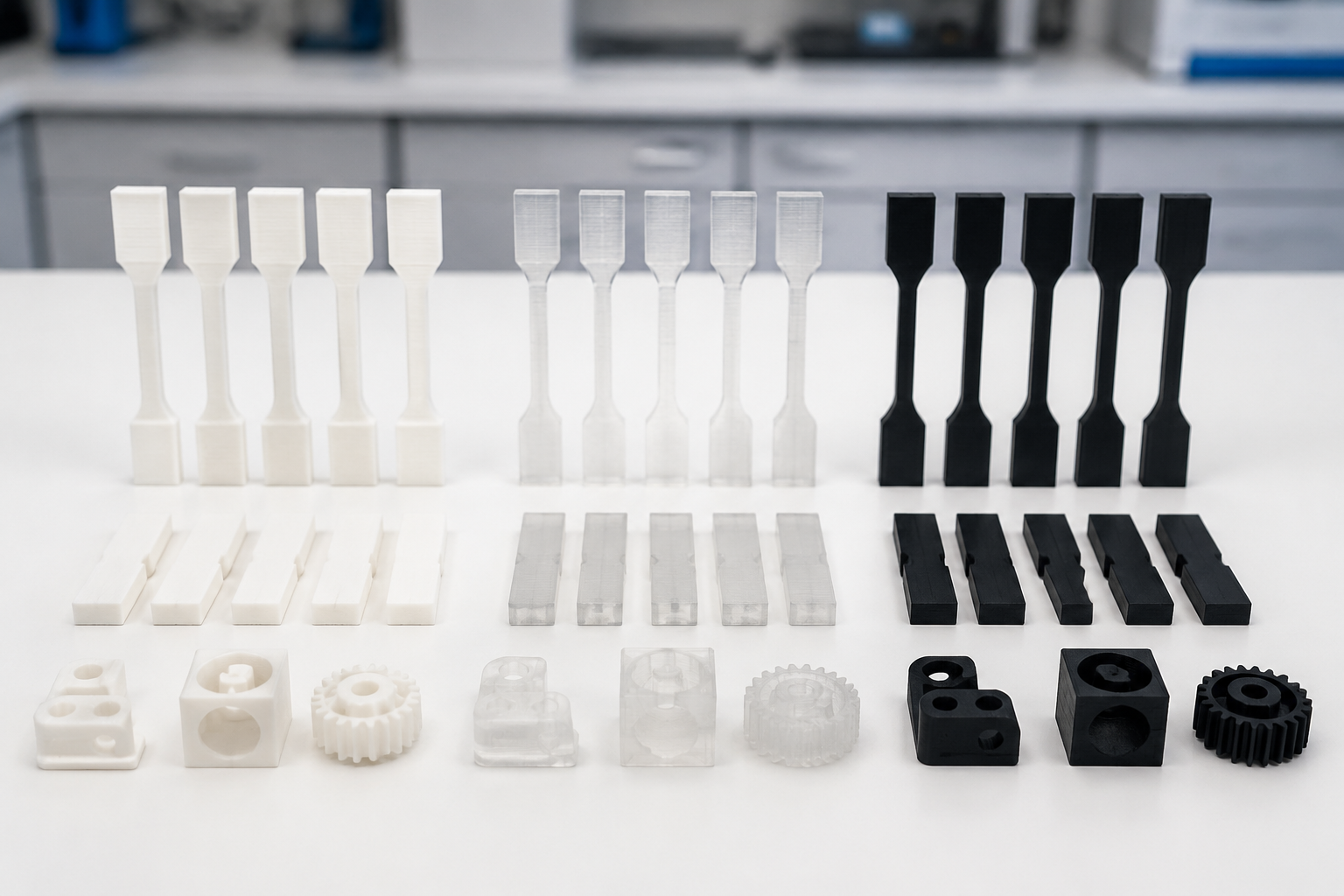
This PLA vs PETG vs ABS comparison is most useful when you care about part function, not forum opinions. If you print long enough, you eventually face the same question: PLA, PETG, or ABS? These three filaments account for roughly 80% of all FDM printing material by volume, yet the advice you find online is often contradictory. One forum says ABS is obsolete. Another says PETG is the new PLA. A third insists PLA is all you ever need. The truth is more nuanced: each of these materials has a specific performance envelope, and understanding where those envelopes overlap — and where they don’t — is the difference between a part that lasts and a part that fails.
This guide is written for people who print functional parts — engineers, manufacturers, prototyping shops, and serious makers who need dimensional accuracy, mechanical performance, and predictable failure modes. We test, we measure, and we compare the numbers that matter.
Material Profiles: What Each Filament Actually Is
Before comparing numbers, you need to understand what these materials are at the molecular level, because their fundamental chemistry dictates everything from print temperature to long-term durability.
PLA (Polymilchsäure)
PLA is a bio-based polyester derived from fermented plant starch — typically corn, cassava, or sugarcane. Its glass transition temperature is remarkably low: just 55–60°C. This means PLA parts begin to soften and deform in a hot car, near a radiator, or under direct sunlight. Tensile strength is surprisingly high for a bio-derived material (typically 45–60 MPa), and stiffness (Young’s modulus ~3.5 GPa) exceeds ABS and rivals unfilled PETG. But PLA’s Achilles heel is brittleness: elongation at break is typically 3–6%, meaning it snaps rather than bends. Impact resistance is poor — a PLA part dropped from waist height onto concrete has a decent chance of shattering.
PLA’s big advantage is printability. It prints at low temperatures (190–220°C), doesn’t require a heated bed (though 50–60°C helps), sticks effortlessly to most build surfaces, and produces almost no warping on parts of any size. It also emits a faint sweet smell during printing — the only common filament that’s genuinely pleasant to print with. For dimensional accuracy on aesthetic prints, nothing beats PLA; if fit and assembly tolerances matter more than surface appearance, see our Leitfaden zu Toleranzen beim 3D-Druck.
PETG (Polyethylene Terephthalate Glycol-Modified)
PETG is the glycol-modified variant of PET — the same base polymer used in water bottles. The glycol modification reduces crystallinity, making PETG printable at home-gamer temperatures while preserving most of PET’s mechanical advantages. PETG bridges the gap between PLA’s ease and ABS’s durability: it prints at 230–250°C, requires a heated bed at 70–85°C, and produces minimal warping on parts under 150mm. Stringing is PETG’s signature annoyance — it oozes more than PLA or ABS, so retraction tuning is essential. For a full process workflow, see our PETG printing guide.
Mechanically, PETG offers the best balance of the three. Tensile strength ranges from 45–55 MPa, elongation at break is 15–25% (tough, not brittle), and impact resistance is roughly 3–4x that of PLA. PETG also has excellent chemical resistance — it stands up to IPA, weak acids, and most household cleaners that would etch or stress-crack PLA and ABS. Its temperature resistance (glass transition ~80°C) is better than PLA but below ABS. For outdoor use, PETG handles UV exposure reasonably well and won’t degrade as fast as PLA in sunlight.
ABS (Acrylnitril-Butadien-Styrol)
ABS is the legacy workhorse of FDM printing, and for good reason. It’s a terpolymer combining the chemical resistance of acrylonitrile, the impact toughness of butadiene rubber, and the processability of styrene. The result is a material with heat deflection temperature of ~98°C (at 0.45 MPa), exceptional impact resistance across a wide temperature range, and surface quality that can be acetone vapor-smoothed to a near-injection-molded finish. If ABS is the direction you are leaning, our dedicated ABS printing guide goes deeper on settings, enclosure control, and post-processing.
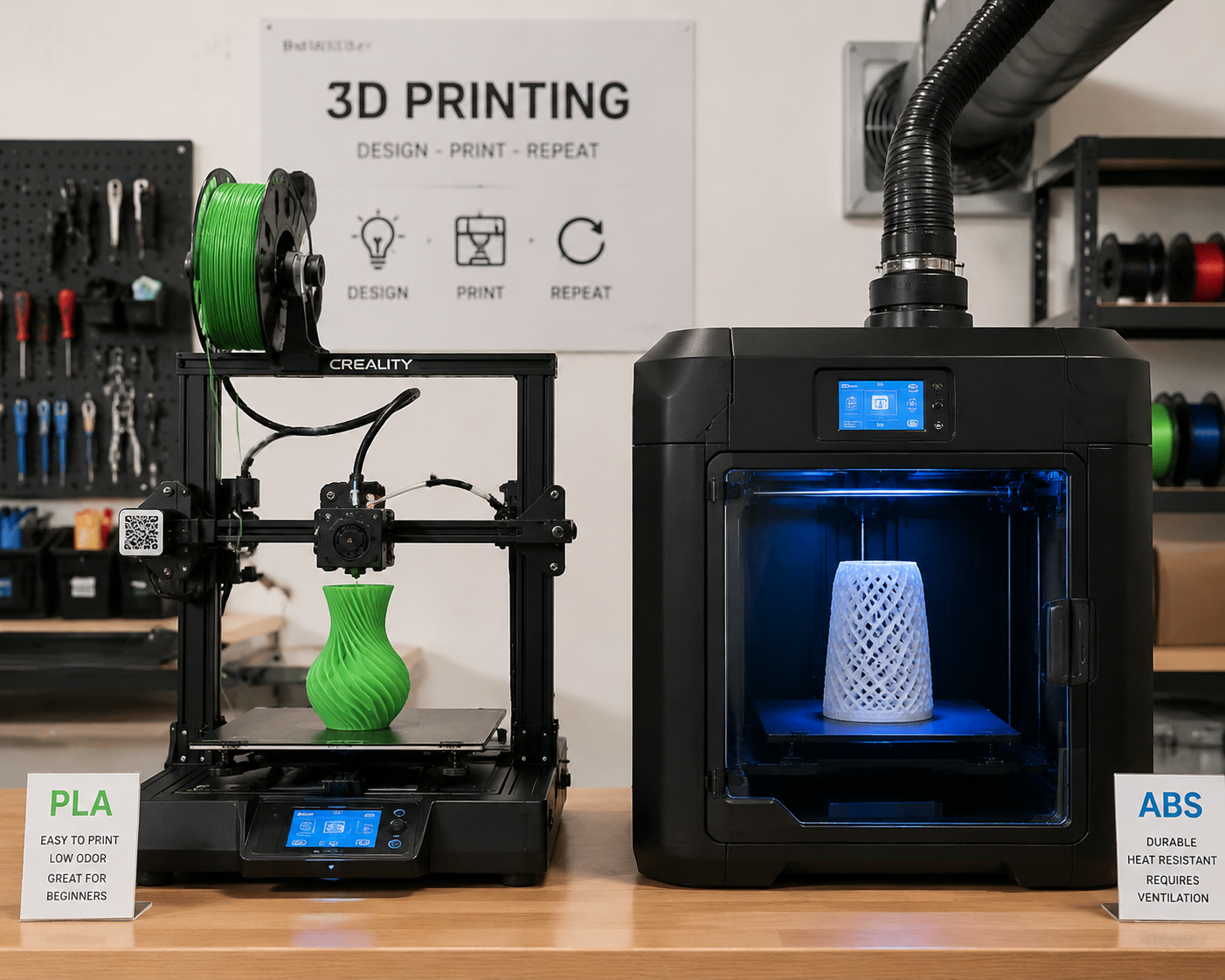
But ABS is difficult to print. It requires a heated bed at 95–110°C, an enclosure maintaining 40–50°C ambient, and nozzle temperatures of 230–260°C. Without an enclosure, parts larger than ~50mm in any dimension will warp — ABS shrinks approximately 0.8% during cooling, and the resulting thermal stress peels corners off the bed. It also emits styrene fumes during printing, which are unpleasant and potentially harmful — ventilation is mandatory. Post-processing is where ABS shines: acetone vapor smoothing not only improves aesthetics but also seals surface porosity, increasing water resistance and part strength. ABS can also be glued with standard solvent cements, sanded, drilled, tapped, and painted — it machines more like a traditional plastic than any other FDM material.
| Eigenschaft | PLA | PETG | ABS |
|---|---|---|---|
| Zugfestigkeit | 45–60 MPa | 45–55 MPa | 35–45 MPa |
| Elastizitätsmodul | 3,5 GPa | 2.0–2.3 GPa | 2.0–2.4 GPa |
| Dehnung beim Bruch | 3–6% | 15–25% | 10–20% |
| Schlagzähigkeit (Izod) | 3–5 kJ/m² | 8–12 kJ/m² | 15–25 kJ/m² |
| Glasübergangstemperatur (Tg) | 55–60°C | 80–85°C | 100–105°C |
| Wärmeformbeständigkeit (0,45 MPa) | 50–55°C | 70–75°C | 95–100°C |
| Print Temperature | 190–220 °C | 230–250°C | 230–260 °C |
| Temperatur im Bett | 50–60°C (optional) | 70–85°C | 95–110°C |
| Beilage erforderlich | Nein | No (recommended for large parts) | Ja |
| Warping Tendency | Vernachlässigbar | Niedrig | Hoch |
| UV-Beständigkeit | Poor (degrades, discolors) | Gut | Poor (yellows, embrittles) |
| Chemische Beständigkeit | Poor (attacked by solvents) | Excellent (acids, bases, solvents) | Moderate (attacked by acetone, esters) |
| Nachbearbeitung | Sanding, painting (limited) | Sanding, painting (difficult) | Acetone smoothing, gluing, machining |
| Price per kg | $15–25 | $18–30 | $18–30 |
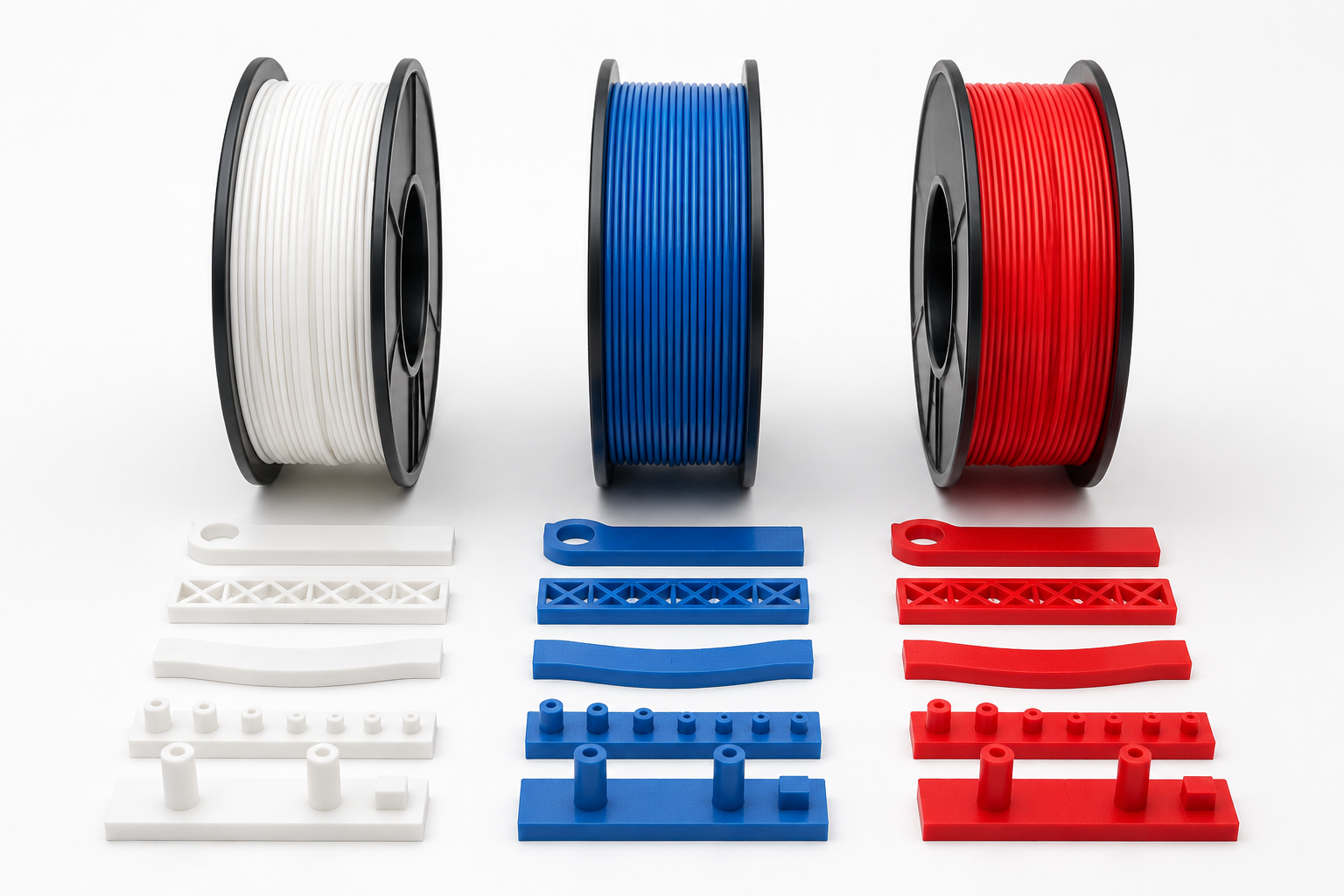
Strength vs Toughness: The Tradeoff Nobody Talks About
When engineers look at material selection charts, they plot strength against toughness — and PLA, PETG, and ABS occupy distinctly different quadrants. Understanding this relationship prevents the most common material selection mistake: choosing the strongest material and overlooking that it’s also the most brittle.
Tensile Testing at 20 mm/min: The Numbers
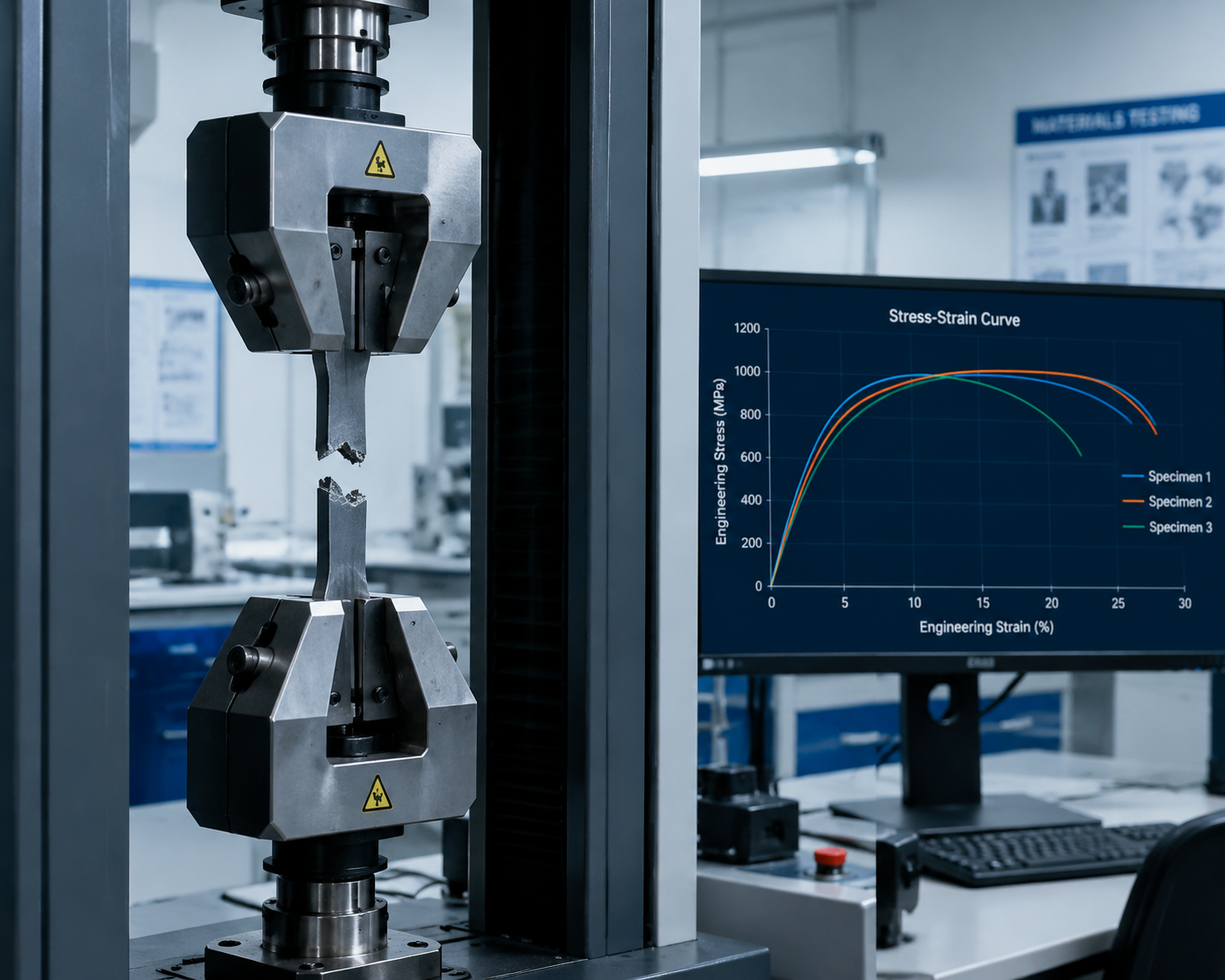
Under slow tensile loading (ASTM D638 Type IV specimens, 20 mm/min crosshead speed, 23°C), PLA consistently shows the highest ultimate tensile strength — often 55–60 MPa for quality filament. PETG follows at 48–53 MPa. ABS trails at 38–44 MPa. These numbers frame PLA as the “strongest” material, but strength alone is misleading.
The critical differentiator is the area under the stress-strain curve — the total energy absorbed before failure. PLA’s curve rises sharply and terminates abruptly at 3–5% strain. PETG’s curve shows a distinct yield point followed by a long plastic deformation region lasting 15–25% strain. ABS exhibits necking and cold-drawing behavior: after yielding at ~35 MPa, the specimen forms a neck that propagates along the gauge length at roughly constant stress, absorbing energy continuously until failure at 10–20% strain. The total energy to failure (toughness) ranks ABS > PETG > PLA, despite PLA having the highest peak stress.
Impact Testing: Izod and Drop-Weight Results
Notched Izod impact testing tells a similar story but with even greater separation. PLA: 3–5 kJ/m² — brittle failure with minimal crack propagation energy. PETG: 8–12 kJ/m² — ductile failure with visible deformation before crack initiation. ABS: 15–25 kJ/m² — the butadiene rubber phase absorbs impact energy through cavitation and shear yielding, resulting in impact resistance 5–8x that of PLA.
Drop-weight impact on printed enclosures and functional parts tells the practical story: a 3mm-thick PLA electronics enclosure dropped from 1 meter onto concrete cracked in 8 out of 10 tests. The same geometry in PETG survived all 10 drops with cosmetic scuffing. ABS dented but didn’t crack. For any part that might be dropped, struck, or handled roughly, PLA is the wrong choice.
Fatigue Resistance
Cyclic loading separates these materials dramatically. PLA fails rapidly under repeated loading — fatigue life at 50% of UTS is typically under 10,000 cycles due to brittle crack propagation from surface defects. PETG performs better, with fatigue limits around 30–40% of UTS and lives exceeding 100,000 cycles at lower stress amplitudes. ABS exhibits the best fatigue performance due to the energy-dissipating butadiene phase: at 30% of UTS, ABS specimens regularly exceed 500,000 cycles without failure. For living hinges, snap-fits, and cyclically loaded components, PETG and ABS are viable; PLA is not.
Temperature Performance: Which Material Survives Heat?
Temperature resistance separates PLA from PETG and ABS decisively. The numbers matter because real parts face real thermal environments.
Wärmeablenkungstemperatur (HDT)
At 0.45 MPa load (ASTM D648), PLA’s HDT is approximately 52–55°C. A PLA bracket inside a car on a summer day — where dashboard temperatures routinely exceed 70°C — will creep, sag, and fail. A PLA part left in direct sunlight will soften within minutes. For context, a dark-colored PLA print can reach 60°C just from solar radiation on a 25°C day.
PETG’s HDT of 70–75°C provides a meaningful step up. It survives inside a hot car, near warm electronics (laptop exhaust, server rack), and in most indoor industrial environments. It won’t survive continuous exposure near engine components or in autoclave sterilization, but it covers 90% of functional part applications that PLA cannot.
ABS, with HDT of 95–100°C, handles nearly all consumer and light industrial environments. Under-hood automotive brackets (away from direct engine contact), dishwasher components, and electronics enclosures near heat sources are all within ABS’s thermal envelope. For boiling water exposure (100°C), ABS is marginal, and for autoclave sterilization (121–134°C), none of these three materials are suitable — that’s polycarbonate, PPSU, or PEEK territory.
Glass Transition and Creep
Glass transition temperature (Tg) predicts long-term creep behavior better than HDT. At temperatures approaching Tg, the amorphous regions of the polymer begin to flow under sustained load. A PLA part under constant spring load at 50°C will creep measurably over hours to days. At 55°C, creep accelerates dramatically. This is why PLA is unsuitable for any load-bearing application above ambient temperature — not just because of the HDT number, but because sustained stress below HDT still causes time-dependent deformation.
PETG at 60°C under sustained load shows minimal creep over weeks. At 75°C, creep becomes measurable but manageable with adequate safety factors. ABS at 80°C exhibits similar behavior. For structural brackets, clamped assemblies, and spring-loaded mechanisms, the practical continuous-use temperature is typically 15–20°C below Tg — which puts PLA at a ceiling of 35–40°C for load-bearing parts.
Printability: The Practical Reality
Material properties mean nothing if you can’t print the part successfully. Each of these filaments imposes different constraints on your printer and workflow.
PLA: The Baseline
PLA prints on essentially any FDM printer ever made. Nozzle temperature 190–220°C, bed temperature 50–60°C (optional on some surfaces), no enclosure, low retraction requirements (2–4mm), and excellent bridging performance. Overhangs up to 60° from horizontal print cleanly without support. Layer adhesion is strong — Z-axis tensile strength typically reaches 70–80% of XY strength, better than PETG or ABS. The only caveat: PLA’s low melting point means heat creep in the hotend can cause jams if the heatsink fan isn’t adequate. A stock Ender 3 or Prusa Mini prints PLA flawlessly out of the box.
PETG: The Middle Ground
PETG needs a heated bed (70–85°C) and a build surface it won’t bond to permanently. PEI spring steel sheets are ideal; bare glass with glue stick works but risks chipping the glass if PETG bonds too aggressively. The first layer requires more care than PLA — nozzle height should be 0.05–0.1mm higher than PLA to prevent the nozzle from dragging through deposited material, which causes the characteristic PETG “boogers” that accumulate on the nozzle and eventually deposit on the print. Fan speed should be low (20–40%) for strength; higher fan speeds improve overhangs and bridging but reduce layer adhesion. Stringing is the primary print quality challenge — aggressive retraction (4–7mm at 40–60mm/s) and travel speed above 200mm/s help, but some stringing is almost inevitable with PETG. A stock Ender 3 with Capricorn tubing handles PETG well; all-metal hotend is preferred but not required.
ABS: The Demanding One
ABS requires commitment. Enclosure temperature must reach 40–50°C and stay there for the entire print. The bed must maintain 95–110°C — a 24V heated bed with insulation underneath is strongly recommended; 12V beds struggle to reach and hold these temperatures. ABS slurry (ABS dissolved in acetone) or specialized adhesives like Magigoo PA are reliable bed adhesion solutions; PEI alone is marginal for large ABS parts.
Warping is the dominant failure mode. A 150mm ABS part printed in an unheated enclosure has perhaps a 20% chance of completing without corner lift. The same part in a 45°C enclosure with a 10mm brim is nearly guaranteed success. Part cooling fans must be off or at minimum (0–15%) for the entire print — excessive cooling creates differential shrinkage between layers, causing delamination. ABS also shrinks during cooling (0.7–0.8% linear), so parts requiring tight tolerances must be scaled up in the slicer by 0.5–1% to compensate.
Ventilation is non-negotiable for ABS. Styrene emissions exceed recommended exposure limits in unventilated spaces during multi-hour prints. A filtered enclosure vented to outside, or a dedicated printing room with active ventilation, is standard practice for regular ABS printing.
Applications: What to Print with Which Material
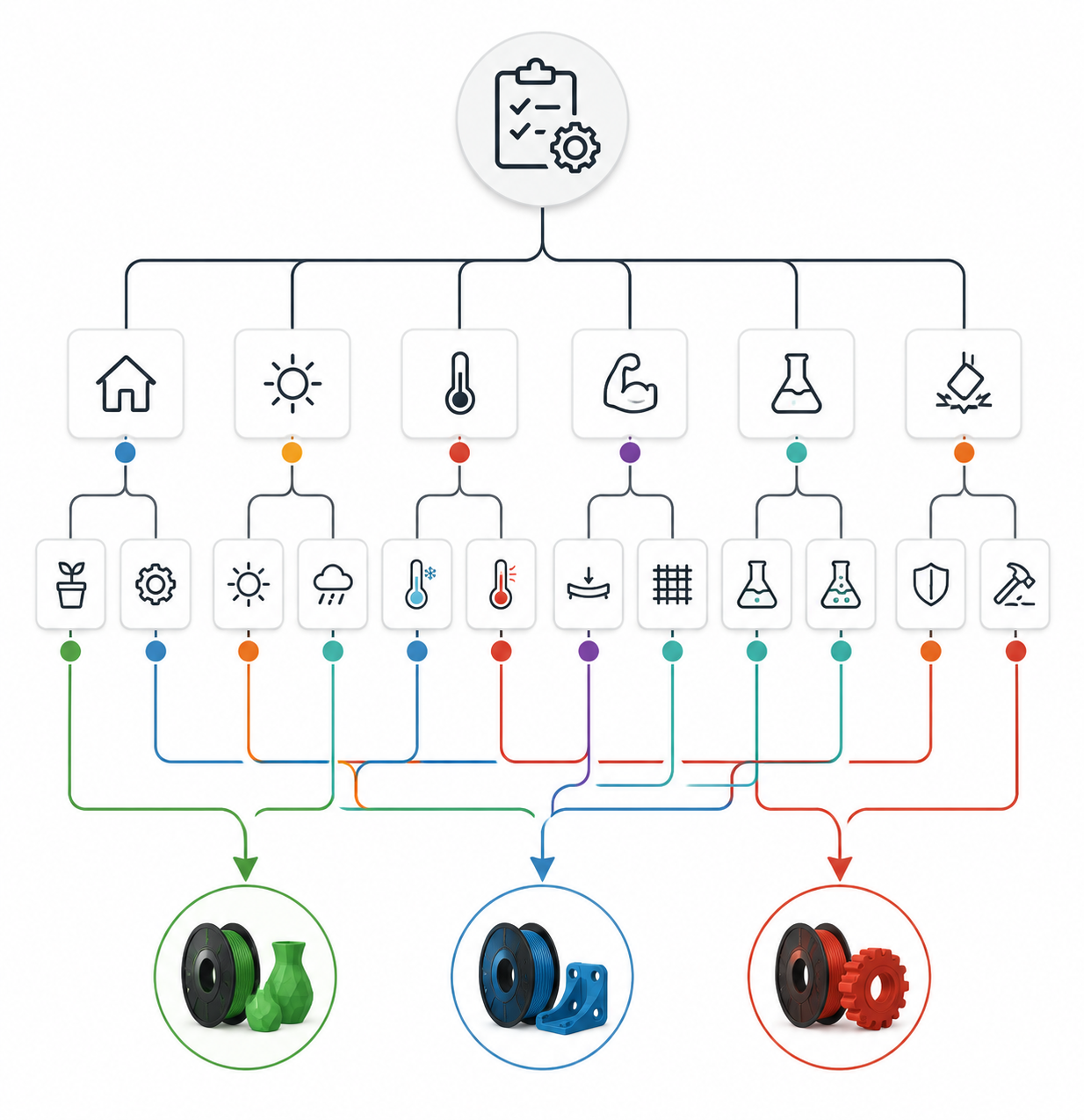
The material selection decision tree starts with the application requirements. Here’s what each material is genuinely best at, based on physical properties rather than community consensus.
When PLA Is the Right Choice
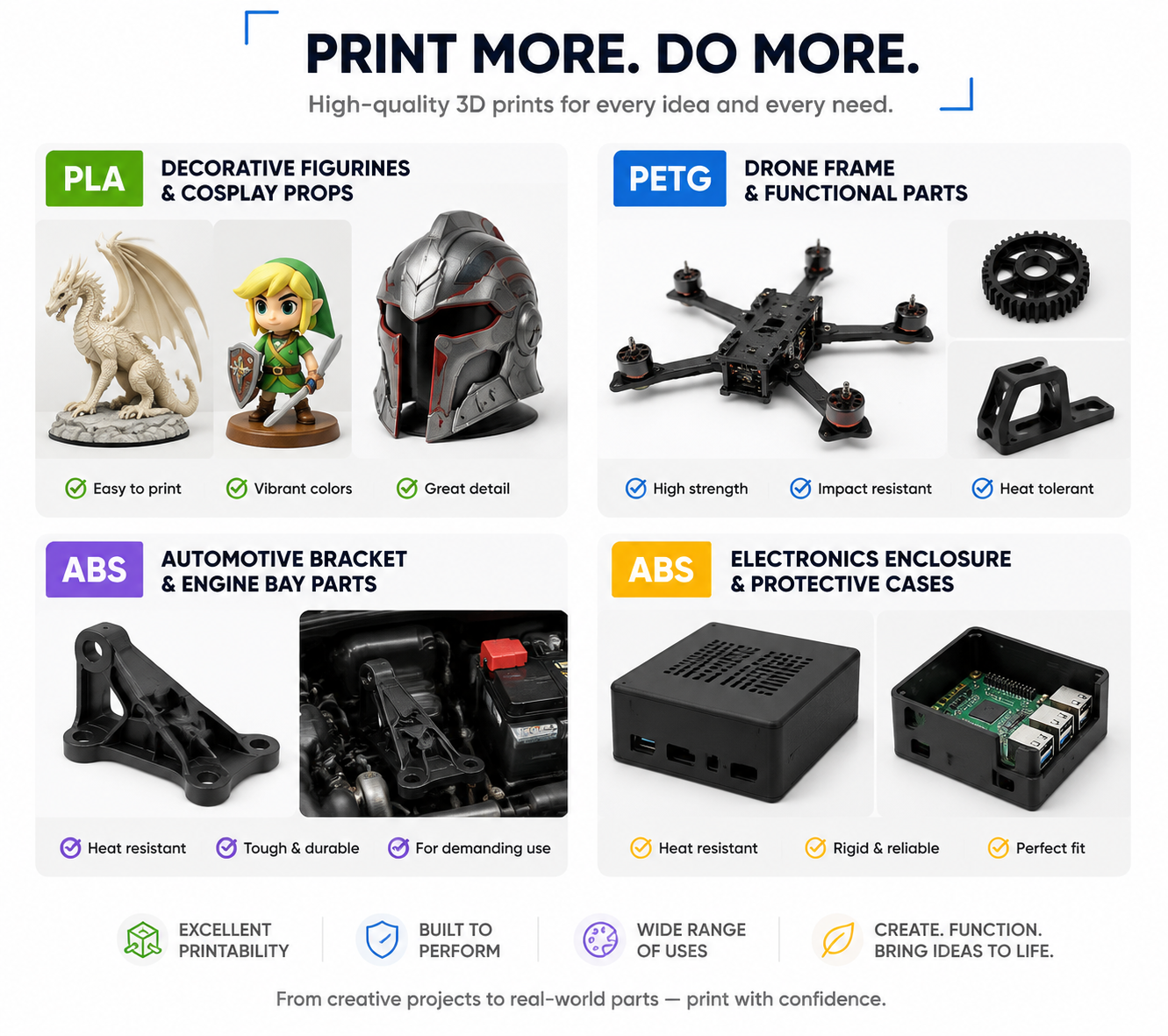
- Visual prototypes and display models: PLA’s dimensional accuracy, surface finish, and wide color gamut (including silk, marble, wood-fill, and gradient variants) make it unmatched for aesthetic prints.
- Figurines, cosplay props, and decorative items: Detail resolution at 0.1mm layer height with PLA exceeds what PETG and ABS can achieve.
- Tooling and assembly jigs (indoor, low-load): Drill guides, soldering jigs, and alignment fixtures that won’t see heat or impact work well in PLA.
- Educational models and teaching aids: Low cost, ease of printing, and zero fumes make PLA the classroom standard.
- Mold patterns for casting: PLA burns out cleanly for investment casting; PETG and ABS leave more residue.
When PETG Is the Right Choice
- Functional prototypes that need toughness: Snap-fit enclosures, living hinges, and click-together assemblies that will be repeatedly handled.
- Outdoor parts: PETG’s UV stability and moisture resistance make it suitable for garden fixtures, drone parts, and outdoor sensor housings.
- Chemical and water contact: Pump impellers, hydroponic fittings, lab equipment — PETG handles water, weak acids, and alcohols without degradation.
- Electronics enclosures: Impact-resistant cases for prototypes and low-volume production; PETG doesn’t crack when dropped and doesn’t deform near warm electronics.
- Food-contact items (with caveats): Natural PETG is FDA-compliant for food contact, though FDM layer lines harbor bacteria — coat or seal food-contact surfaces.
- Printer upgrades and structural parts: PETG’s combination of stiffness, toughness, and temperature resistance makes it the go-to for printed printer parts — extruder mounts, fan ducts, and frame braces.
When ABS Is the Right Choice
- High-temperature environments: Automotive interior parts, under-hood brackets (non-engine-contact), heat shields, and appliance components.
- Parts requiring post-processing: When surface finish matters, acetone vapor smoothing produces injection-molding-quality surfaces. ABS can also be machined — drilled, tapped, and sanded — more effectively than PLA or PETG.
- Mechanical assemblies with fasteners: Threaded inserts and self-tapping screws hold better in ABS than in PLA or PETG. ABS’s ductility prevents cracking around threaded fasteners under torque.
- Durable housings and enclosures: Professional-looking electronics enclosures, instrument cases, and protective shells that need to survive drops, heat, and years of use.
- Production-like prototypes: When prototyping parts that will eventually be injection-molded in ABS, printing in the same material validates both mechanical performance and assembly fit.
Storage, Moisture, and Shelf Life
Filament storage is often treated as an afterthought, but moisture absorption affects all three materials differently and can destroy print quality — and mechanical properties — before you see any visible sign of trouble.
PLA: Moderately hygroscopic but forgiving. PLA absorbs moisture slowly, and mildly wet PLA manifests as reduced layer adhesion and increased brittleness rather than obvious print defects. A spool left out for a week in 50% RH will still print acceptably. Drying at 45–50°C for 4–6 hours restores properties. PLA stored in a sealed container with desiccant lasts essentially indefinitely.
PETG: More hygroscopic than PLA. Wet PETG announces itself dramatically: popping and hissing during extrusion, heavy stringing, rough surface texture, and dramatically reduced layer adhesion. Drying requires 60–65°C for 4–6 hours. PETG should be stored in a sealed container with indicating desiccant and ideally printed from a dry box for consistent results.
ABS: Least hygroscopic of the three but not immune. Wet ABS shows increased stringing and surface defects but rarely the dramatic popping seen with wet PETG or nylon. Drying at 80°C for 2–4 hours is sufficient. ABS’s lower moisture absorption is one of its practical advantages — it’s more forgiving of imperfect storage.
Cost Analysis: Material Price vs Total Cost Per Part
Filament cost per kilogram is only one component of the total cost per usable part. Print success rate, post-processing time, and part lifespan all affect the true economics.
| Kostenfaktor | PLA | PETG | ABS |
|---|---|---|---|
| Filament cost/kg | $15–25 | $18–30 | $18–30 |
| First-print success rate | 95%+ | 85–90% | 70–80% (enclosed) |
| Post-processing time | 10–30 min (sanding, painting) | 20–40 min (string removal, sanding) | 20–60 min (support removal + smoothing) |
| Typical part lifespan | Months (indoor); days (outdoor) | Years (indoor/outdoor) | Years (indoor); months (outdoor UV) |
| Energy cost per print | Lowest (low temps, short warmup) | Mäßig | Highest (high temps, enclosure heating) |
For production environments, the math often favors PETG: it’s only marginally more expensive than PLA per kilogram but produces parts with dramatically longer service life and lower failure rates in functional applications. ABS becomes cost-competitive when post-processing requirements favor its machinability and acetone smoothing, or when temperature requirements exceed PETG’s envelope. PLA remains the clear winner for visual-only parts, prototypes that won’t be mechanically tested, and high-volume low-cost production where heat and impact aren’t factors.
Material Selection Framework
Use this decision flow to select the right material for your application:
- Will the part exceed 55°C in use? → Eliminate PLA. Choose PETG or ABS.
- Will the part exceed 80°C in use? → Eliminate PLA and PETG. Choose ABS. If exceeding 100°C, these three materials are all unsuitable — consider nylon, polycarbonate, or PEEK.
- Will the part experience impact or repeated handling? → Eliminate PLA (brittle failure risk). Choose PETG or ABS.
- Does the part need chemical resistance? → Eliminate PLA and ABS (sensitive to solvents). Choose PETG.
- Is the part for outdoor use? → Eliminate PLA and ABS (poor UV stability). Choose PETG.
- Does the part need post-processing (smoothing, painting, machining)? → Choose ABS. Acetone vapor smoothing is a unique capability.
- Is dimensional accuracy the top priority? → Choose PLA. It has the lowest shrinkage and best fine-feature reproduction.
- Is print success rate critical (no time for failed prints)? → Choose PLA (95%+ success) or PETG (85–90%). ABS requires more tuning and has higher failure rates.
Häufig gestellte Fragen
Kann ich ABS ohne Gehäuse drucken?
For very small parts (under 30mm in any dimension), you can sometimes get away with it — but warping and delamination are likely. A draft shield (printed wall surrounding the part) and a heated bed at 110°C improve odds, but the success rate for anything functional-sized is low. If you’re serious about printing ABS, budget $50–100 for an enclosure (or build one from foam board and acrylic). The enclosure pays for itself in eliminated failed prints within a few spools.
Is PETG actually stronger than PLA?
“Stronger” depends on what you’re measuring. PLA has higher tensile strength (55–60 MPa vs PETG’s 48–53 MPa) and higher stiffness. PETG has dramatically higher toughness — it absorbs more energy before breaking and fails in a ductile manner rather than shattering. For a part under steady tensile load, PLA is “stronger.” For a part that might be dropped, struck, or flexed, PETG is far more durable. In practice, most functional parts benefit more from PETG’s toughness than PLA’s peak strength.
Can these materials be used for food-contact items?
Natural (unpigmented) PLA and PETG are generally recognized as food-safe at the raw material level, and natural ABS is also considered food-safe in its pure form. However, FDM printing introduces two problems: brass nozzles may contain trace lead that leaches into the print, and the layer lines create bacteria-harboring crevices that can’t be effectively cleaned. Pigments and additives in colored filaments may not be food-safe. For occasional, short-term food contact with coated/sealed surfaces, PETG is the best option. For regular food use, apply a food-safe epoxy coating or use printing only for the mold pattern and cast in food-grade silicone.
Why does my PETG print have so much stringing?
PETG’s high melt viscosity and tendency to ooze make stringing its most common print quality defect. Solutions in order of effectiveness: (1) Dry your filament — wet PETG strings exponentially more than dry PETG. (2) Increase retraction distance to 5–7mm and speed to 40–60mm/s. (3) Enable “z-hop when retracted” set to 0.2–0.4mm. (4) Increase travel speed to 200mm/s+ to snap strings before they cool. (5) Reduce nozzle temperature by 5–10°C — the lowest temperature that maintains layer adhesion minimizes oozing. If all else fails, a heat gun quickly removes PETG strings from finished prints.